
Return of the Mac…
By Roy Gregory
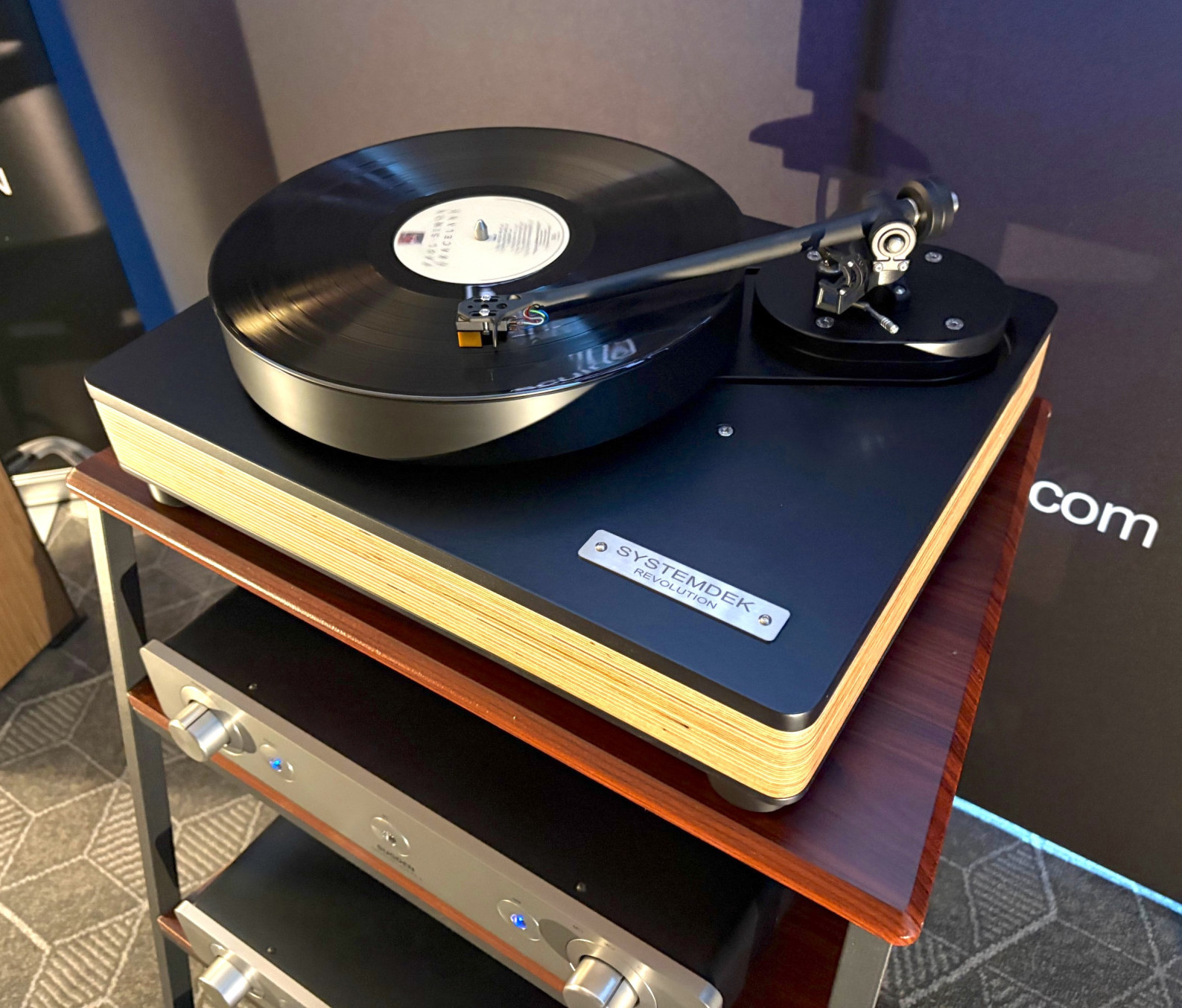
Despite the Bristol Show becoming more of a talking shop than a listening experience, a chance to catch up with companies and individuals, all concentrated in a single place, it still seems to throw up at least one interesting product. The SUPATRAC Blackbird tonearm is a case in point, while this year, it was another analogue device that caught the eye.
Systemdek has been building turntables for almost as long as three-point suspended decks have existed. The Systemdek III was an early LP12 competitor, while the IIX became a budget staple in the ‘80s and early ‘90s. Even today, the IIX sells second-hand for around three times its original price. More recently, they launched the impressive Systemdek 3D Reference, which I reviewed for TheAudioBeat.com https://www.theaudiobeat.com/equipment/systemdek_3d_reference_mk_ii.htm a substantial ‘table in terms of both weight and price, costing a cool £30K. While that might not seem particularly extravagant compared to some top-flight offerings, it’s still considerably more than many people want or can afford to pay for a record player. So, the arrival of the far more approachably priced Systemdek Revolution is welcome indeed.
First announced back in July of 2025, this was my first glimpse of the deck in the flesh, so to speak. Sharing the same basic form factor and design as the 3D Reference, the Revolution might be considered a pared-back iteration of the flagship. The deep plinth with its radiused corners is mated to a thick platter and a raised, oval ‘arm-board’ to compensate for the elevated playing surface: All visually similar to the 3D Reference. But like all suspended decks, the devil is in the detail and that is hidden inside the plinth and platter…
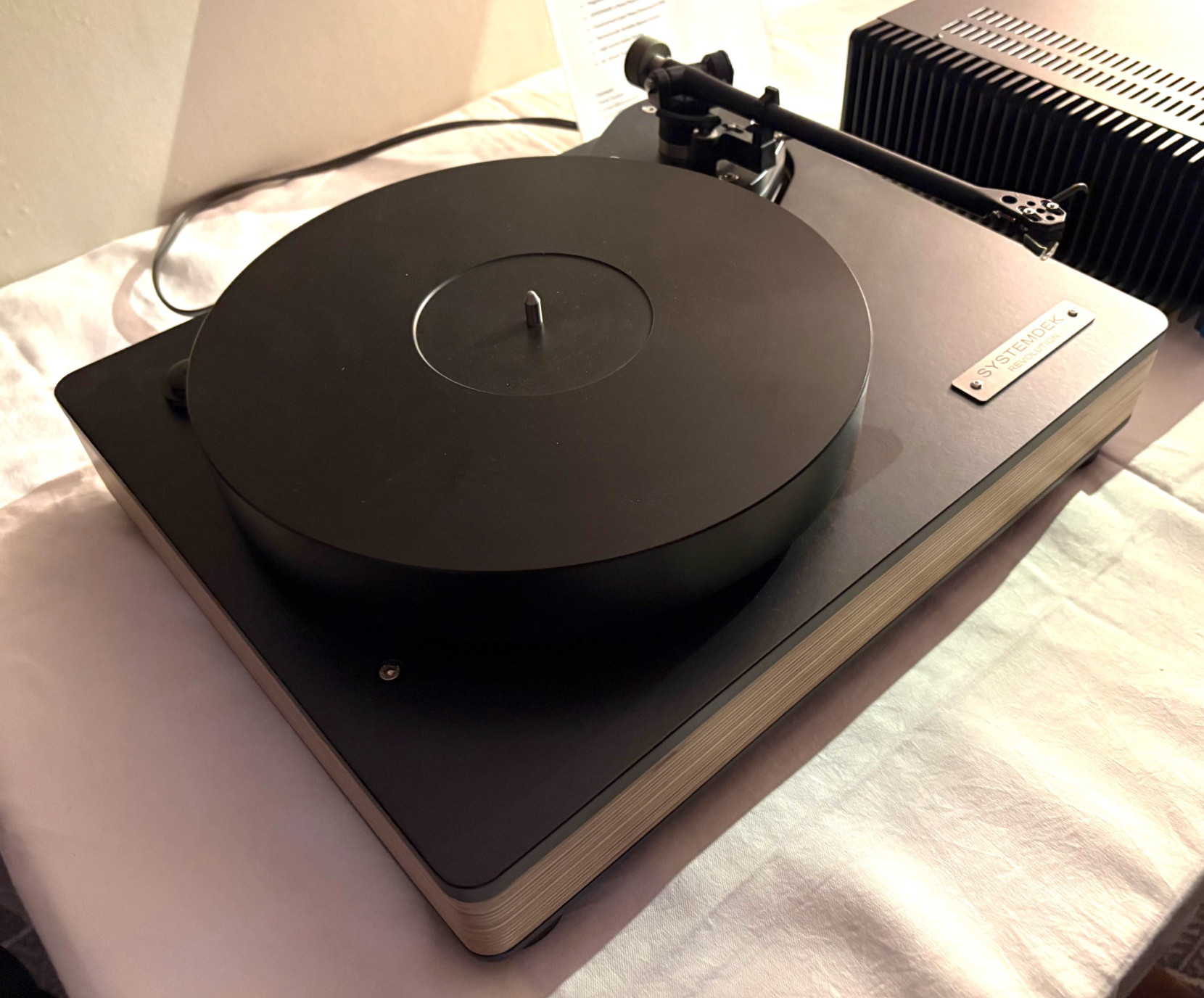
The heart of any turntable is the main bearing and the one in the Revolution is well worth a closer look. A large diameter shaft (it looks like 15mm or so, but I don’t have an accurate figure) sits in a Teflon well, supported by opposed magnets where the base of the shaft meets the bottom of the well. The standing bearing is completely immersed in an oil bath, creating an incredibly thin layer between shaft and the vertical surfaces of the well – a zero-contact, hydro-statically damped arrangement that promises consistent and silent rotational motion. The top of the bearing shaft/spindle is heavily tapered, ensuring a perfectly concentric fit with the high-mass Delrin platter.
The single-piece platter is belt driven by an AC synchronous motor, with mechanically adjustable fine-speed control (although an external electronic control is in the works). The sub-chassis that supports the main-bearing and arm-board is constructed from Richlite composite material. Together with the platter it creates a high-mass suspended weight that is hung from three springs, each adjustable from above (You can see the adjustment bolts located around the platter and either side of the arm-board)The arm-board is extended enough to accept arms of up to 10” effective length, although longer arms that use off-set mounts (like the Kuzma 4Point for example) can easily be accommodated. The deck’s suspension is tuned to the familiar low-frequency of earlier Systemdeks, giving a smooth, languid motion a world away from the more nervous behaviour of contemporary LP12 or Pink Triangle decks.
- 1
- 2