
“There’s a kind of hush…”
By Roy Gregory
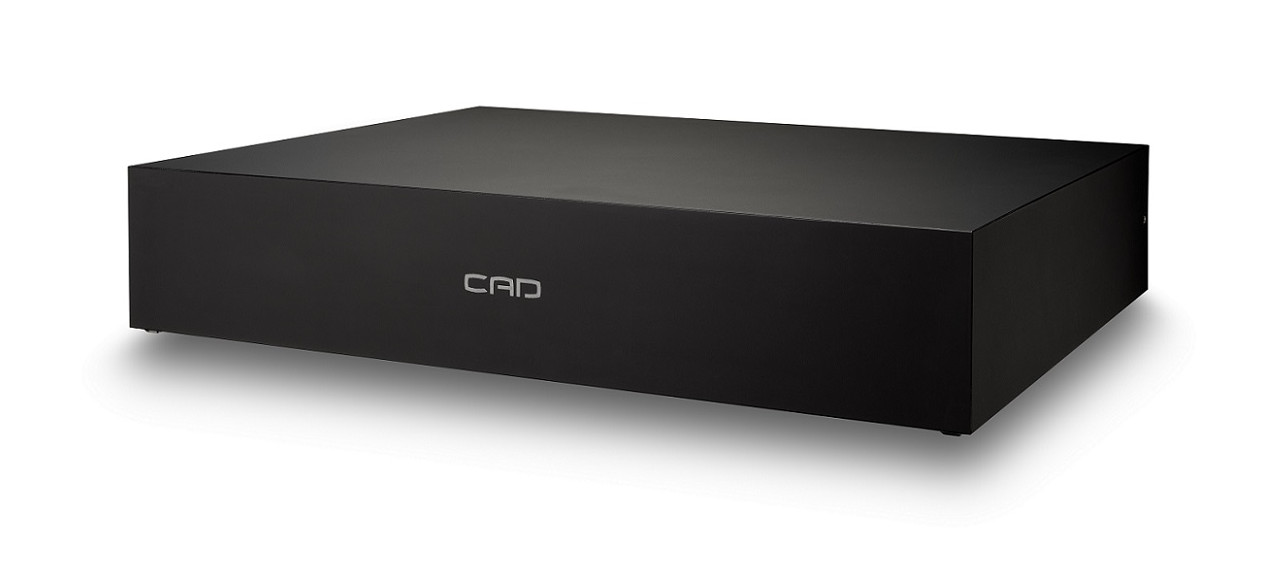
Once upon a time we pretty much all started out with four-box systems (or three and a turntable). But as time has marched on, those systems have grown and inevitably got more complex, with more boxes, more different functions, more power supplies and – inevitably – more noise sources polluting our systems’ ground planes and raising their noise-floors. As a result, more and more sophisticated grounding arrangements have emerged, including not just separate chassis and signal grounds, but a whole host of passive, parallel grounding devices. These inscrutable products have been with us for nearly two decades, blank boxes that sit next to your system and suck up the damaging noise and interference that threatens to erode the musical performance of analogue, but especially digital replay chains.
So effective are these devices that they’ve become virtually de rigueur in serious systems, with multiple options on offer. While Computer Audio Design weren’t the first company to offer such a product (that was possibly the Swedish company, Entreq), they were certainly early to the table, with their elegantly compact Ground Control GC1, a distinct aesthetic contrast to the timber boxes and rustic ‘charms’ of those popular Scandinavian offerings. Sized and styled to sit alongside their ground-breaking, streaming-only 1543 USB DAC (they were early to that party, too) the GC1 successfully hoovered up ground noise that otherwise impaired both DAC and system performance. So successfully in fact, that demands soon emerged for larger versions, capable of providing a multiple component/whole system solution. These culminated in the massive, Krion-clad shape of the GCR (Ground Control Reference) a unit which has become the nearest thing we have to a benchmark when grounding high-end systems.
However, not everyone has the considerable space or considerable funds essential if you are going to include one or more GCRs in your system (it is, after all, the same sort of size as a substantial power amp – and heavier than most such units). For mere mortals, or those of more meagre means, there is an alternative: after the GC1 and before the GCR was even a ripple in the imagination of CAD designer Scott Berry, there was the GC3. The same size as the CAD 1543 DAC or most other, conventional separate components – I’m thinking Naim NAP250 or Arcam amp here – the GC3 featured the same frosted acrylic casework as the other CAD units, with six 4mm sockets compared to the GC1’s two. That made it system capable and suitably compact to boot.
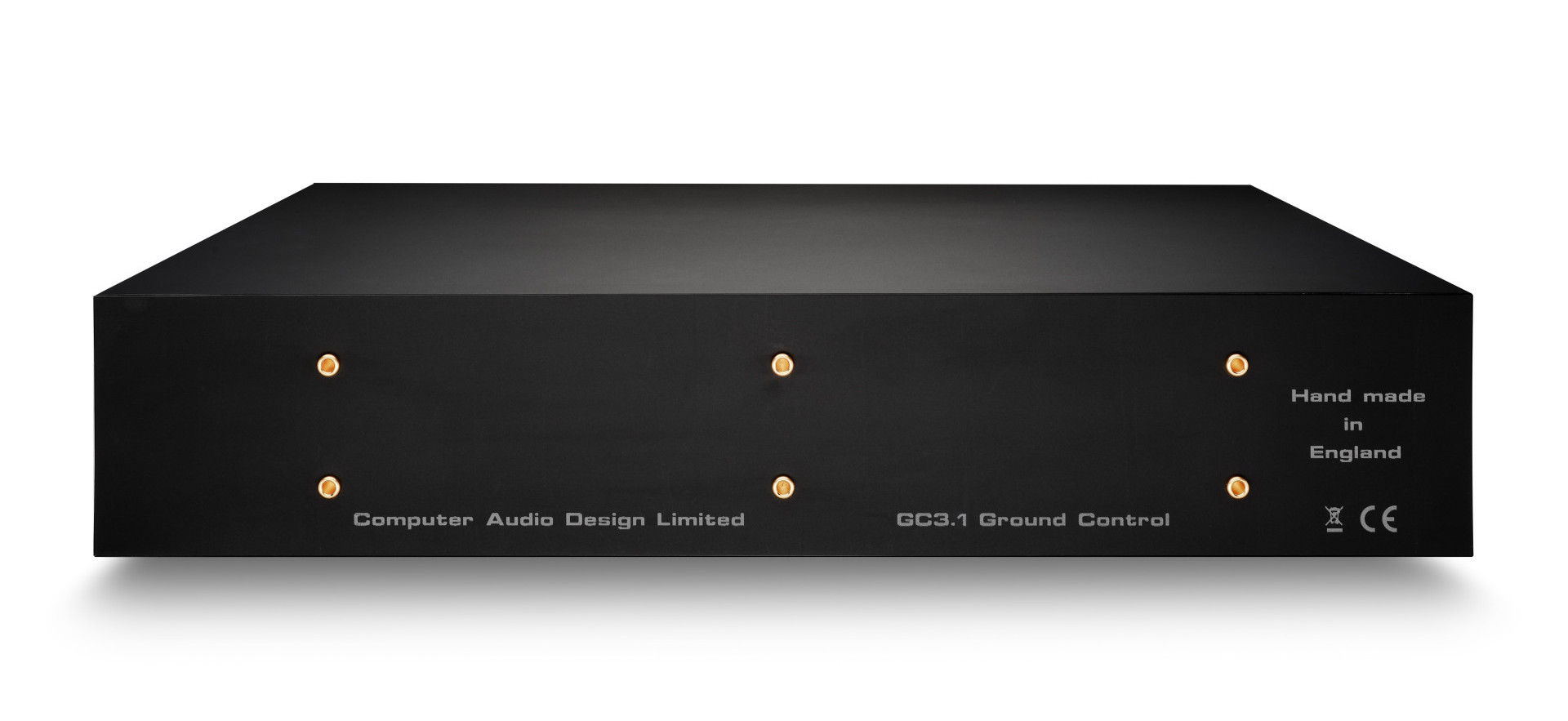
Since it first appeared, the GC-3 has been an ever-present in the shifting system landscape at Gy8. It has subsequently been joined by alternative devices from the likes of Nordost and The Chord Co. and is often used in combination with them. But it’s performance, capacity and sheer practicality has kept it in constant circulation, even as newer and shinier products have come (and gone). Then, a couple of years ago, the GC1 was revised and designated the GC1.1, with a worthwhile uplift in performance. The CAD units had always focussed on absorbing and dissipating the high-frequency noise so damaging to the performance of digital circuitry. The GC1.1 extended both the capacity and the bandwidth of the unit, delivering a more coherent spatial and temporal picture, improved tonal colours and more focussed dynamics. But most importantly of all, the quieter background made for more explicit spaces between notes and more emphatic rhythmic expression. All of which kept the GC1.1 both relevant and competitive in an increasingly crowded market place. So, it was no great surprise when the GC3 also received a makeover, the GC3.1 being the subject of this review.