
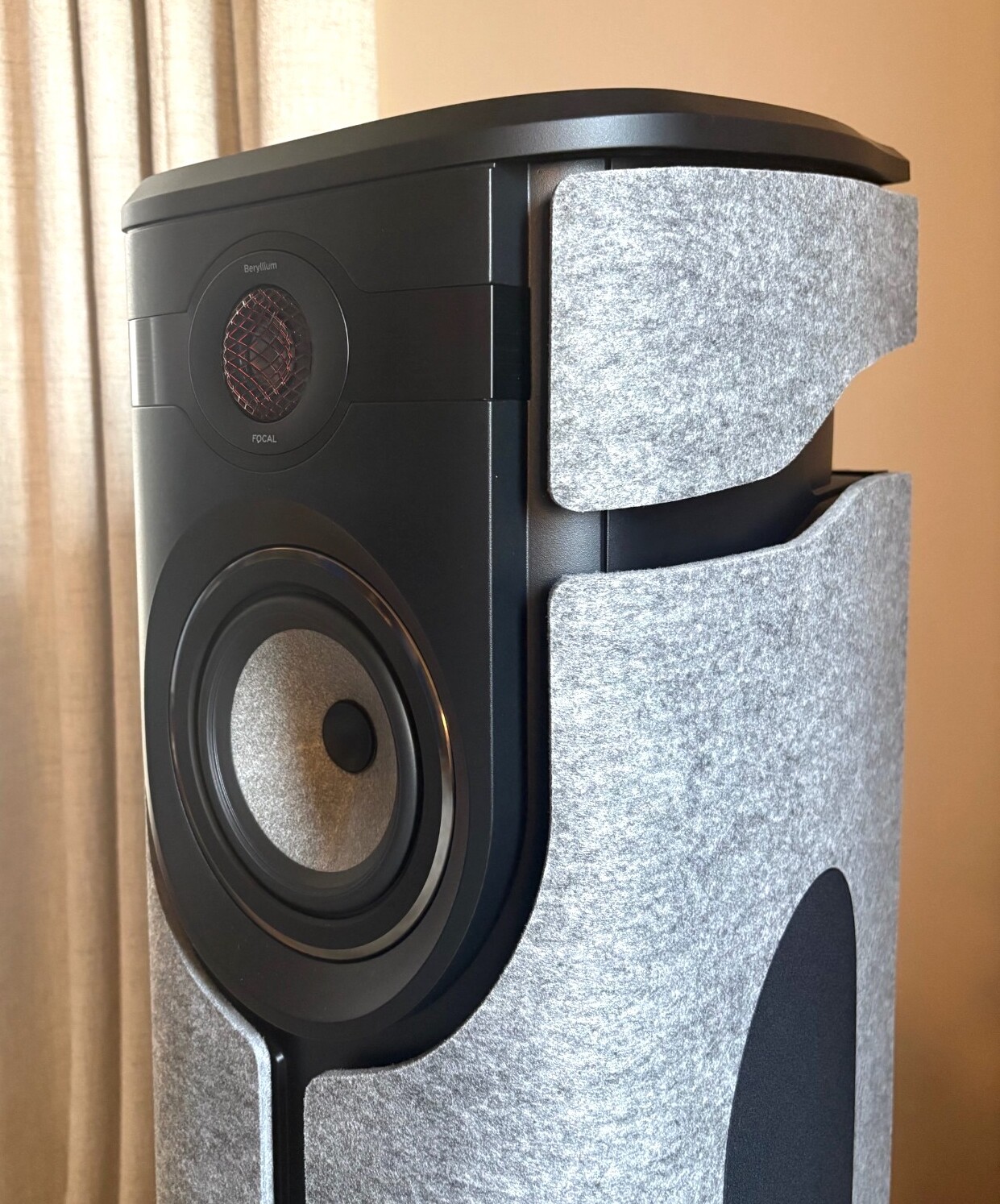
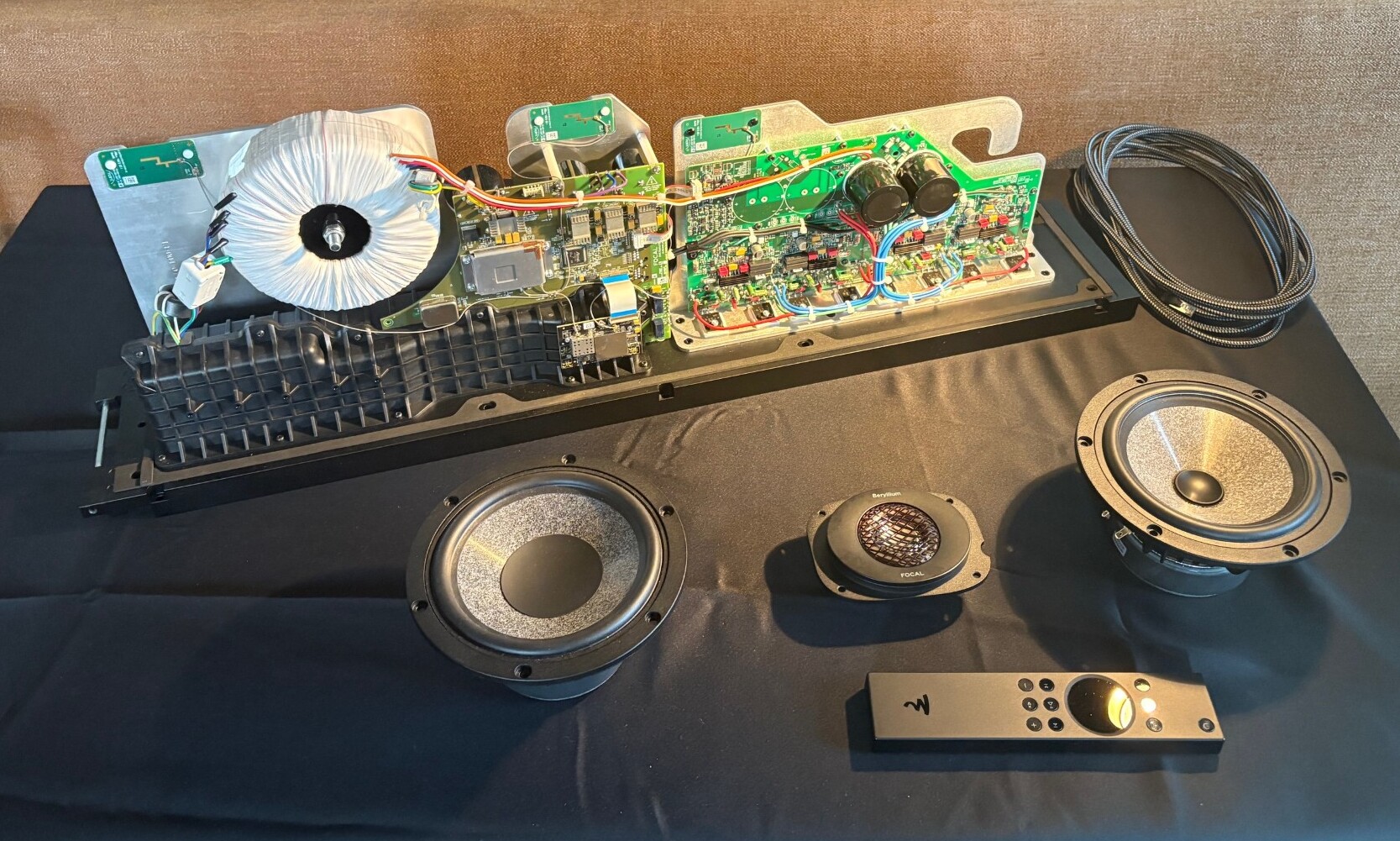
The three-way design employs a total of six separate drivers, a 27mm inverted dome beryllium tweeter, a 165mm midrange driver and four 165mm bass units, arranged in horizontally opposed, force cancelling pairs across the cabinet. These are driven by 75W/ch amplifiers for the mid and treble and a pair of 125W/ch amplifiers for the bass. THe acoustic system offers a bandwidth of 27Hz to 40kHz (±3dB), while its active nature renders issues of load and sensitivity moot. Focal don’t quote a maximum SPL figure, but these speakers go impressively loud, without apparent fear or strain.
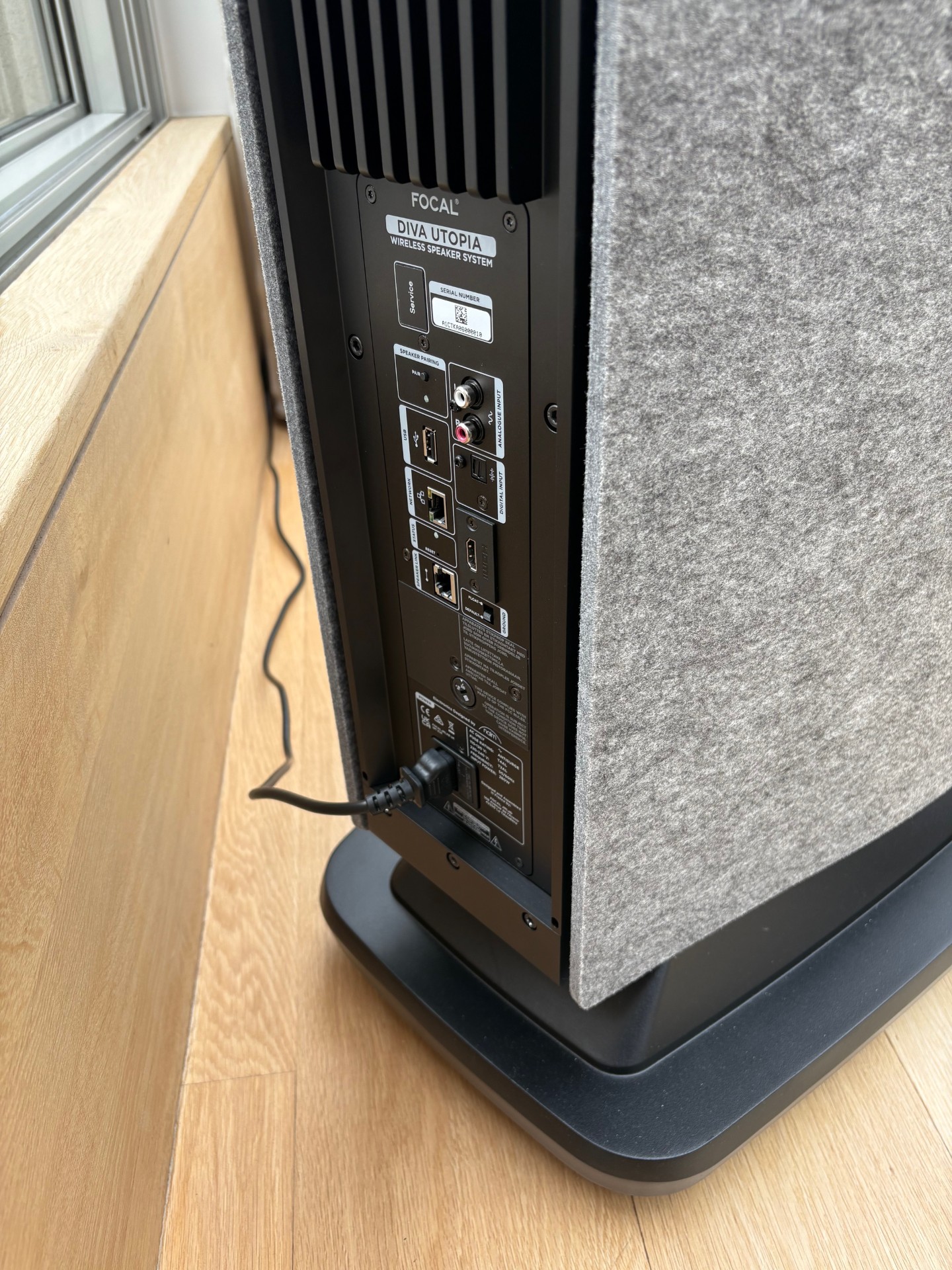
Inputs are located on the rear of the Master speaker (internally shielded from active electronics) and cover all of the usual wireless suspects – AirPlay 2, BlueTooth, Spotify etc – as well as hardwired connections for USB, TosLink, Ethernet and (tellingly) HDMI, as well as a pair of analogue inputs on RCA. It’s a line up that gives the first serious hint as to the Diva’s target customer group. The absence of ‘legacy’ digital inputs demonstrates just how squarely this product is aimed at multi-media, streaming-based systems – whether they’re streaming music, radio or moving images. The one thing I can’t tell you is whether the speaker is Roon Ready or acts as a Roon endpoint. The R-word was absent from both the supplied materials and the presentation. However as the latest Naim Uniti products and streamers are Roon Ready, I suspect the Diva will be certified in due course…
But the real challenge in any system like this is synchronising the digital electronics in the two separate speakers, especially when that digital package includes a DSP crossover, separate DACs for all three amplifier channels and a innovative, proprietary room EQ solution. With all that and a requirement to stream high-res material, the Focal/Naim engineers stepped straight past Bluetooth and other common, wider-band digital transmission solutions, adopting instead UWB (multi-path) transmission, a challenging technology but one that if you can make it work, maintains bandwidth, rejects common interference artefacts and offers exceptional stability. The end result is a wireless transmission system that extends up to 10m and can transfer both data (up to 24bit/96kHz) and the critical clock-synchronisation signal that ensures the two speakers sing in time. In addition, there is the facility to run a high-def cable link on RJ45 connectors, which increases the data capacity to 24/192.
Finally, perhaps the most obvious and talked about feature of the Diva is the finish. Sculpted felt panels are a world away from traditional veneers or automotive paint, but a visit to any Scandi furniture outlet will quickly convince you that the Diva is definitely ‘on trend’. Whether that trend extends to audio components only time will tell, but I learnt long ago not to pre-judge such things…