
Who is JC Gaberel? A highly regarded classical recording engineer who, after a working life spent with major artists and major labels, has decided to devote his time to high-resolution recordings of emerging talent, spread across genres and distributed through high-res streaming platforms and his own Label G. He has also collaborated with Stenheim to create their Acoustic Sessions recordings – a process that led directly to the Alumine 5 Signature. So, with many pleasurable hours spent in the company of both the Alumine 5 and 5SE, I was intrigued to see what changes the Signature revision had wrought – and changes there certainly are. The Signature is – to my ears at least – a very different animal indeed.
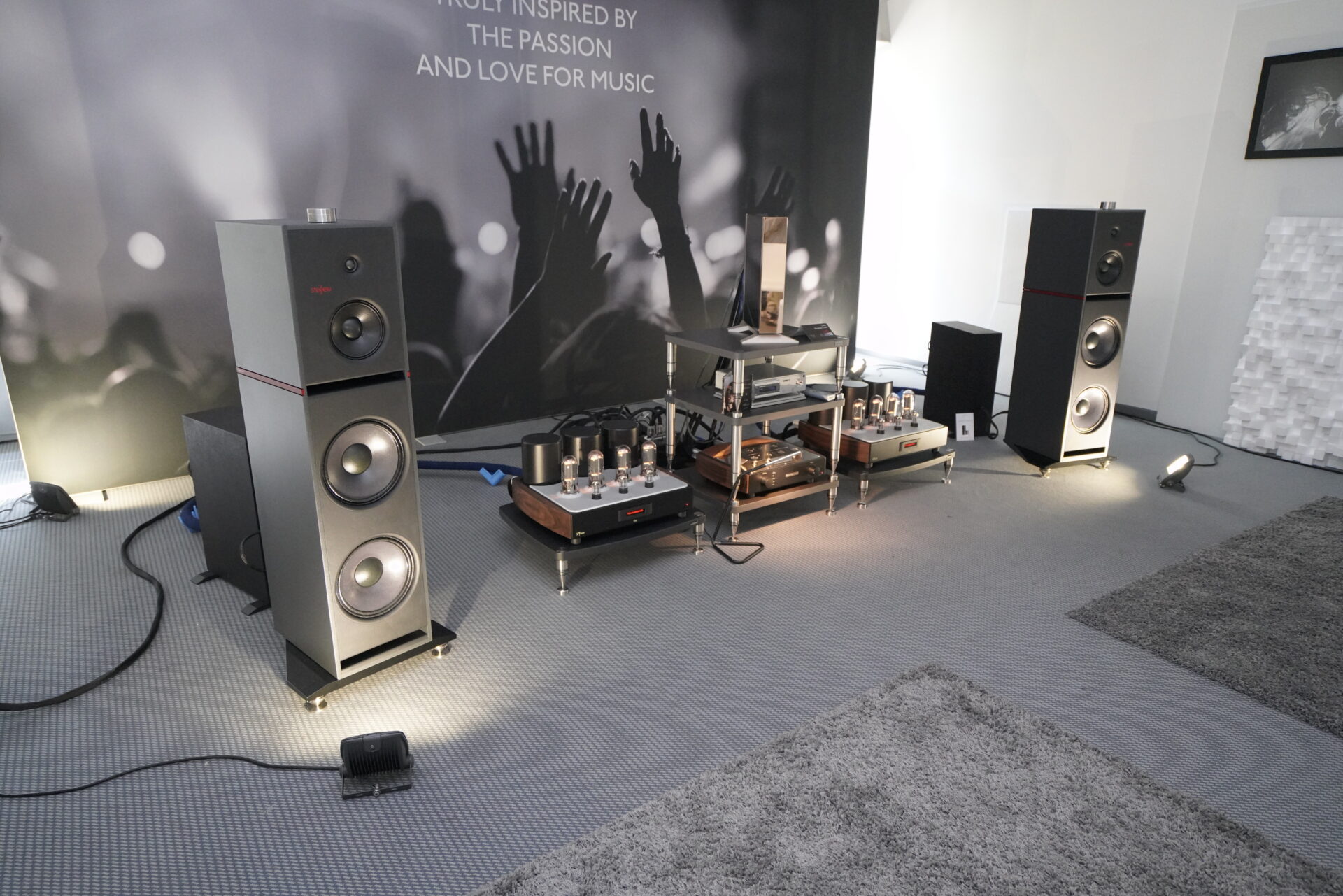
The thing that makes the Alumine 5 and 5SE so enjoyable is the way they combine dynamic freedom and energy in such an organised, expressive and recognisable way. It’s a combination of virtues that reproduces recordings (and the events they record) with a holistic sense of substance, a presence and a purpose that brings them to life. If ever a speaker allowed the music to breathe – to swell, to draw a breath, to pause, to gently exhale or catch its breath in anticipation – then the Alumine 5 is it. Listening to recorded music through the 5s, it is impossible to miss the sense of human agency behind the sound, the creative tension or chemistry in the performance.
But as engaging and enjoyable as the 5 is, it ain’t perfect. All that life and presence is a product of its relative efficiency and easy load. Combine that with its relatively compact dimensions and you don’t need to be Einstein to realise that it isn’t going to trouble the lowest reaches of musical reproduction. Don’t get me wrong – the bass is impressive and impressively effective – but it doesn’t go really, really deep. It’s not demanding of amplifiers per se, but it works a lot better bi-amped – so I guess that just makes it demanding in a different way. Transparency and resolution are good, but can be bettered while the soft-dome tweeter is tonally and dynamically excellent, but lacks the clarity, speed and extension of the best Beryllium units, or the sheer tonal purity of the best diamonds. But with all that taken into consideration, the 5’s overall coherence and expressive range, musical impact and the plain sense it makes of recordings have dealt it a winning hand. As a way of simply enjoying music – rather than just marvelling at its sound – it takes some beating.
So what does the monitoring DNA of the 5 Signature add to the mix – and what gets discarded along the way? Well, the additional quality is easy: in a word, clarity. Put on any familiar recording and the sense of space and separation, transparency and focus is immediately obvious. Playing Rachel Podger’s spirited small-group rendition of Vivaldi’s L’Estro Armonico (Brecon Baroque, Channel Classics CCS SA 36515) is a perfect example, the Alumine 5 Signature effortlessly separating each instrument, defining the space around and between them, capturing the vivid, angular lines of the musical cut and thrust. If you are looking for an argument to support the current flood of and fashion for smaller ensembles playing the Red Priest’s major works, you could do much worse than this. The precision in both the playing and the presentation are impressive – as are the musical results. In many respects it also reflects the speaker’s inherent character, its sense of inner focus.