


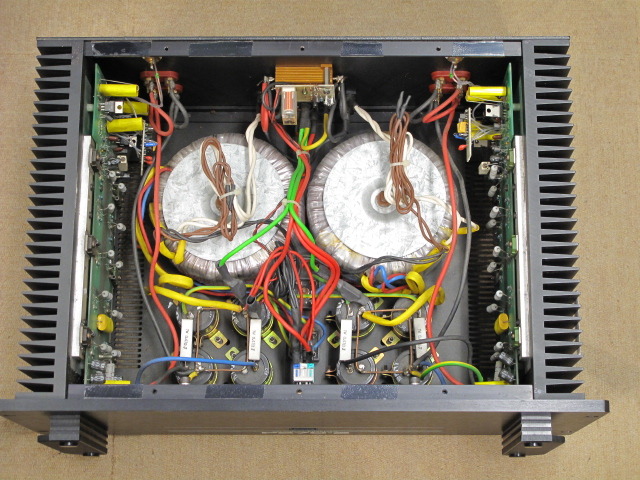
Now, this is a clear case of caveat emptor: purchasers were free to listen and make their own value judgement. Less defensible was the willingness of a slew of reviewers who, once the short-fall in capacitance was pointed out (oddly, nobody seemed to notice the diminished output transistors), all duly trotted out the company line – small caps discharge quicker and sound ‘faster’…
At this point I should also clarify that Musical Fidelity changed hands in 2017, bought by the redoubtable Heinz Lichtenegger and now operated by Audio Tuning – the group that also manufactures ProJect turntables and electronics and which shares none of the policies or practices of the previous ownership.
‘Juicing’ review samples
Back to the automotive industry and another approach that sees parallels in audio manufacturing: ‘juicing’ or breathing on review units. The fixing of emissions testing is an international scandal, fraud that was quite literally on an industrial scale. But on a more mundane level, does anybody believe that a motor manufacturer risks a Friday afternoon car ending up in the hands of a reviewer? You can be sure that any car going for testing or review is gone through with a fine toothcomb before it gets delivered. Does that extend to tuning the engine to extract extra performance? As we know from emissions testing, nothing could be simpler given modern engine management technology. The higher the performance, the more incentive there is to cheat the specs and end up with reports on unrepresentative samples. The same can certainly be true of audio products…
Examples are legion, from units with upgraded or selected components, to ones that run close to destruction for a strictly limited time. Take the case of the sales rep who (having departed his previous employer) confided that in demonstrating their most recent product to dealers, a pair of compact, 50 Watt ‘Class A’ mono-blocs, his samples were biased so high and ran so hot that they offered a safe continuous operating window of around three hours. The strategy was to plug them in and warm them up for half an hour, demonstrate them, make the pitch and unplug them inside of two hours, leaving some margin of safety – although apparently, accidents did happen. The demonstrators were tuned so close to destruction that they literally needed a factory rebuild after every sales call.

But that pales into insignificance when compared to some examples of premeditated deception. In one case, a manufacturer offered stores ‘pre-production’ demonstrators of a budget integrated amp that sounded like a unit costing four times its modest price, encouraging their dealers to start taking pre-orders for what was going to be a seriously ‘hot’ product. And the orders came rolling in. But when the production units started to arrive, some two months later, a number of customers felt that the product they received wasn’t as good as the product that they’d heard demonstrated some weeks before. We went through the normal steps of giving the new unit time to run in and settle down, but one customer in particular was adamant that ‘his’ unit sounded sub-standard, so we invited him to bring it in for a direct comparison against our demonstrator. There was no comparison: the demonstrator absolutely buried the stock unit – and lifting the lid and comparing the internals, it was obvious why, from its selected Sanken output devices and massive, metal housed bridge-rectifier to the larger caps and machine aluminium casework. It sounded like an £800 amp because it was an £800 amp! The stock item boasted wimpy, no-name transistors, reduced capacitance and a plastic rectifier and end plates. The sonic and musical differences were so obvious that the customer was adamant about them despite the two-month time-lag between listening sessions.
Press pass…
We duly flagged up our findings to one of the main audio magazines, then currently reviewing the unit. Their reviewer duly reported – that he’d heard rumours of unrepresentative demonstrators but had investigated, made the comparison and could hear no substantial differences between demonstration and stock units. Meanwhile, those ‘pre-production’ demonstrators were replaced almost overnight with stock units, the product’s stellar reputation having been duly established.