

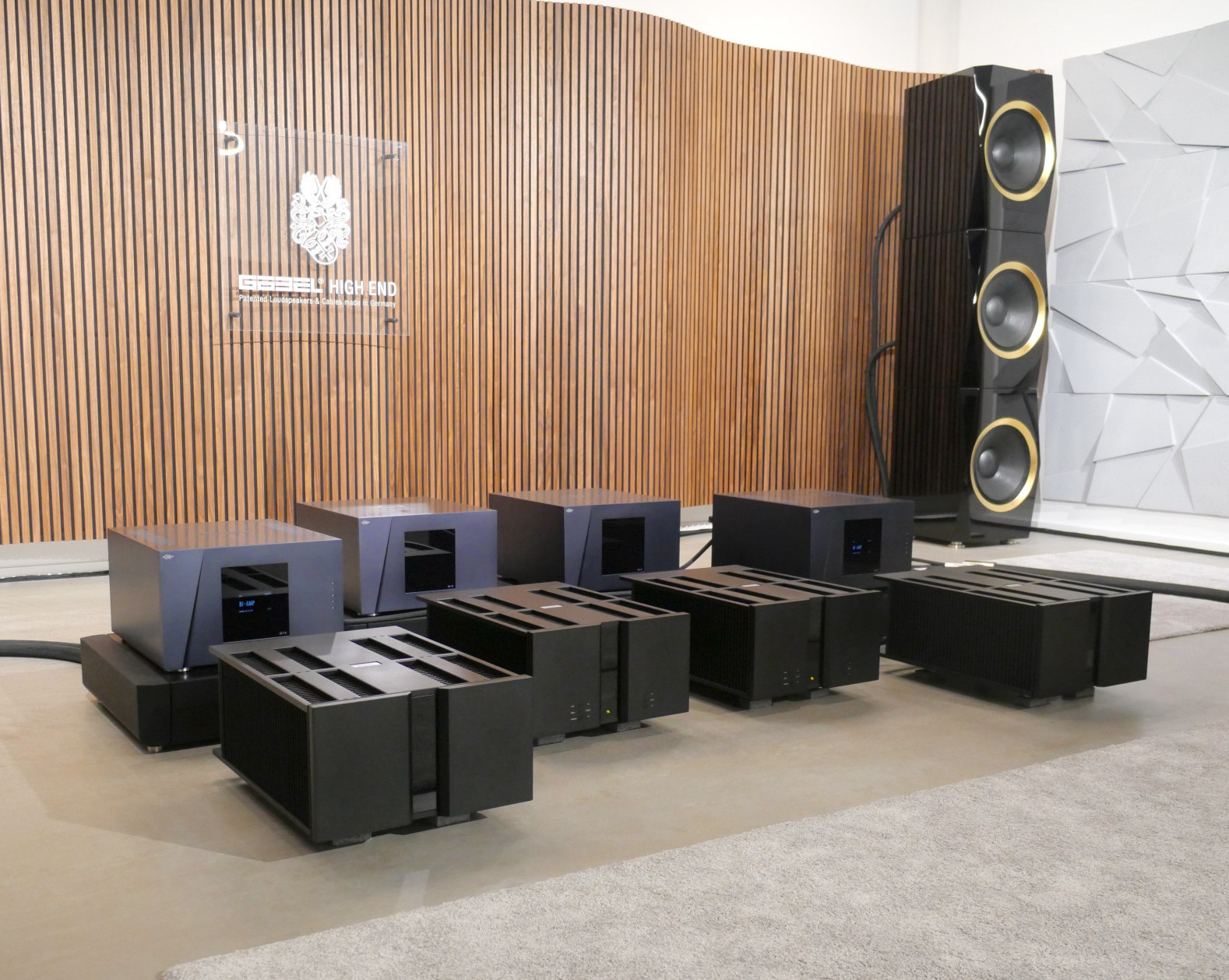
Outwardly, one of the Majestic’s more obvious features is the four reflex ports, arranged symmetrically around the bass drivers. These are deployed to ensure even pressure patterns behind the driver, eliminating any torsional or rocking influence that might push the diaphragm off-centre, something that massively increases distortion levels. The tapered cabinet walls eliminate parallel surfaces and standing waves within the enclosed volume, but internal resonance is cancelled using a sophisticated combination of internally mounted, carefully tuned, Helmholtz resonators and ceramic foam ‘velocity dampers’. The bi-wirable/bi-ampable crossover is isolated in its own chamber, behind the mid and HF units and, as well as all the exhaustively selected expected audiophile grade components, includes impedance compensation that delivers a near flat 4Ω load.
The result is a loudspeaker that not only controls and maximises output from its moving parts, but minimises the influence of its cabinet (or stationary elements) – the latter to a quite remarkable extent. This is a low-loss design approach, minimising both the loss of energy in the system and the loss of information. System sensitivity is 98dB, bandwidth extends down to a -3dB point at 21Hz, while the non-reactive 4Ω load makes the most of the driving amplifier’s output, something that’s further extended by bi-amping. In fact, it could be argued that Göbel are actively courting the displeasure of consumer groups everywhere by describing this as a ‘loud’speaker, when it’s actually a very ‘quiet’speaker indeed: quiet in terms of unwanted acoustic output; quiet in terms of intrusive colouration or spurious energy polluting the signal. Quiet enough to capture the tension and fragile, delicate energy of the top string on a violin. Quiet enough to separate the rattles on Ólafsson a tambourine, the explosive slap on its skin and the air cushion contained within its frame.
Well – if we must…
It’s finally time to give in to our baser instincts. What works for ‘small’ also brings real qualities to ‘large’, and I do mean real. Few systems can match the scale presence and dynamic range of an orchestra, but this Wadax/CH/Göbel set-up gets as close or closer than any I’ve heard. The Batiashvili/Barenboim concert recording of the Tchaikovsky Violin Concerto (UHQ-MQACD, DGG UCCG-41048) is produced with really convincing scale, energy, space and spread. Dynamics swell without constraint, the heavily populated stage appears behind and beyond the speakers, instrumental groups distinct and separate, the soloist focused but not over voiced. This is one of the most convincing orchestral presentations I’ve heard from an audio system. It’s not real – at least not in the sense that you think you are there, at the event – but it lets you know clearly and unequivocally, just what it was like to be there. Has the gap between real and reproduced has never been this short? Not in my experience.
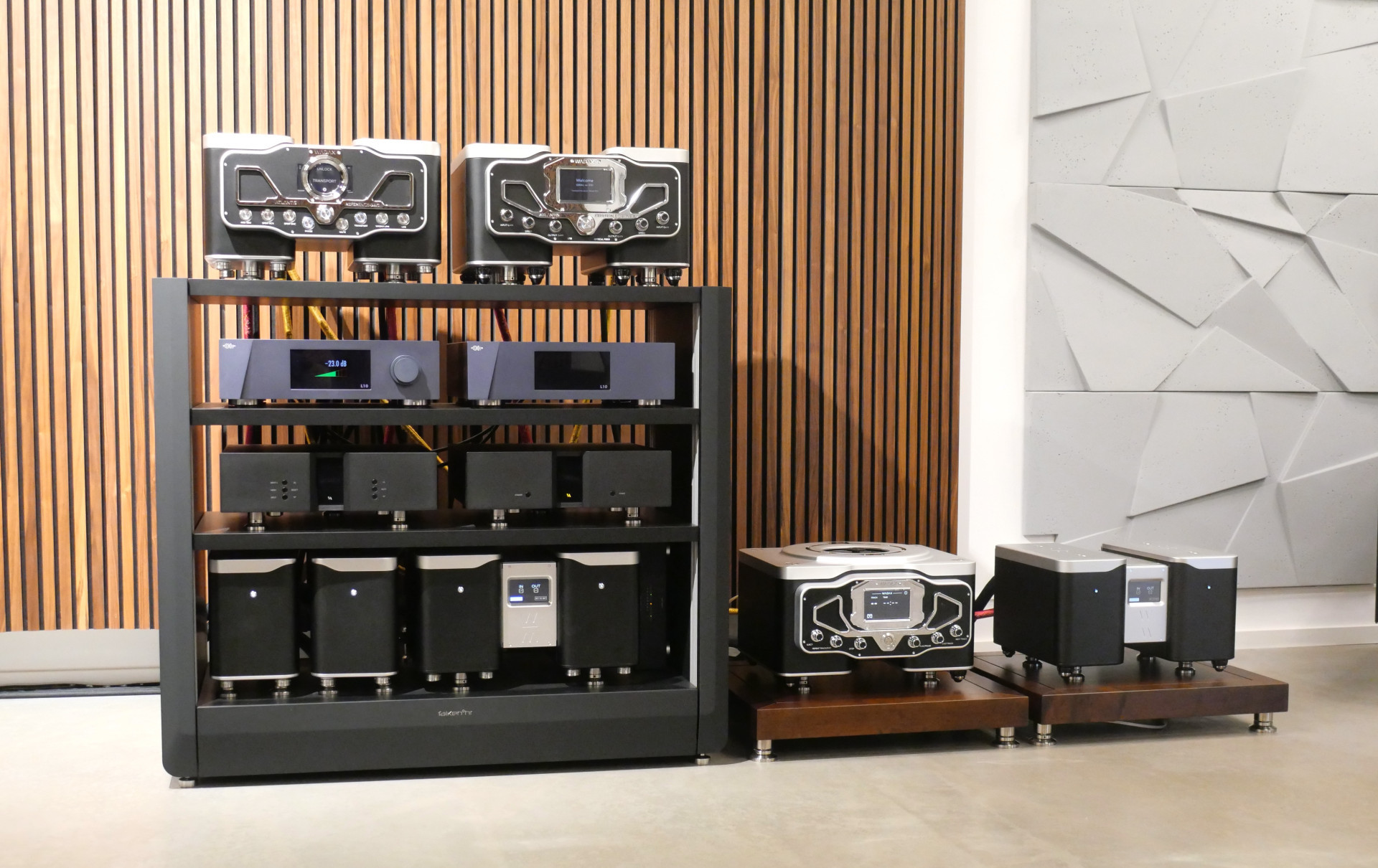
But as engaging, exciting, involving and plain exhilarating as her Tchaikovsky recording is, it’s another Batiashvili performance that really underlines the fundamental musical qualities of this system and these speakers. The recording quality of her Shostokovich Violin Concerto No.1 (with Esa-Pekka Salonen and the Symphonieorchester Des Bayerischen Rundfunks, another UHQCD, DGG UCCG-UCCG-52086) might not match the immediacy, presence and energy of the Tchaikovsky disc, but the scale and demands of the music and the way she responds, put this performance on another level. Ironically, what really underlines the emotional intensity in the playing is the almost tortuously extended solo passages in the Passacaglia, but the balance and communication between soloist and orchestra is just as intimate, the shifts in dynamic level and density, tone and (perhaps most importantly of all) mood, unrolling before you like a musical journey. It’s what I call a 3D experience – but here the dimensions are musical. This system is dynamically coherent, temporally coherent and spatially coherent too. Together those things add up to a remarkable sense of performance, everything in its place, doing what it should, when it should.