
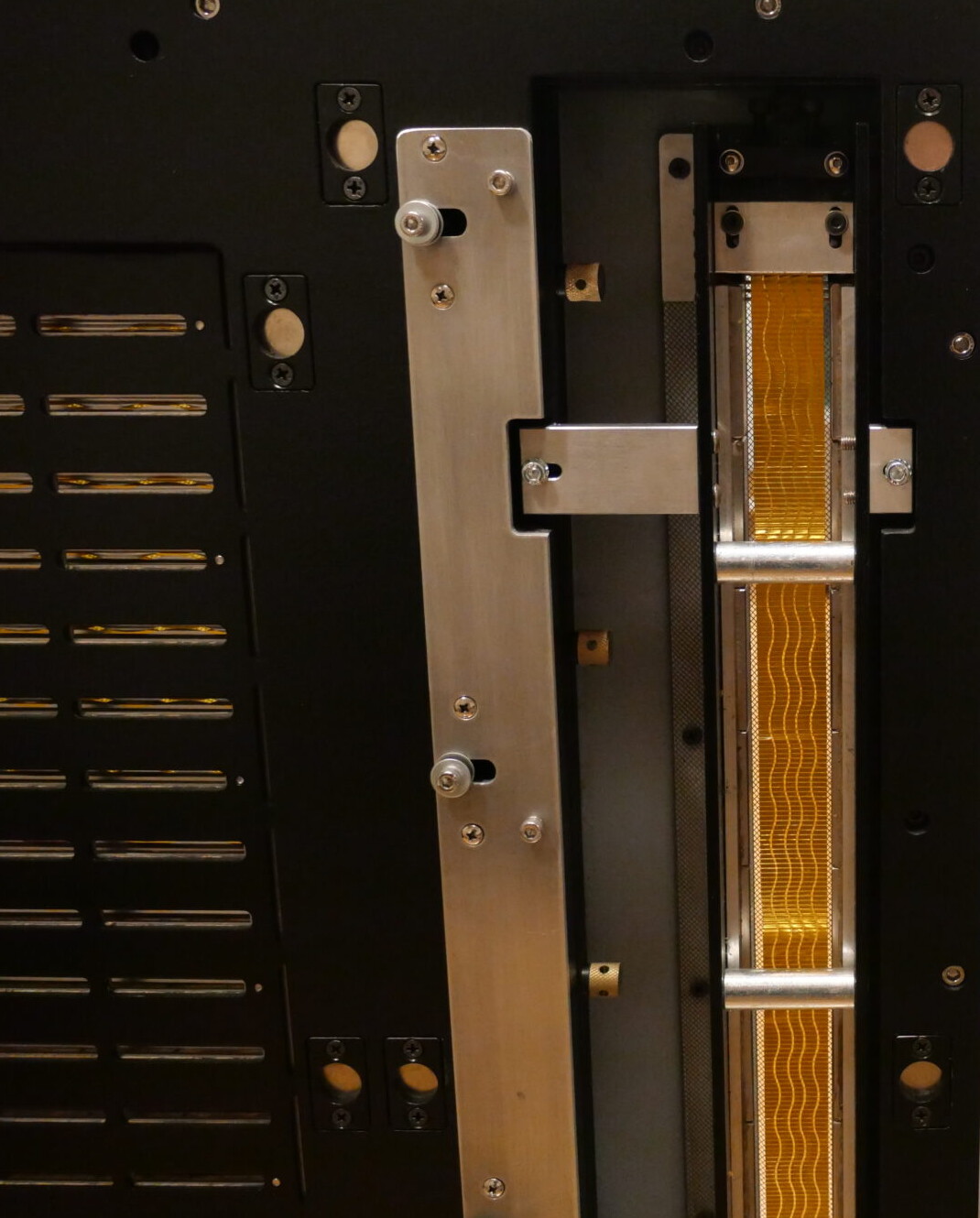
The final angular adjustment is going to be rake angle. Again, with line source drivers, listening axis is super critical. The Minuets, like the Auditoriums, do lean back, but even so I actually ended up with a 5.9degree additional rear tilt in my system and with my listening seat. The complication here is that in adjusting the rake angle, it is essential to maintain exactly the same listening distance – and that means measuring the listening distance at exactly the same height on each speaker. I used the ubiquitous blue painter’s tape to establish an identically positioned ‘target’, adjacent to the tweeter ribbon on each panel, checking rake-angle, listening distance and lateral offset with each adjustment. It’s painstaking, even tedious, but you can clearly hear the benefits once everything is just so.
As always, positioning is a huge part of speaker set up. But there are always other factors to consider when it comes to achieving the best possible system integration and overall performance. With around half the swept area of the Auditorium the Minuet doesn’t enjoy the bigger speaker’s exceptional sensitivity. Clarisys rate the Minuet at 88dB efficiency, with a bandwidth of 28Hz to 20kHz, ±3dB. Although it’s notoriously difficult to measure di-pole output in-room, or compare it meaningfully to the experience and numbers that relate to box speakers, my gut feeling is that they’re not far off. Initially using the same CH Precision M1.1 amplifiers that I used with the Auditoriums, even given the reactive nature of the driven load, it was obvious (and not just from the front panel meters) that the amps were being asked to work considerably harder. So, on that basis, it’s hardly surprising that even the briefest experiment confirms that the Minuet, more-so even than the Auditorium, really benefits from bi-amping. If you can’t manage four channels of output power immediately, at least go as far as bi-wiring. But if you want to get the best out of your expensive speakers, plan on adding a second amp (or pair of amps) as soon as practically possible.
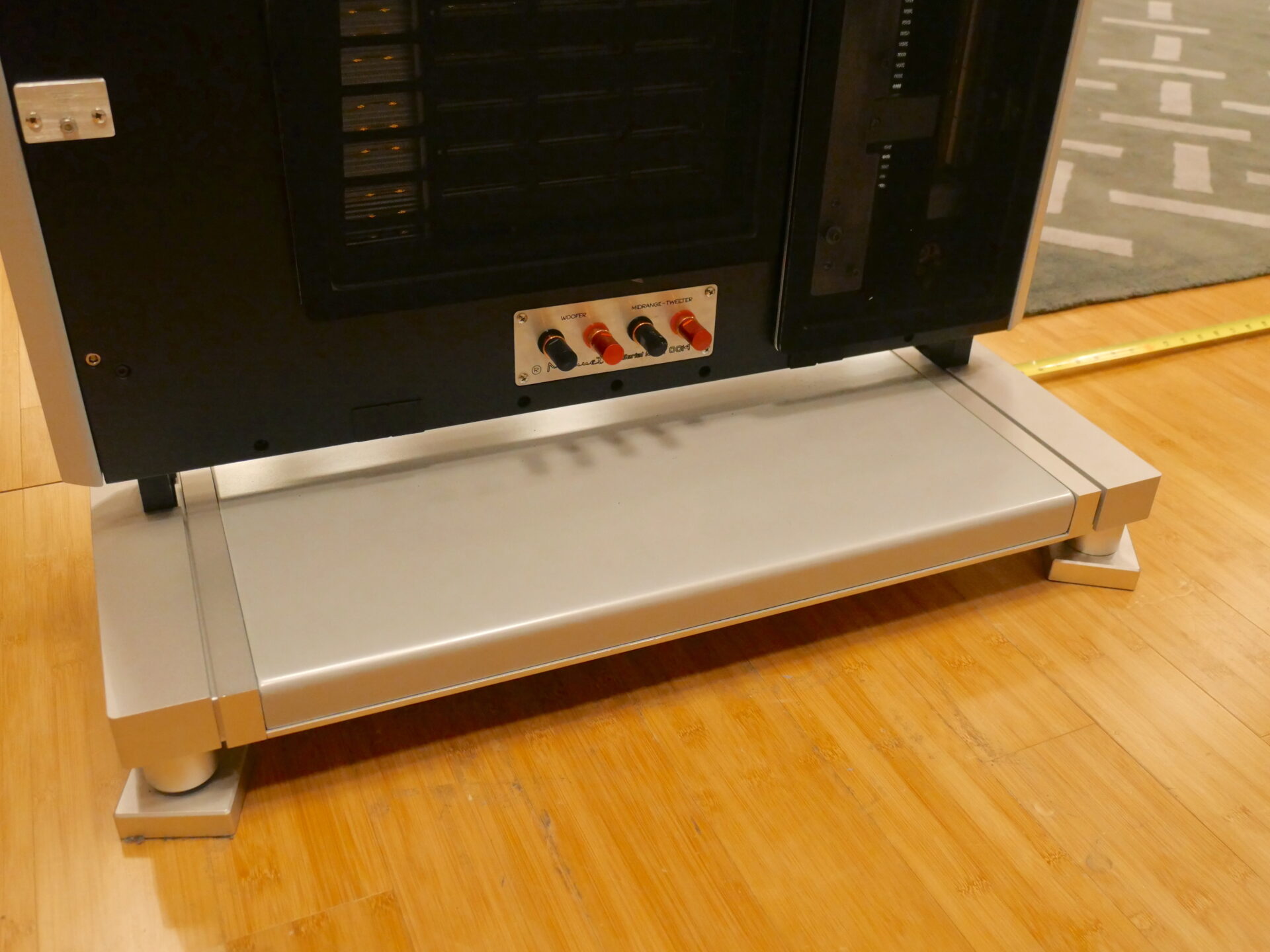
A second major difference between the two speakers relates to the location/installation of the crossover. Each Auditorium houses its three-way crossover in a separate, external enclosure. The Minuet’s crossover is built into the structure of the speaker itself, with bi-wire terminals located at the rear centre of each panel. While separate crossover cabinets are doubtless a good thing, there’s no getting away from the fact that an internal crossover is a whole lot neater. But, unless you think ahead, it could come with a hidden cost. One significant benefit of the Auditorium’s external network is that it can be easily replaced with an active crossover (Clarisys recommend models from CS Port or Accuphase) with a significant step up in performance. You don’t get that option with the Minuet – unless you plan for it. If you request them when ordering the speaker, Clarisys will fit an additional set of parallel, non-filtered binding posts to allow later, active operation. It’s a cost option, but one that you should definitely take.