
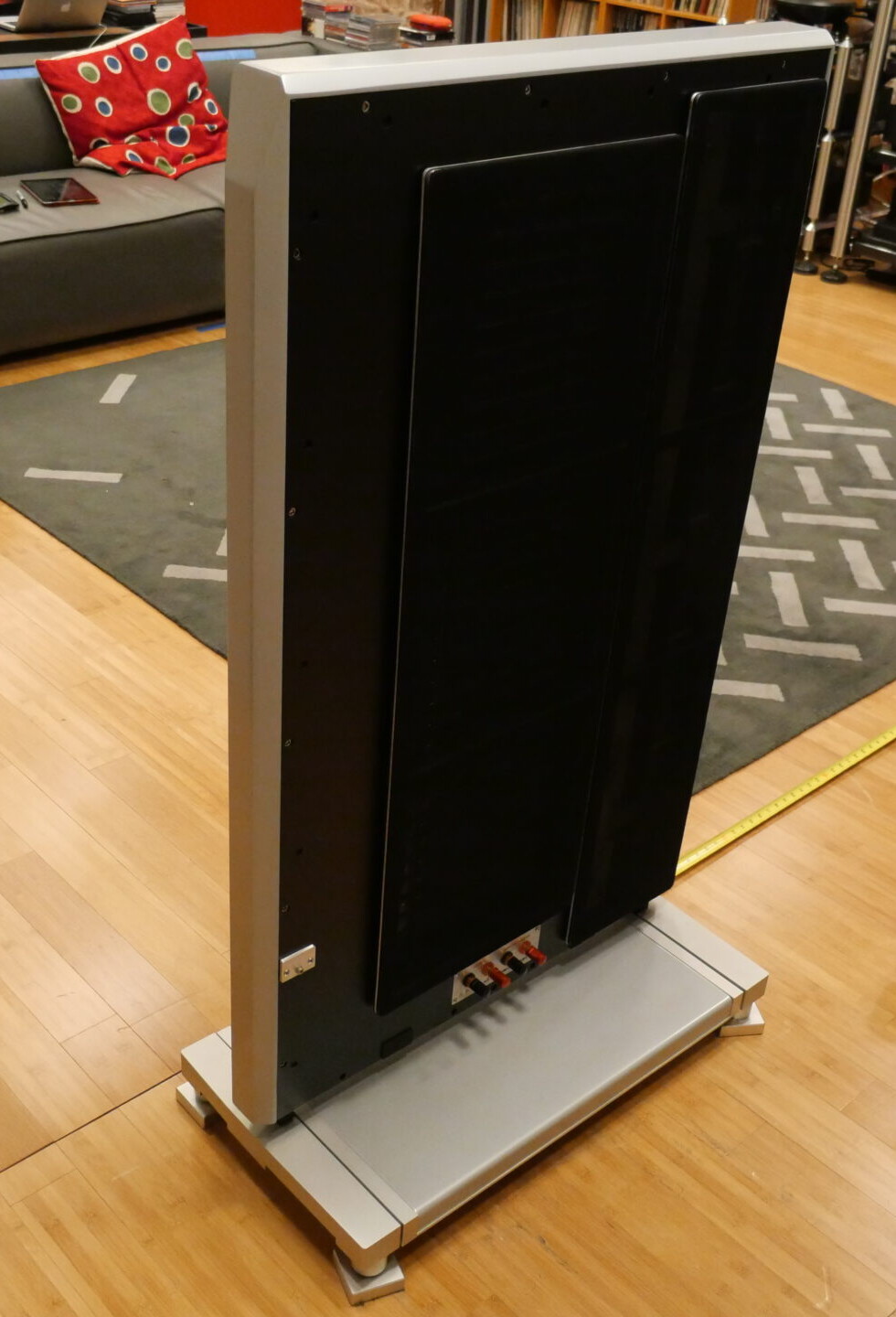
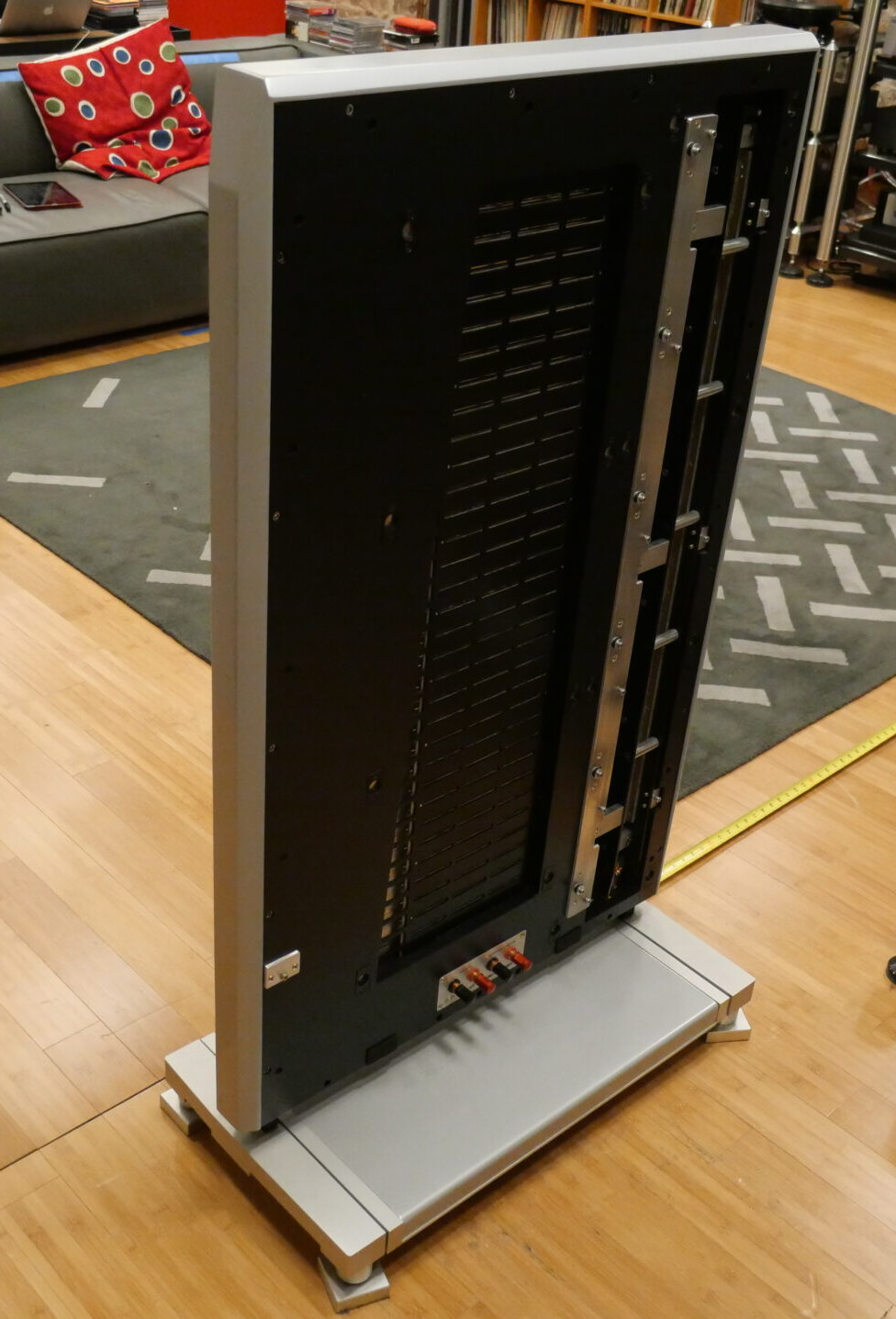
One thing I wasn’t expecting was the sonic and musical impact of the rear grilles. Beautifully constructed from thin material stretched over substantial frames and magnetically attached, the Minuet has separate grilles to protect the rear faces of the two drivers. With the grilles in place the sound has a warmth and rounded dimensionality that complements the expansive and spatially coherent soundstage. But remove the grilles and the sound sharpens up significantly, becoming quicker, more focussed and more immediate. It gains transparency and a sense of rhythmic snap that adds pace and timing to the music. The intra-instrumental spaces become cleaner and ‘blacker’ with less grain. The soundstage retains its width, but loses some depth, although the space and distance between players is more clearly defined. It’s not a subtle difference, although it’s also not a difference I noted on the Auditorium. Maybe that speaker’s sensitivity overcame (or at least rendered less obvious) the slight damping effect of the grilles – or maybe I just missed it. Either way, it’s a big enough difference on the Minuet to warrant a conscious decision. While I certainly enjoyed the classically expansive staging with the grilles in situ, at least with the CH amps, I preferred the clarity, immediacy and explicit rhythms and pace with them removed. Whether that holds true with other amps remains to be seen, but with the distinctly different S-400 and Berning Quadrature-Zs waiting in the wings, I’ll be investigating in the full review.
With all the details attended to, the Minuets deliver a remarkably wide listening window, maintaining a natural perspective across the entire listening sofa. Central seating still wins out, but the stage stays stable and spatially coherent for adjacent listeners too. If any speaker really brings home the fact that when setting up, it’s the relationship between the speakers as much as the relationship between the speakers and the room, then this is it. Fortunately, the Minuets are transparent enough that the musical influence of even small shifts is readily apparent. But the key to getting both speakers really pulling together lies in precise attitudinal adjustment. You will need both the best tools and the patience to achieve results that reflect what these speakers are actually capable of. Just rest assured – it will be worth the effort.
n. clarisysaudioglobal.com