
Released into the wild, the unit offers a standard, bent-metal chassis coupled to an attractive ‘flying’ acrylic front panel. With a single central push or turn selector knob, this fascia is at the heart of the distinctive Advance Paris brand identity. Switch the amplifier on and it lights up with a pair of bright blue (distinctly McIntosh-esque) VU meters that flank a central pair of glowing tubes. That’s right – the A10 Classic is a hybrid amplifier, with a couple of ECC81s at the front-end, coupled to a variable bias, solid-state output stage that kicks out a healthy 130 W/ch of Class A/B power into an 8Ω load, 190 W/Ch into 4Ω. A small switch on the rear allows you to select the high-bias mode, which keeps the first Watt or so firmly in Class A. Those numbers might not be the stuff of high-end audio fantasy, but they are serious enough in the real-world, especially given the increasing number of moderately efficient speaker options that exist these days. In a true blast from the past, there are binding posts to connect and switch between two sets of speakers and menu-driven tone controls.
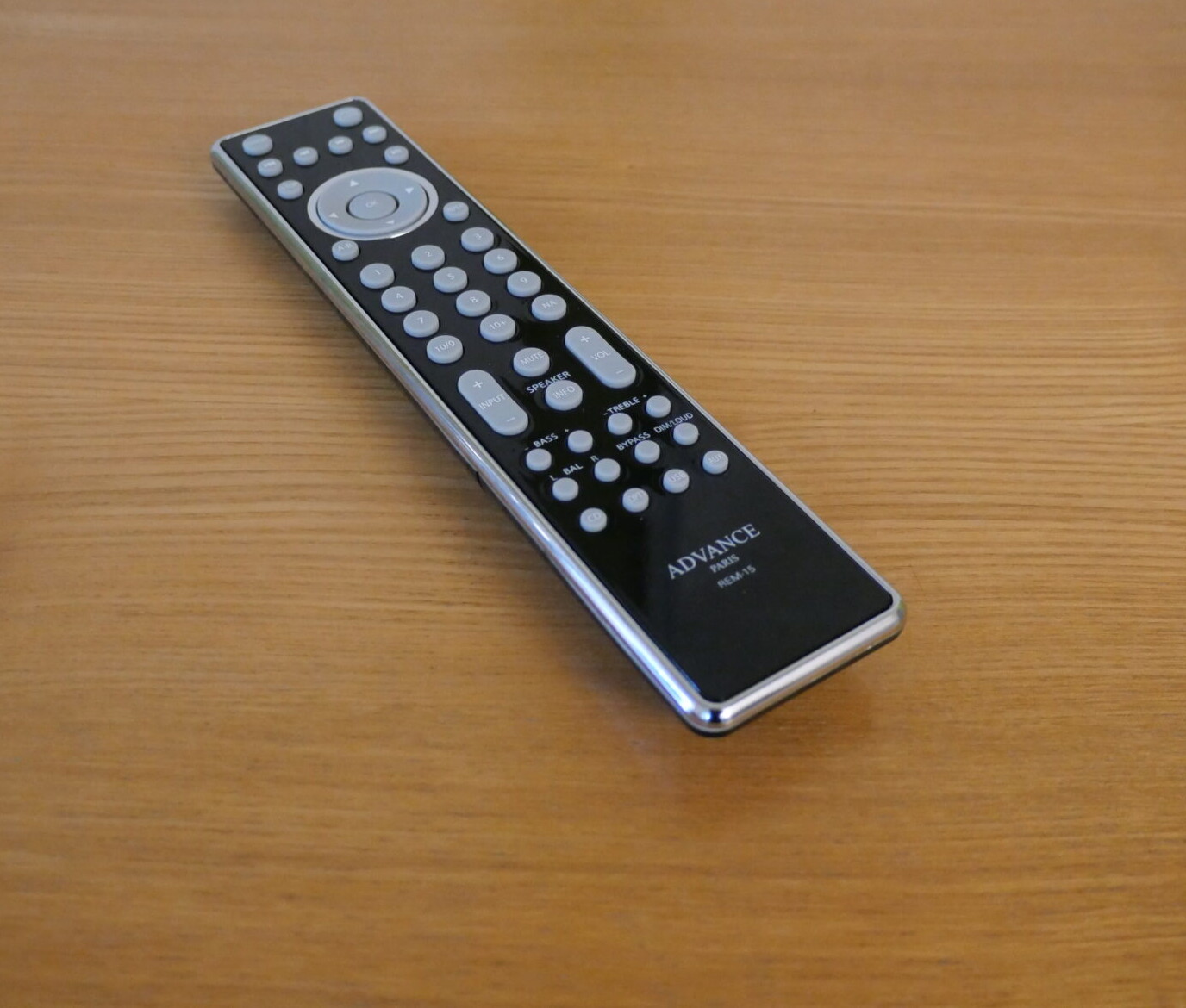
With the question of amplification duly dealt with, it’s time to look at the input options and versatility on offer. The front-panel is virtually devoid of controls. There’s the multi-function rotary knob (which as the name suggests, covers a lot of bases, including volume control, source select and menu navigation), a standby switch and a headphone socket. Apart from that, all you get is LEDs to indicate the high-bias setting and left or right channel protection, along with an input and volume readout. Everything else is accessed via the menus or the full function button-riddled remote. That allows you to control all of the top-line functionality of the A10, plus giving you direct access to things like the tone controls and loudness facility. You can even switch off the standby LED when the unit is running, or dim those (undeniably slightly garish) meters. But it’s around the back that stuff gets busy…
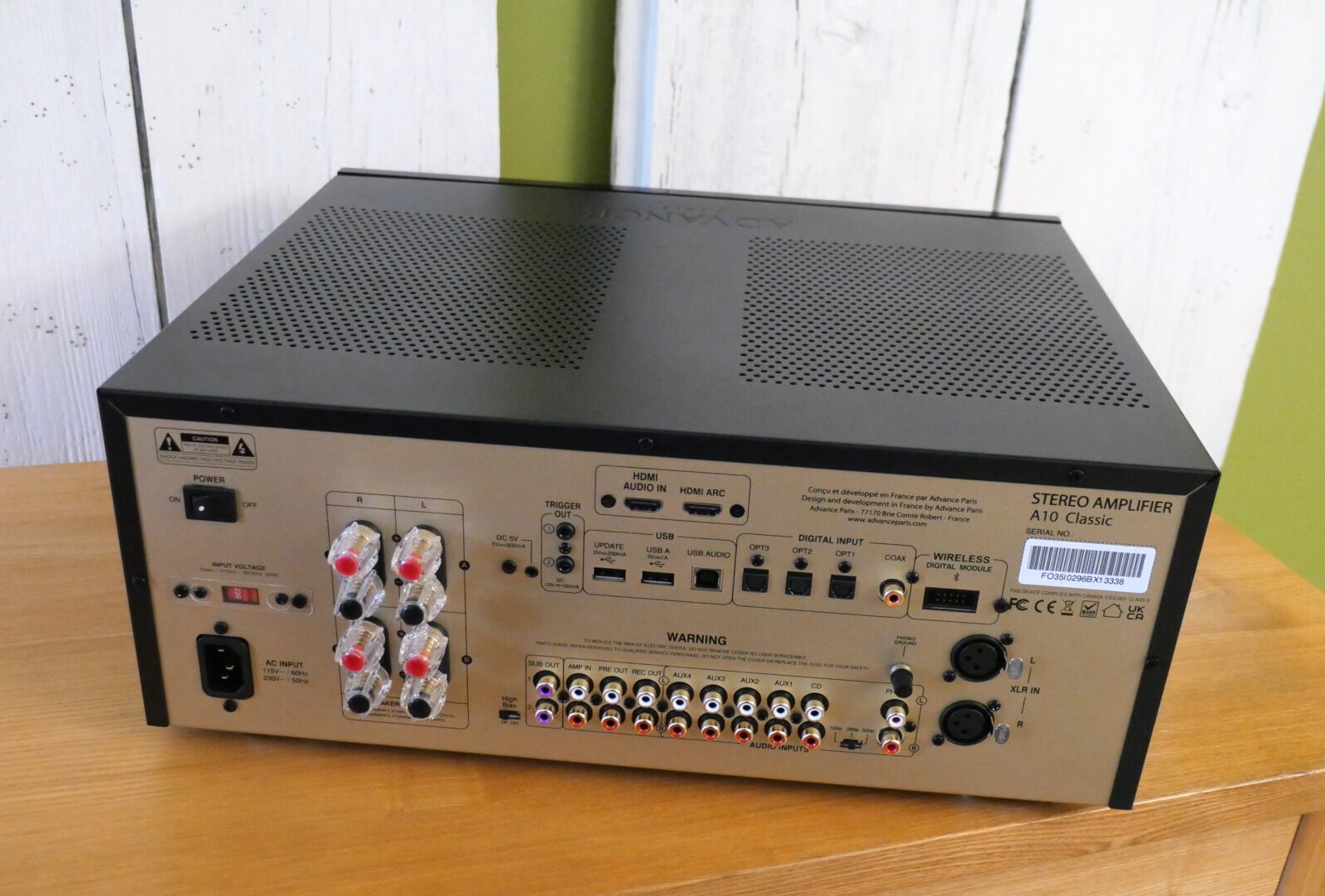
The A10 Classic offers extravagant analogue connectivity, with one set of balanced XLR line inputs, five single-ended RCA line-inputs and a moving-magnet phono input (with three capacitance settings). It also offers a pre-amp output, an amplifier input, a record and a pair of sub-woofer outputs. The internal DAC will accept USB A and B digital audio connections, an S/PDIF input on RCA, three TosLink inputs and HDMI inputs for A/V or audio sources. Additionally, there’s a USB input for software updates and a multi-pin connector for the company’s range of external accessories/add-ons.
I can hear the outraged screams from here! “What – no ethernet connection or network replay capability?” That’s actually one of the things that really attracted me to the A10 Classic: not the absence of the ethernet connectivity or BlueTooth functionality, but the fact that users can select the facilities they need as and when they want them. Advance Paris offers a range of optional plug-in or free-standing options that will add wireless/streaming connectivity (from €99) or combine that with network connectivity and a choice of digital or analogue connection to the main unit (up to €400, depending on the unit you choose). Price-wise, that compares very favourably with the stand-alone streaming options that are out there and I’m all in favour of keeping network circuitry and connections as far from my main DAC and analogue circuitry as possible.