
That was the first indicator of the increased clarity, separation and dynamic definition that the SX foot brings to the speaker. But the easier set-up is not to be sniffed at either. Using the pair of T-bars to adjust both spikes on a face simultaneously makes the job significantly easier, while (once lubricated) the large diameter spikes move smoothly and precisely, making tiny, incremental changes as easy to execute as the new base makes them to hear. My only complaint is the absence of locking rings to really fix speaker alignment. I know the spikes are really big, with fine threads and that that combined with the sheer weight of the speaker should ensure that they stay put, but I’d feel much happier if they could be secured in place. Slim rings with pry-bar ports to lock the spikes from below would be easy to execute, easy to use and invisible…
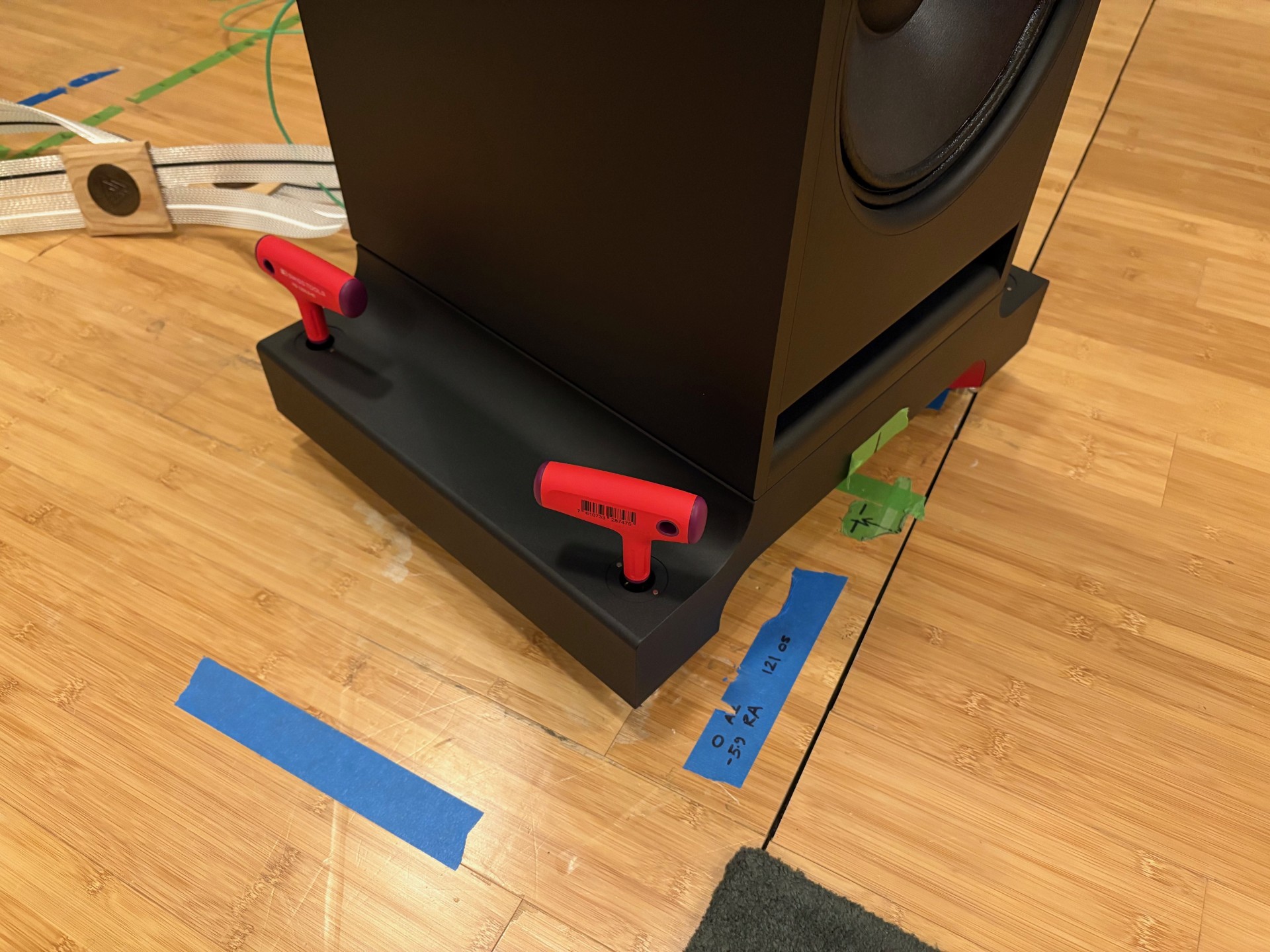
Adding the SX base to the A5 doesn’t so much create a new speaker as build substantially on the original’s already impressive performance. The heavyweight foot adds extension, clarity and transparency to the lower registers – with a commensurate knock-on effect across the rest of the range. The soundstage is more expansive, transparent, focussed, dimensional and stable. Instrumental body and texture improves, as does the precision in the playing and the sense of ensemble, the latter reflecting far clearer dynamic distinctions. The A5-SX maps both a player’s tiny shifts in level and the differences between their instrument and others, with an ease and confidence that adds enormously to the sense of real instruments in a real space: a space that you are included in. The ‘big foot’ allows you to hear further into the acoustic space, a space peopled by far more convincingly presented and spaced images and instruments.
Musically these are far from subtle changes. The SX base brings real presence and immediacy to performances. Playing the recent Hyperion LP re-issue of Steven Isserlis performing the Walton Cello Concerto (with Paavo Järvi and the Philharmonia – Hyperion LPA 68077) the solo instrument is better defined, more dimensional, with a greater sense of body and bowing, the poised, measured lyricism of Isserlis’s playing brought to life and to the fore. Behind the soloist, the open transparency of the soundstage, the tonal textures and identities of strings and woodwinds and the subtle bass underpinnings produce a real sense of presence, occasion and drama. It makes a fascinating contrast with Piatigorsky’s more sweeping, romantic reading with Munch and the BSO (RCA SB-6676, an early UK pressing and replayed with Decca EQ). Despite the work being written for the Russian soloist, there’s an unquestionably ‘English’ quality to the slightly reserved Isserlis performance. It’s far better suited to the Walton than the Elgar that’s on the other side of the record. It’s also a quality that blooms to its full lyrical beauty thanks to the relaxed clarity and easy precision of the A5-SX. The speakers manage to be open, clean and transparent without ever sounding pinched or lean.