
A new, all-analogue release from Deutsche Grammophon.
By Roy Gregory
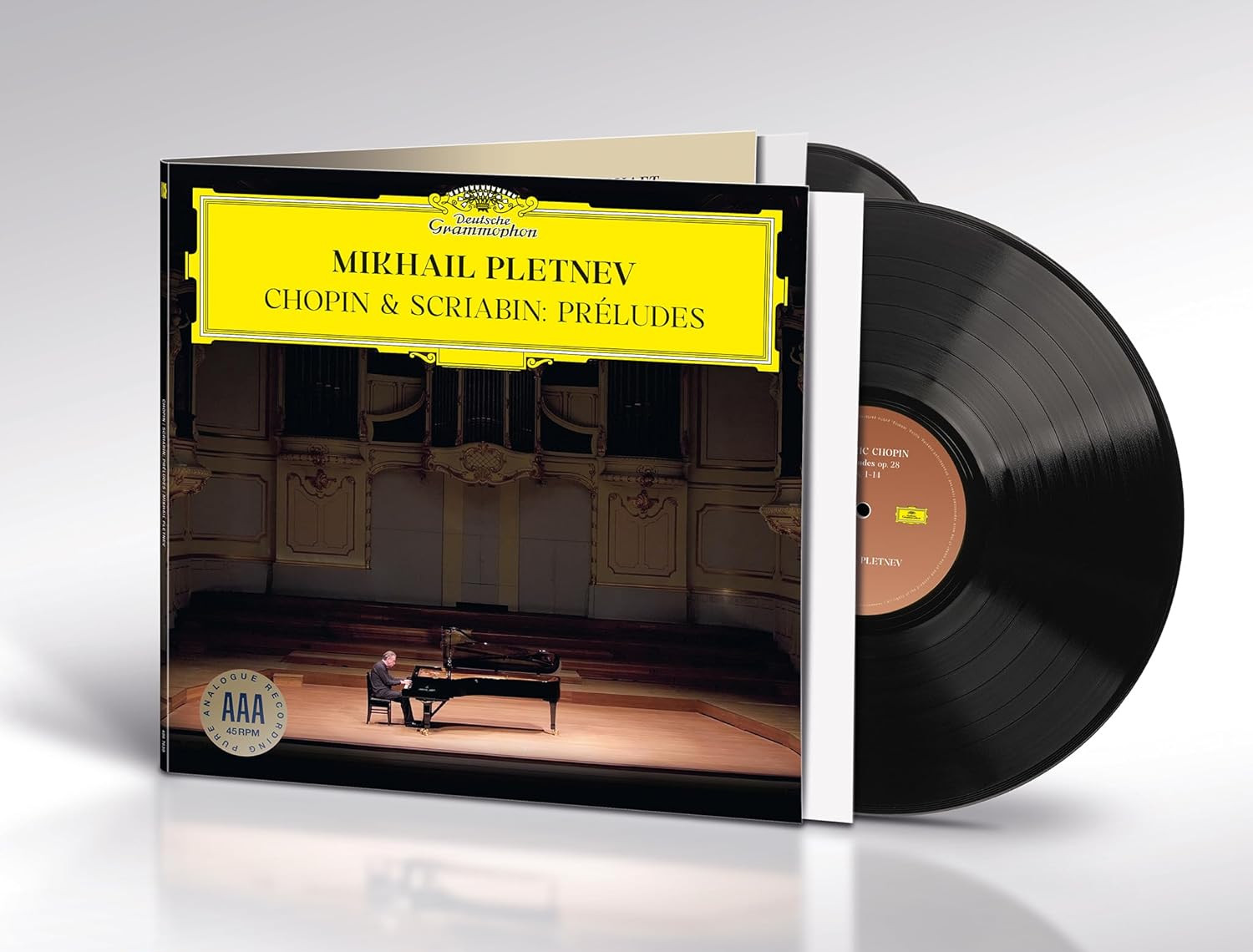
Deutsche Grammophon, doyenne of classical recordings was the first major label to abandon analogue and, quickly thereafter vinyl, in favour of the newly arrived CD. So, perhaps it’s ironic that DGG has been at the forefront of the classical record revival, at least as far as major labels are concerned. Starting with vinyl releases of mainstream digital recordings, they soon followed that with the Original Source analogue re-issue series and now, they’ve come full-circle with their latest release, an all-analogue recording pressed on 180g vinyl. Along the way, they’ve dabbled with ‘special’ pressings, issuing official ‘white label’ discs (at considerable additional cost) and more interestingly, with clear vinyl releases, records that sound so much better than stock black pressings that you wonder why, given the marginal cost increase, they don’t simply adopt it as a standard. For this latest, all analogue issue, they’ve sadly eschewed clear vinyl, in favour of a double 45RPM format. Whilst I applaud their spirit of adventure, I do wish they’d learn their lessons, draw some conclusions and proceed accordingly…

It’s no coincidence that many of their best sounding and most successful vinyl releases have featured piano recordings. Their roster of piano talent is astonishing, including: Daniil Trifonov, Víkingur Ólafsson, Martha Argerich and Kristian Zimerman (not to mention the late Sviatoslav Richter and Maurizio Pollini). Then there’s the dubious pleasures of Alice Sara Ott, Yuja Wang and Hélène Grimaud, while Lang Lang heads up a whole slew of Oriental talent, including Bruce Liu and Nobuyuki Tsujii. But for this foray into the all-analogue realm, they’ve chosen the great Mikhail Pletnev, playing Chopin and Scriabin Préludes. It makes for an enticing proposition, the more so because it was immediately preceded by current rising star Ólafsson’s Opus 109, available on clear vinyl. That in turn followed on from his ground-breaking Debussy-Rameau (DGG 483 8283), his Goldbergs (DGG 486 4559) and the sublime Continuum (DGG 28948660735), all essential purchases. As a direct comparison of the current state of piano recording, young(ish) buck captured on modern digital and pressed on clear vinyl, against respecter elder-statesman, recorded in analogue and pressed on black, 45RPM discs, it’s irresistible.

I started by listening to Debussy-Rameau to set the benchmark, with its lucid, fluid and immediate presentation. It’s just as captivating now as it was on release. But moving on to the clear vinyl pressing of Opus 109, a recording made in the same venue, by the same team, the superiority of the record was clear. The playing is redolent with all Ólafsson’s thoughtful spacing, fluid phrasing, delicate precision, control of note-weight, attack and pace, but the quiet surface and lack of grain, the added transparency and immediacy that come with clear vinyl certainly elevate the listening experience. Also characteristic is the distinct personality he brings to his performances and readings. I particularly enjoy his performance of Beethoven’s Sonata No.30, the eponymous Opus 109. It’s deeply introspective approach might lack the beautifully balanced intensity of Brendel or the holistic quality and technical mastery of Pollini, but it stands as a fascinating alternative to those towering performances. Others will doubtless have their own views, but the sheer quality, crisp clarity, attack, weight and dynamic scaling of the recording is undeniably impressive, present and convincing – helped in no small part by the tonal purity, extended harmonics and absence of grain that are markers of the translucent pressing, itself such a visual metaphor for its musical virtues. The life-size, fully dimensional image captures the scale and complexity of the instrument beautifully, building on the already excellent sonic standard set by those earlier discs mentioned above. Opus 109 is a hard act to follow – in every sense…