
Canary in the cable coalmine…
By Roy Gregory
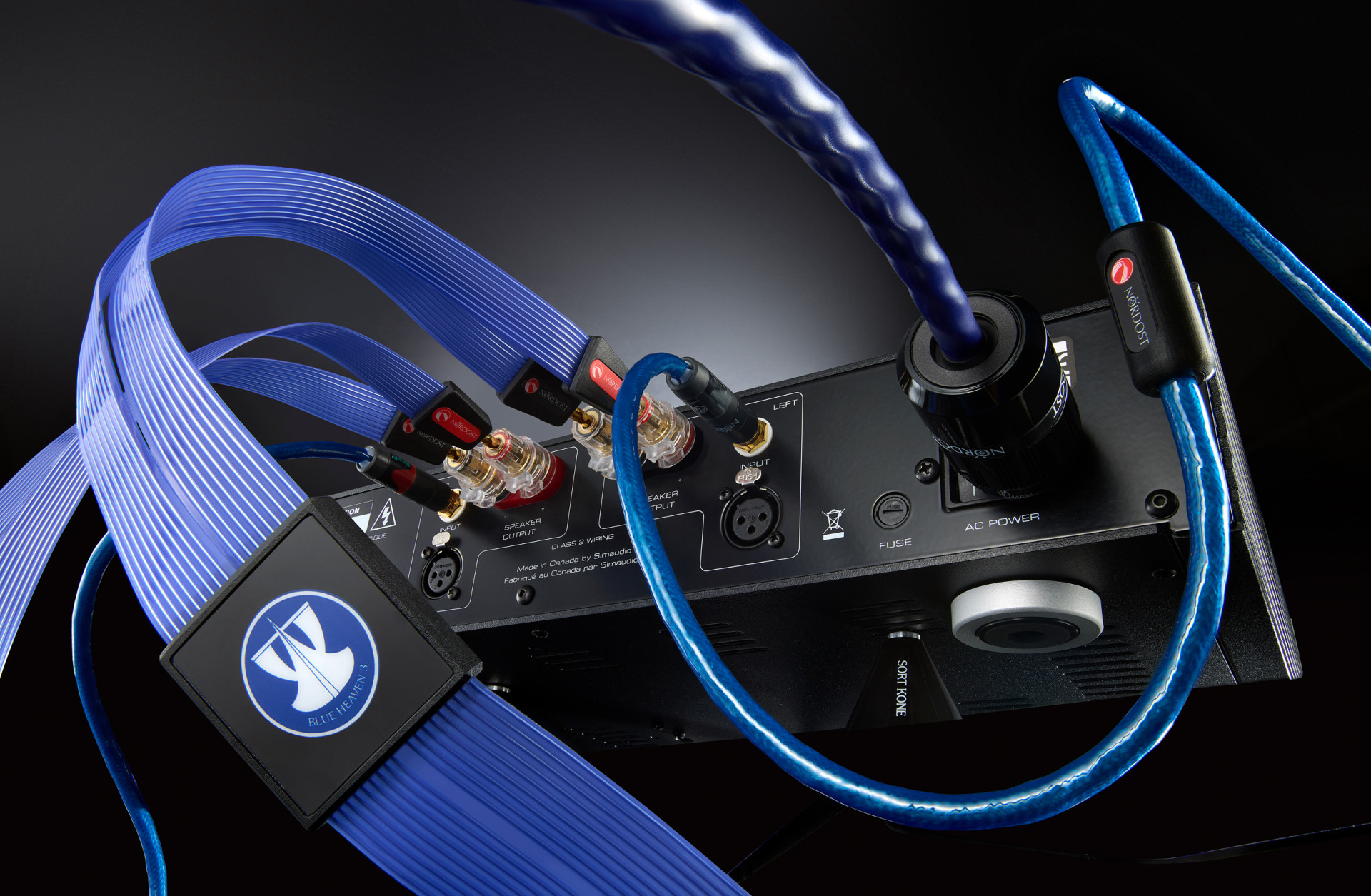
Despite significant advances in the understanding and performance of audio cables, when it comes to cabling audio systems and reviewing audio cables, the majority of audiophiles, dealers and reviewers are still not getting the best from the cables they use or, as a result, the systems that they are using, demonstrating or assessing. The sonic and musical benefits of a ‘system-approach’ to cabling, one that treats the entire cable loom as a single component, is easy to hear – but it’s hard to hear demonstrated. The logistical issues are significant, the costs normally not a part of the system plan. The result is a groundswell of natural resistance: but despite the benefits of a coherent cable loom appearing obscure (at least in a practical sense), they are fundamental to system performance.
It has taken a long, long time, but we are finally seeing a decline in essentially useless ‘reviews’ of individual interconnects or power cords, as more and more listeners and reviewers finally cotton on to the benefits of using a unified cable loom, rather than mixing and matching leads from a variety of different suppliers. It’s been a long road and an often rocky one, but it’s also a road that’s well worth travelling – and travelling with the company that arguably started this particular ball rolling, or at least pointed in the direction of what was already moving.
As you’ll discover, Nordost’s Blue Heaven occupies a very specific place in their cable range. It’s their most affordable ‘do it all’ series, the cable family that encompasses virtually all system requirements, while also offering vertical continuity in terms of approach, materials and technology, with the cables above it in the Leif 3 range. So, this review is an opportunity to assess both the performance of the current Blue Heaven cables as well as the benefits of using them in a complete system context. That means listening to the cables in isolation, but also, in a second instalment of this review, looking at the benefits of using a coherent cable loom and the most performance-effective way of navigating from a mixed cable set-up to a singular cable solution.
Moving on from box-fever…
The starting point for any cable strategy discussion is the acceptance that different cables do indeed, sound different. Seriously – if you don’t accept that, just stop reading now; otherwise, you’ll only upset yourself. However, if you do accept that different cables actually sound different, it seems a logical step to ‘match’ the sound of each cable to the component it’s being used with: at least, it did thirty odd years ago. It fitted perfectly with the ‘box-led’ dogma that was increasingly coming to dominate the media and audio discussion in general: thinking that assumed that the answer to every audio question was a new or different box, with the likes of cables and supports relegated to the role of ancillary or worse, accessory. But the problem is that, like so many things in audio, that’s looking at the problem backwards. It addresses the system as a (random) collection of individual parts that are (hopefully) going to be assembled in such a fashion as to create a coherent whole. Which is a bit like trying to assemble a perfect circle from a collection of different, angular and irregular, geometrical shapes. Good luck with that…