

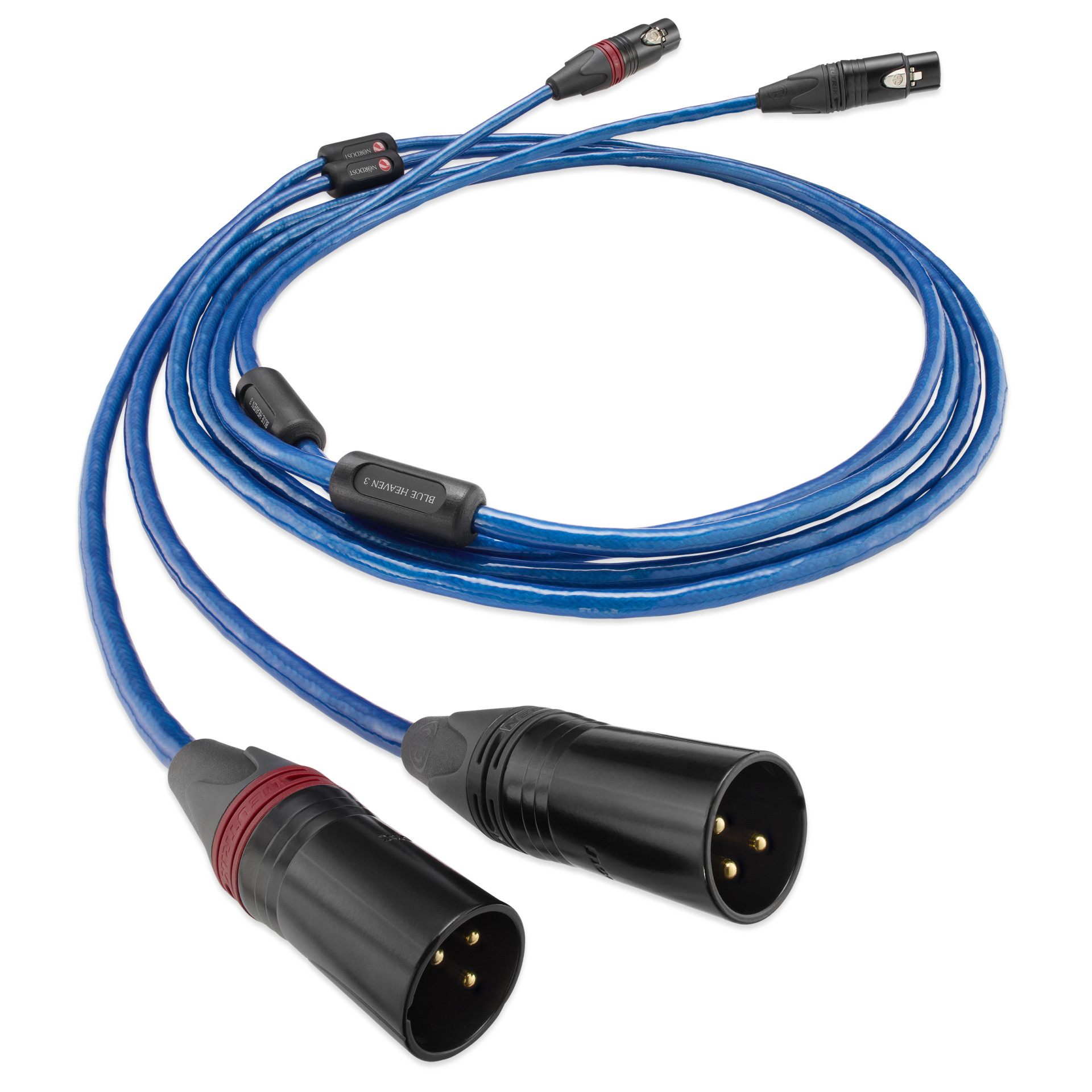
More recently, audiophiles have started to realise the unavoidable fact that you can’t listen to a component; that you can only listen to that component in the context of a system. The implications of this more holistic approach are far reaching. If you want to end up with a circle, it makes sense to work backwards from it. In assembling the constituent parts, consistency of size and shape, the nature of the parts you are using, becomes a significant factor. Rather than fitting bits and pieces around a random shape to try and force its outline to conform, construct a consistent framework which will better allow you to assess which of the available options will best fit. In the microcosm that is each audio system, that consistency is lodged in the cables, the supports, the AC supply and the grounding arrangements. Get those things right and you will be well on the way to a system that doesn’t just work, it stands a decent chance of actually delivering on its performance potential.
If we are talking about cables, then it’s a subject that embraces every bit of wire between the wall socket and the speaker terminals: power cords, analogue interconnects, speaker cables, digital leads, tonearm cables, power umbilicals if you use them, ethernet and clock cables, if you use those too. That’s a lot of different cables doing different jobs, often demanding very different characteristics. How then do you instil consistency across the entire loom. Obviously, you can’t make all of the cables identical, but what you can do is ensure consistency when it comes to conductor materials, geometrical cross section, dielectric materials, overall construction and the mechanical/material aspects of connectors. Using common metallurgy is easy enough. Likewise common dielectrics and other insulation materials. Application can impose its own limitations on construction: a 75Ω S/PDIF cable does need to be co-axial. But even within such considerations it’s possible to ensure consistency of approach: whether you use fillers (and what fillers you use) or voids/tubes; whether and how you shield – and how you ground those shields; whether your cables employ a minimalist structure with a high cross-sectional ratio of conductor to di-electric, or go the massive, multi-layer, mechanically damped route; whether your connectors are minimalist, employing the least possible amount of metal and plating layers, or more massive and heavy, making a mechanical and visual statement as well as electrical contact.
With so many variables (and believe me, that list only scratches the surface) the easiest, probably the only, way to achieve a coherent cable loom for your system is to work with products from a single company, maybe even a single range. Yet despite the easily demonstrable benefits of this coherent approach, the industry has been slow to adopt it. Working with and comparing complete cable looms is a considerable task – and one that demands a shed-load of cables, a quantity of product that dealers are often reluctant to invest in and manufacturers are often reluctant to supply for review. It’s not just a system’s worth: if you are a dealer or reviewer, your available cables need to cover as many system eventualities as possible, from long interconnects and short speaker cables to short interconnects and long speaker cables, balanced and single ended, bi-wired or bi-amped. All of which helps explain the embedded resistance to the idea of unified cable looms, a resistance that still persists today, despite the number of end-users who have finally realised the benefits. All of which helps explain the persistent resistance to the notion of unified cable looms, despite the increasing number of end-users who have started to enjoy the benefits of the approach.
The lessons of history…
Such was the impact of the Linn/Naim asteroid that smashed into the UK audio market that earlier historical periods (or vintages) might well be labelled BLN. Within a few short years in the late 1970s, Linn and Naim between them came to dominate the discussion, the media and the market. That dominance was down to a number of factors, not least the circularity of the system logic and the ‘story’ that went with it. But the thing that really underpinned its success was what amounted to a self-contained system’s approach. Not only did the product lines offer a clearly defined (and demonstrable) upgrade path, but they actively impeded the incorporation of alien elements. How so? The Naim electronics used a proprietary connection scheme, based around various, different DIN plugs and the occasional XLR for interconnects. They even went as far as using BNC sockets on their phono-inputs. Long story short, it was a real bear to mix and match or even hook-up other manufacturer’s amplifier components within a Naim set-up. It really was a case of all or nothing. But the real kicker was that in comparing a full Linn-Naim rig to almost anything else, you could count on its musical coherence and communicative qualities to carry the day. Thus was born the (in)famous ‘tune test’ and the concept of PRAT (Pace, Rhythm and Timing).