

Where this all comes together is in performances that really breathe, while also stretching or playing with the limits of strict tempo. Whether it’s the fluid, expressive intimacy of three-minutes of perfect pop, like Bill Mallonee’s ‘Hard Luck and Heart Attack’ (Audible Sigh, Compass Records 7 4295 2) or the abrupt, stop/start pauses of the Basie Big Band, the Blue Heavens navigate temporal elasticity or sudden hesitations with equal aplomb, allowing the music to set the pace rather than the system, the musicians to add emphasis or accent. Perhaps the best example of this is Santtu-Matias Rouvali’s recording of the Sibelius 5th Symphony (for Alpha Classics, Alpha 645): the conductors distinctive, measured pace across the first two movements, his strict separation of instruments and phrasing can often seem hesitant and disjointed. But with the Blue Heavens in the system, the careful pacing brings poise, the separation of phrases and instrumental interjections a clarity and structure to the music’s evolution. The slow build is both fluid and contiguous, with none of the hesitations or awkward corners you so often hear on other set-ups. If you’d only ever heard Rouvali on disc (and on less coherent systems) you might well wonder what all the fuss is about. But listening with the complete BH3 loom, just like listening live, there’s a beguiling majesty to the music, a strength, substance and purpose that makes you realise just why this conductor is a rising star. More than any individual characteristic – its bass extension, treble quality, imaging, tonality, speed or dynamics – it’s this overall musical integrity that marks the sound of the system with the complete Blue Heaven loom installed.
Matching collar and cuffs…
While it has been fashionable to dwell on the tonal qualities of cables – whether they tilt the balance and if so, in what direction – it’s a fashion that has led several generations of audiophiles down a performance cul-de-sac. “Got a bright CD player? Use a warm (and wool-y) sounding cable.” Might seem like sound advice, but in reality, all you are doing is masking a problem – losing information and disturbing the musical pattern along the way. Gross tonal aberrations are (or at least should be) a thing of the past, at least in sensibly designed cables. In many ways, the Blue Heaven 3 is exactly that: the archetypical ‘sensibly designed’ cable. I’m not talking about whether speaker cables should be flat. I’m talking about its minimalist, low-loss design and cross-range consistency. Bulk up a cable and you bulk up its sound – with a whole load of undesirable and a-musical additives. The BH3 is essentially neutral. You shouldn’t expect it to act as a corrective – and it’s not going to.
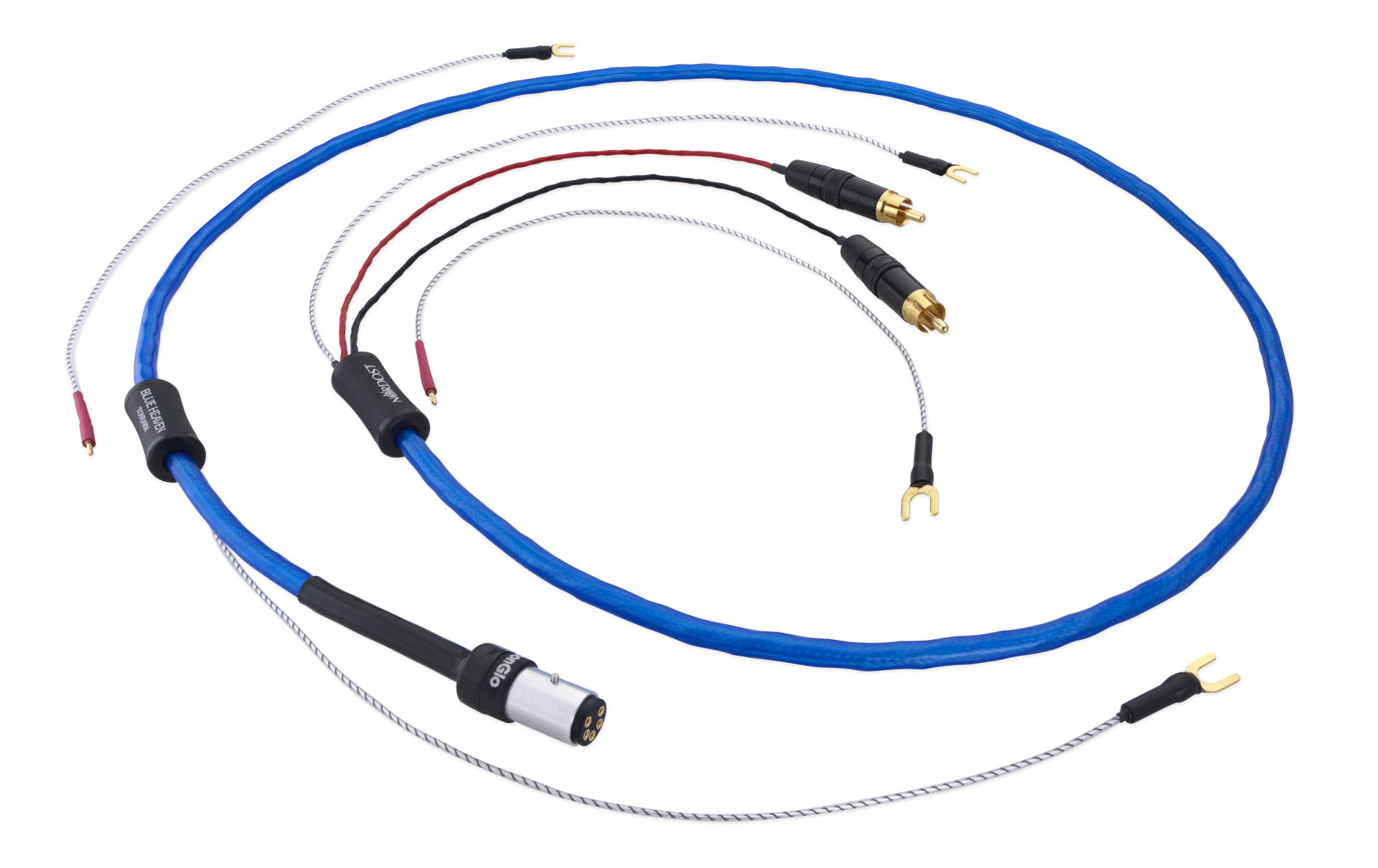
Instead, think of the cables in the system as transferring the fabric of the music from one place to another. Use different cables at different points in the system and you introduce a different weave, warp and weft to the music’s texture and substance. It’s often said that no cable can actually improve the sound of your system – it can only do damage. The goal is to do as little damage as possible and, musically speaking, that means keeping your cables as consistent as possible. So rather than concentrating on the tonal character of each individual Blue Heaven cable, or what it brings to a system, it’s more meaningful and useful to listen with and talk about the cable loom as a system within your system, or component in its own right. Do that and the true value and quality of the Blue Heavens quickly emerges.