
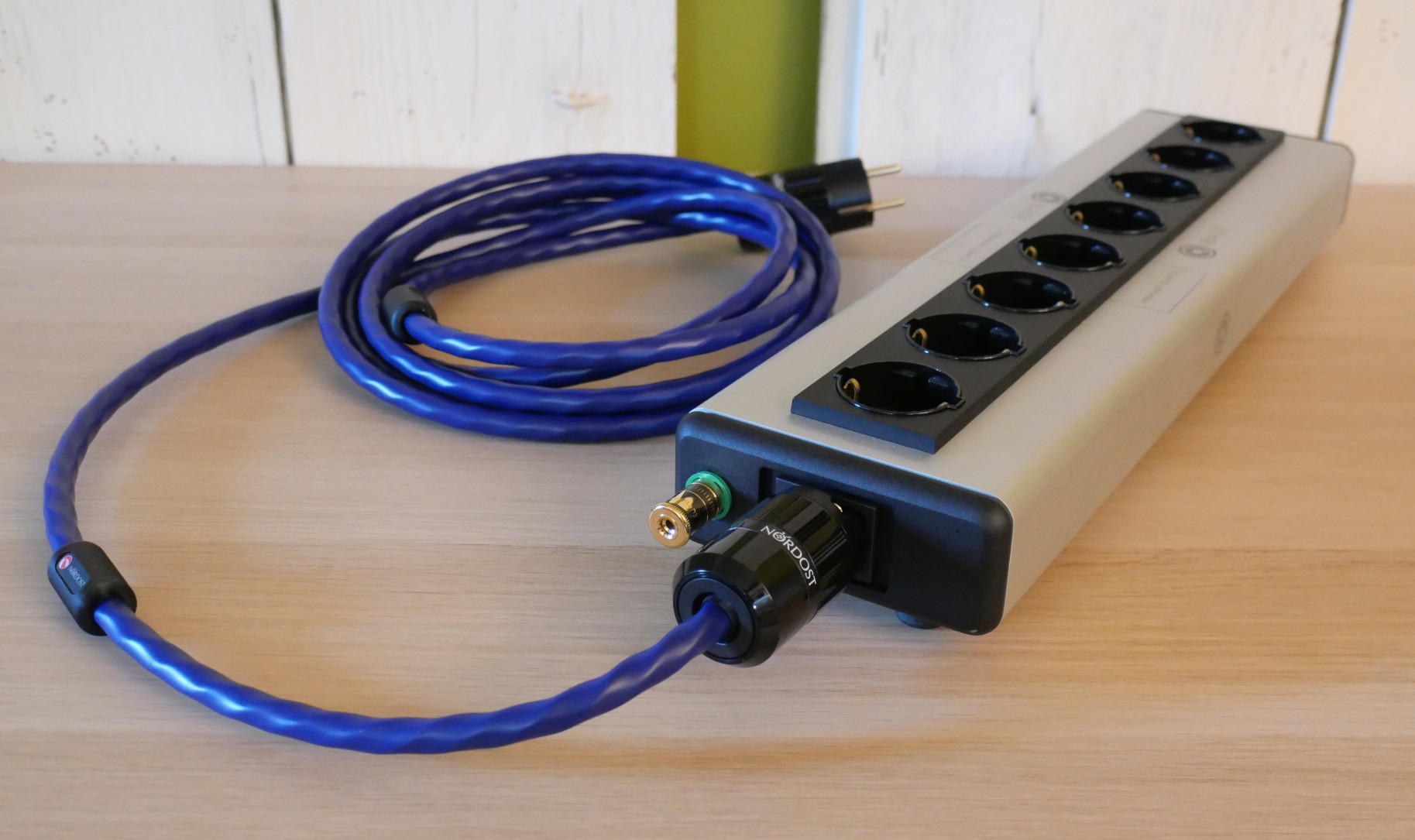
The Vivaldi violin concertos started to sort themselves out too, with at least some degree of spread and separation between instruments, an improvement in tonal balance, although the violins remained sharp. But the biggest shift here was in the all-important phrasing and overall shape to the music. Okay, so there’s still a long way to go, but just one power cord in the key location instilled a burgeoning sense of pace and pattern that started to make sense of the music. Interestingly, although the Blue Heaven 3 power cords are far from expensive, at least in absolute terms, they are the only cables in the Blue Heaven family that benefit from the electrical and mechanical advantages of the air-dielectric, micro-monofilament construction you find throughout Nordost’s pricier Norse and Reference ranges. It’s the clearest possible indication of just how critical the company considers power cords in the overall scheme of things – with even one cable having a significant musical impact when used in the right position.
Step 2 – Blue Heaven power cords throughout.
Next step was replacing the assorted power cords feeding the individual electronics and the VPI Avenger turntable. After the experience of Step 1, the improvements in musical clarity and intent should come as no surprise. Using Blue Heaven 3 power cords throughout brought space, separation and organisation to the soundstage, a planted sense of pace and purpose to rhythm and timing, solidity to dynamics and space between notes. For the first time the overall musical shape and pattern on all three discs became apparent, but the biggest change was on the Rachmaninoff. Each Piano gained its own tonal identity, the distinction between Bösendorfer and Steinway clearly apparent, the latter losing its previously clanky quality. The instruments stayed solidly in place, with no tendency to collapse inwards to the centre of the stage. But most important of all, for the first time this sounded like two musicians working together on a single piece, their efforts interlocking and combining to create a greater whole.

The Holland Baroque society spread out and separated across the soundstage, their performance finally starting to sound like an evolving series of musical sentences. The violins gained precision and agility, losing the nasty edge they’d previously suffered. On ‘Love For Sale’ the pacing on the opening piano phrases, the rhythmic pauses and the gaps between notes finally start to emerge, as do the trumpet’s harmonics, the reed and bell of the sax. For the first time, the drum work is properly integrated into the rhythm section, rather than feeling scattered about the piano and bass.
Step 3.1 – The analogue signal chain – tonearm cable.
Having established the AC foundation with a complete set of power cords, it’s time to turn to the signal path. In this system, the place to start is with the tonearm lead. The Origin Live Enterprise arm cable is already way better than average, with excellent low-mass connectors and a carefully selected cable. It’s 5-pin Din connection makes swapping it out for a Blue Heaven equivalent simplicity itself, especially on the open-plan VPI Avenger. Doing so results in a huge improvement in dynamic range, focus, dimensionality and natural harmonic development. Just for fun I pulled out Somethin’ Else on LP. Swapping out the stock lead didn’t just bring more life and colour to the presentation, it brought greater rhythmic and musical integrity. The piano’s phrases locked in as the harmonic development crystalized, bringing clarity and precision, drive and purpose to note weight and placement. The shape and spacing of the bass notes gelled, bringing a sure-footed sense of articulation to the playing.