
Welcome to Discworld…
By Dennis Davis
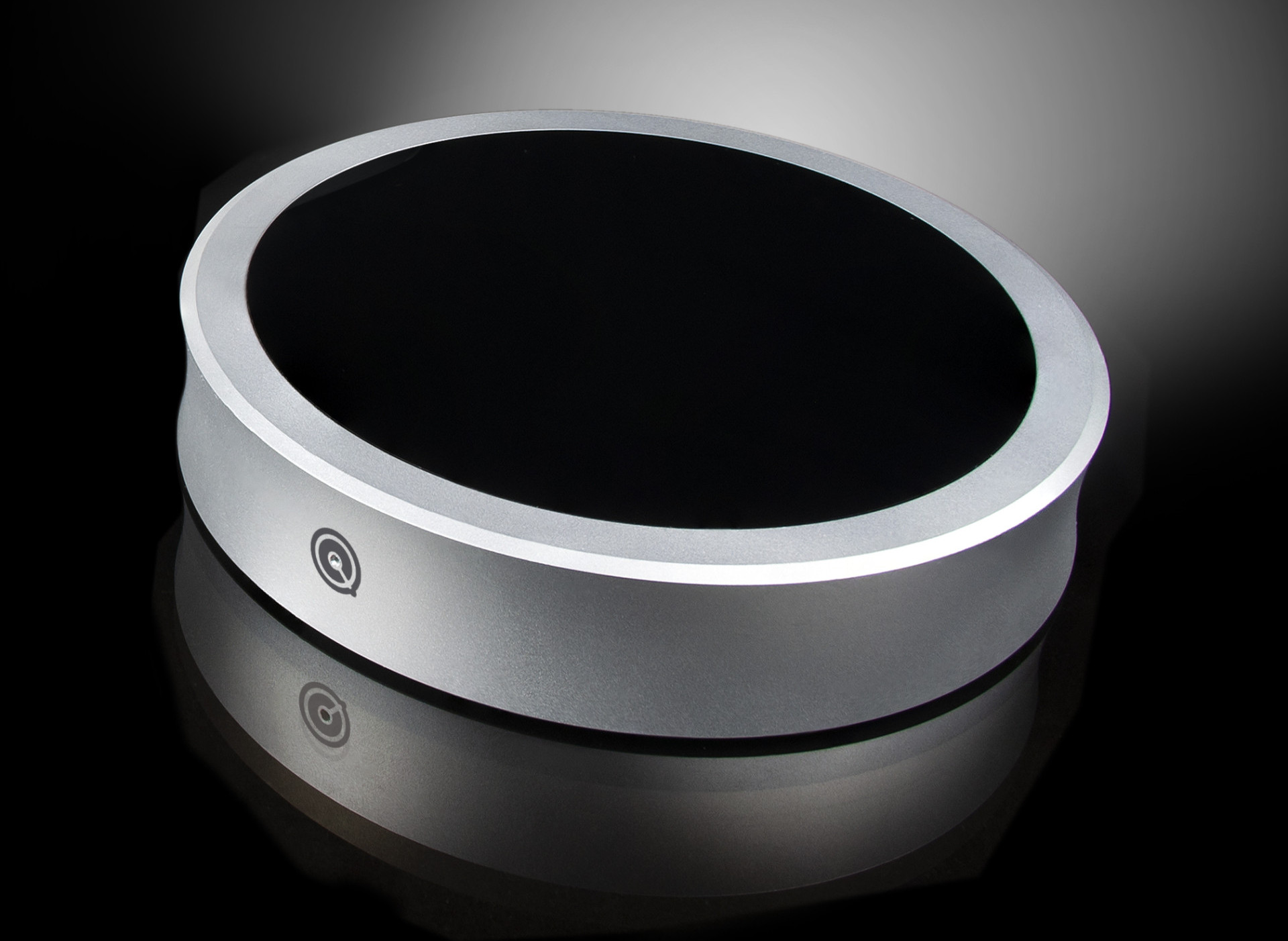
Nordost is best known for its highly regarded range of interconnect, speaker and power cables, but the company also offers a whole family of AC-related and ‘quieting’ products under the QRT banner. As well as purely passive devices like the familiar QBase power distribution blocks, more active QRT products aim to manipulate or interact with electromagnetic fields and mechanical vibrations, aligning or dissipating unwanted energy to create a cleaner signal. Don’t worry: I can hear the chorus of skeptical coughs and barely covered mutterings of “more marketing BS!” from here. Despite positive past experience with earlier QRT products, I still find myself questioning each new offering. If you feel like it’s all a bit ‘out-there’, I can sympathise.
I recall an early experiment with a(n unrelated) resonance product a few decades ago; in that instance, wall resonance damping discs. Unlike most products, I could not do a “before and after” test. The discs took hours to place and once stuck to the walls did not come off. I applied about 30 or 40 discs around the room as instructed and (no doubt because of the investment involved) was convinced that I could hear the difference they’d made. At which point they just became part of the furniture – until a couple of years later when a visitor from Mexico asked why I’d stuck pesos on my wall? Once removed, the system sounded exactly as it had with the discs bonded in place, just without the embarrassment of trying to justify the sticking of small metal discs to my walls. I’m sure I’m not alone in having suffered such an experience. But there’s plenty of accepted wisdom in audio that is just as questionable, so bear with me while I suspend judgement: it’s worth investigating further…
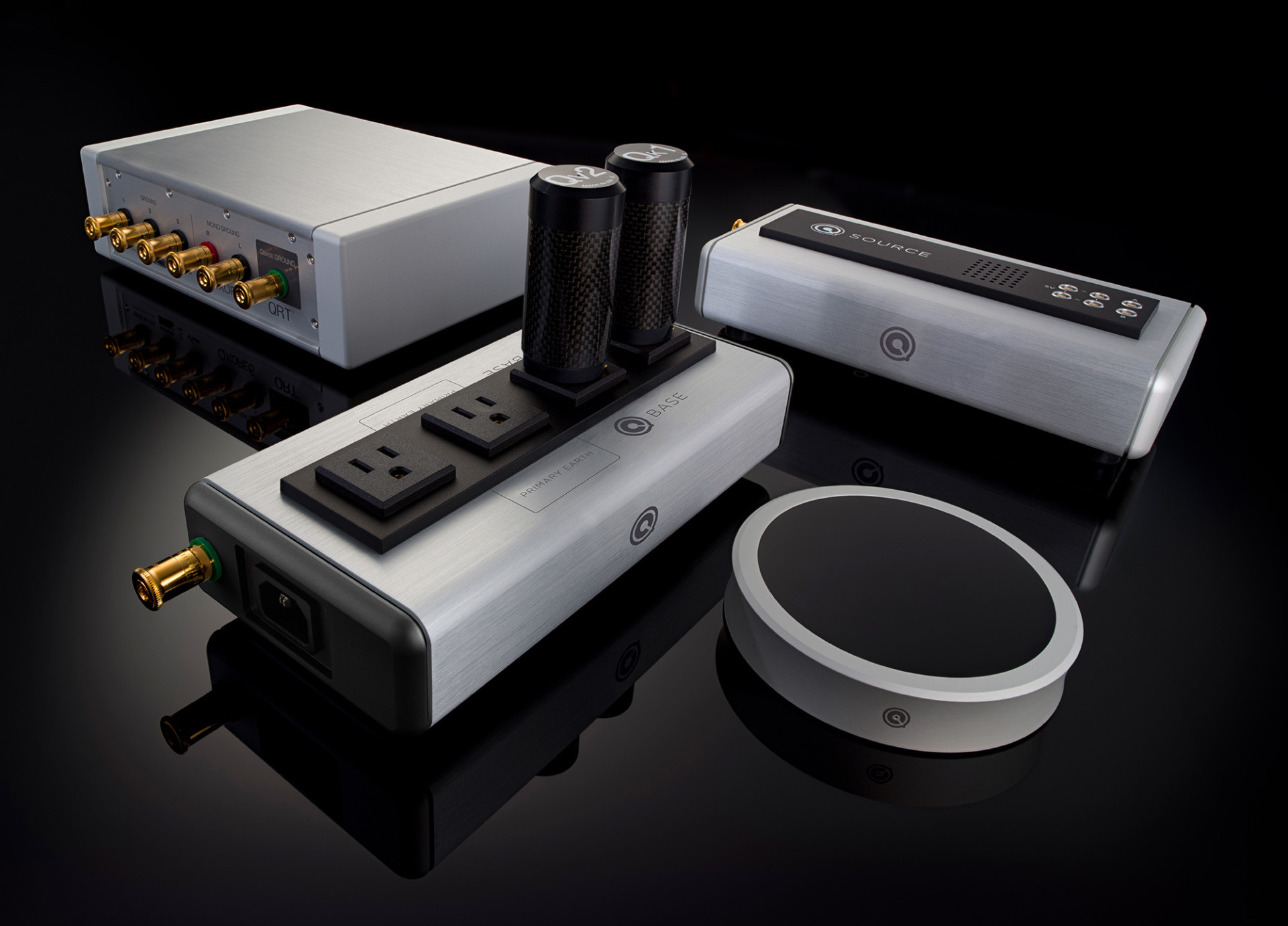
The QRT line might have grown out of the original Thor power distribution unit and got started for real with the QX2 and QX4 field generators, but since then it’s spread its wings, embracing passive AC distribution (those QBase power strips) and a host of plug-top devices – the QKoil, QSine, QVibe and QWave – described as AC enhancers and line harmonizers. Those technologies are, in turn, incorporated into the flagship QBase Reference and QSource power supply, collectively aiming to clean up AC and DC noise and grunge in home audio applications. Then there’s the highly-rated QNet ethernet switch and the extremely effective QKore parallel grounding units. All told it’s a comprehensive assault on AC quality, system noise-floor and (if we include the Sort Products) both electrical and mechanical grounding. Last but not least and bringing the QRT family full circle, we have the QPoints, reviewed here, the current, improved evolution of those earlier QX units.
The QPoint is described by Nordost as a “Resonance Synchronizer”. It is shaped like a larger, 5” diameter hockey puck, but is still thin enough to slip below most products. It emits an electromagnetic field from its black plexiglass top surface. The outer edge has a diode that glows blue or green to identify mode, a switch for choosing that mode and a DC socket for connection of a power source. Each QPoint comes with a ‘wall wart’ transformer, but you can instead connect multiple QPoints (up to four) to a single QSource, a linear power supply that provides higher quality DC and does so far more quietly. The QSource also offers a pair of switchable, higher voltage DC outputs that can be used to drive network components like routers, switches or even a Roon Nucleus. Naturally, Nordost offers a choice of two different DC cables to run between the QSource and your QPoints (or QNet), with standard or Premium versions.
Form an orderly Q…
That’s a lot of Q to absorb. One wonders whether the inspiration for Nordost’s Q naming scheme derives, not from science fiction flics, but instead from the Bond movies, where Q Branch was the MI6 research and development division charged with top secret field technologies. Audiophiles are always susceptible to a new gadget around the house, and if a fully tricked out Aston Martin DB5 is out of reach (Bond did famously escape once in a Citröen 2CV), why not something more down to earth and practical like a resonance device? So, with a tip of the hat to actor Ben Whishaw, I installed QPoints in my system to unpack their secrets.