

There was a similar effect on vocal recordings. Randy Newman’s voice on ‘Mama Told Me Not To Come’ (12 Songs – Audio Fidelity AFZ 070) snaps into focus and moves closer to center stage within a more clearly defined acoustic. Alison Krauss and Gillian Welch’s voices, as they duet on ‘I’ll Fly Away’ (O Brother, Where Art Thou – Lost Highway 088 170-069-2 DG02) tighten up and become less diffuse, with not only better separation, but a much better sense of the physical, tonal and musical relationship between them. The QPoints place the voices musically front and centre in these recordings – just where they should be.
Piano sound was improved across the board. Andras Schiff’s performance of Beethoven’s Appassionata Sonata (ECM 1947) sounded cleaner and more focused, with more dynamic micro detail and better harmonics. And it wasn’t just Schiff. Olafsson, Pollini, Hewitt, and Pires each in turn achieved a sense of more concentrated energy and purpose in their playing and performance. The piano tone on every CD or LP seemed to have more density, while subtle differences in note weight and attack were articulated much more distinctly with the QPoints engaged.
Two Points of view…
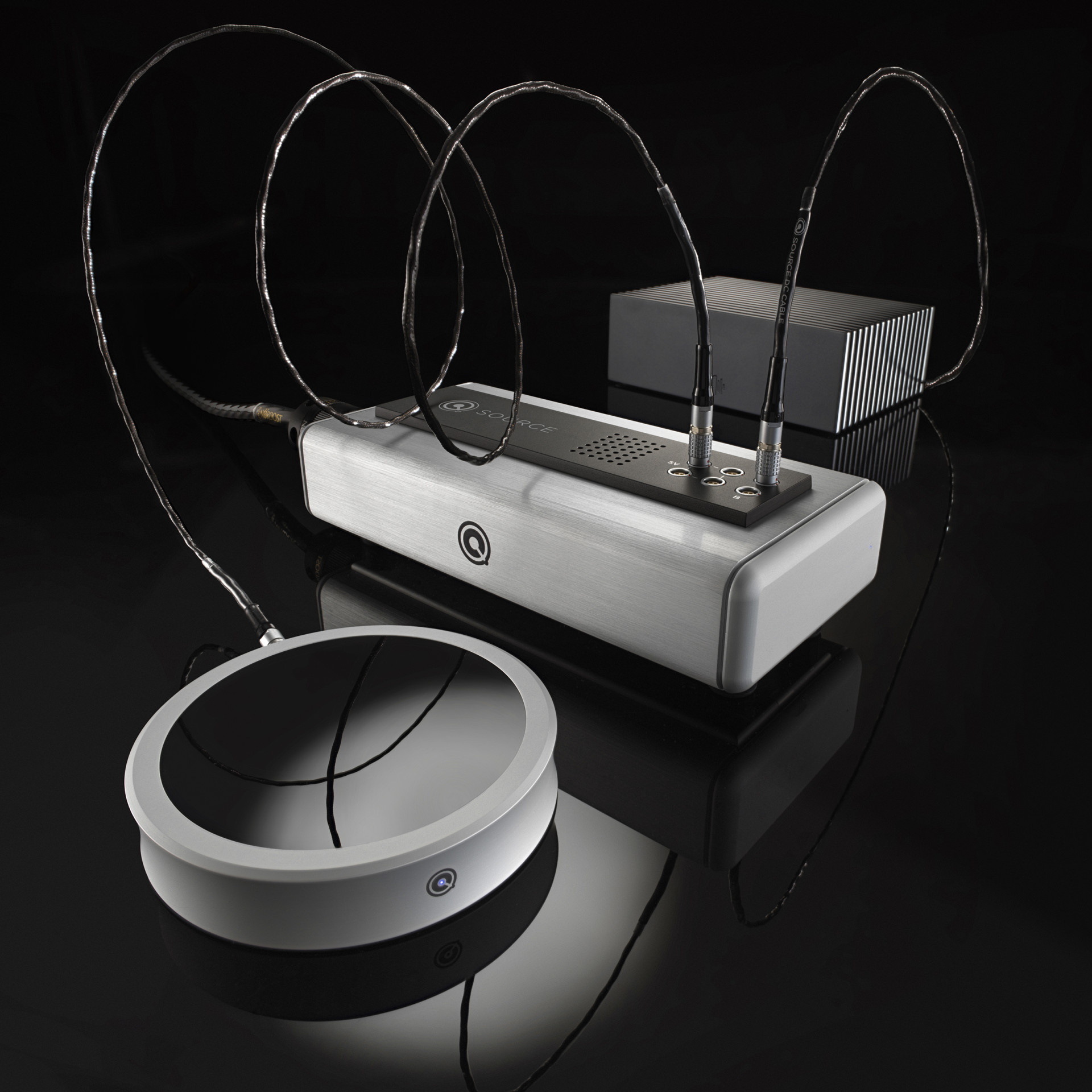
As already mentioned, Nordost provides a choice of two different fields that can be generated by the QPoints. The company recommends that you at least start with all the QPoints in your system switched to the same setting, so that’s exactly what I did, settling down to establish the difference or a preference between the two. The difference itself varied in scale from one recording to another. In some cases, the difference seemed dramatic and in others barely noticeable, but despite that I quickly established what worked best with my assembly of components.
I’ll use the first cut of Chris Isaacs’ San Francisco Days on both CD (Reprise 9 45116-2). and LP (9362-45116-1) as an example, with the QPoints switched off, then on and set to green and then to blue. The differences between off, green and blue were consistent regardless of format. The recording has a big, reverberant, studio sound. The LP version has some extra depth to the soundstage compared to the CD, which is somewhat flat. Engage the QPoints and the soundstage changes significantly with both formats. With the green light, the soundstage became significantly wider and deeper, with the reverb sound as noticeable as before. But with the blue light setting, the stage depth is even greater, and more significantly, the slight sluggishness of the reverberant sound is replaced by a greater sense of rhythmic drive.
I performed a similar comparison with CD and vinyl versions of Joni Mitchell’s Blue. My HQCD version of Blue (Reprise WPCR 18240), played naked of any resonance synchronization presented a slightly jumbled soundstage, with Joni’s voice floating free, a bit off-centre. The green light setting pulled her closer to centre-stage. As with the Chris Isaacs disc, the blue light setting added focus but also tightened up the rhythmic flow. Once again, the LP version (the Bernie Grundman master from the Reprise Albums box set) exhibited the same traits as the CD when subjected to the two setting comparisons.