

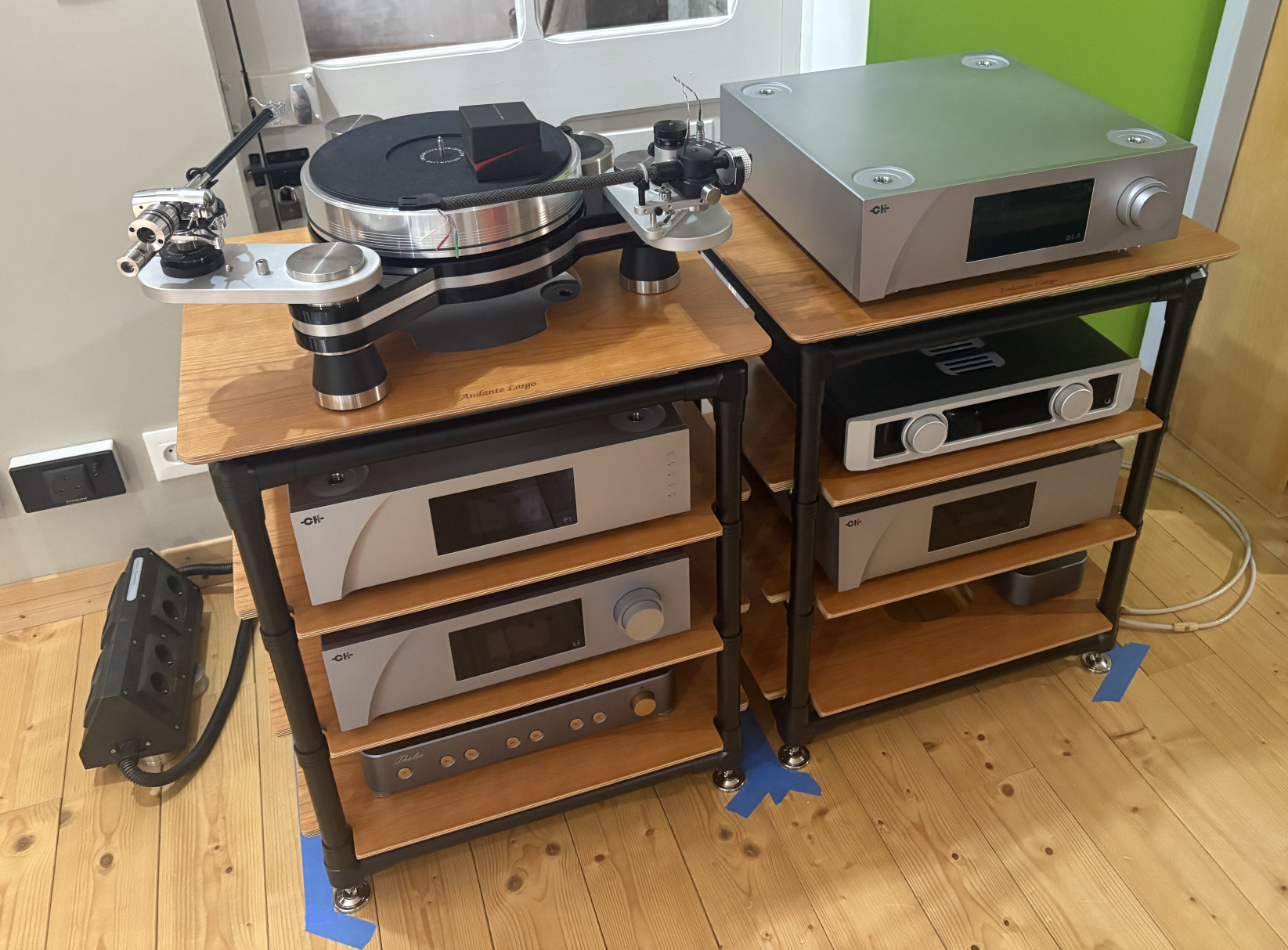
The Andante Largo Grand Tower racks offer a remarkably sense of musical coherence, reproducing the recorded performance and environment evenly from bottom to top. It’s a beautifully balanced and proportioned presentation in all three musical dimensions – temporal, spatial and dynamic. Collectively they combine to deliver expressive range and human agency, the qualities that breathe life into a recorded performance. They back it up with that natural tonality and perspective that fill in the blanks and embroider the fabric, further adding to the completeness of the musical and sonic picture. That picture might not be the biggest or most immediately impressive, but long-term, it will almost certainly be the most consistently convincing.
There’s one other thing to consider if you get to audition these racks. When unifying cable looms, it’s always inserting the last cable in a complete system that makes the greatest difference. With racks, you need to reverse that thinking. To really hear what a rack brings to your system, support everything in the system on the same type of rack. Listen to the results and familiarise yourself with the musical performance. Then, remove a single component and place it on the floor or a different surface and listen to what happens… The first time I used these racks, with a whole system duly supported, Suzuki-san calmly asked me to listen to a track from file replay, before removing the power supply feeding the network switch from the rack and placing it on the floor before restarting the track. The loss of dynamic range and transparency, the increase in grain and noise in and around the music, were obvious enough. But the loss of musical flow, liquidity and rhythmic articulation was genuinely shocking: the musical performance simply fell apart. It’s an easy test to try, even if the results seem hard to accept.
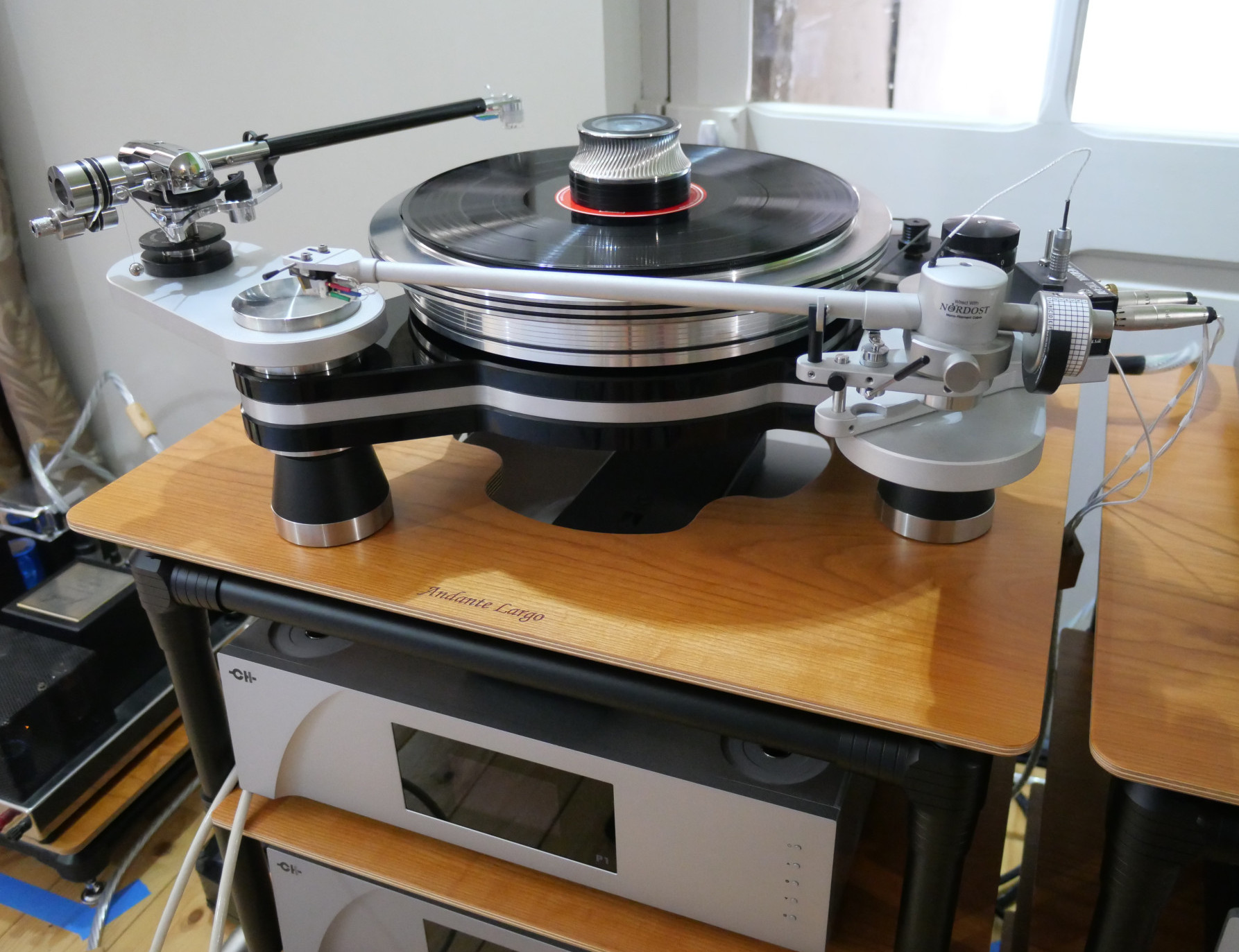
Can much more expensive racks do a much better job? That’s an interesting question. Environmental considerations are becoming more and more significant when it comes to optimising system performance and racks were, arguably the first indicator of this issue. Their performance depends on the system being supported, but also on the surface on which they are placed and the acoustic environment in which they have to operate.
In the case of equipment choice, the AL racks were, for instance, noticeably successful when used with the CH Precision components, electronics that incorporate their own, continuously coupled mechanical grounding system, creating a logical and mechanical continuity between component and supporting surface. Using other electronics (VTL, Trilogy, TEAD, Wadax, Wadia, the Levinson 585 or Heed Lagrange amplifiers) choice of mechanical couplers always proved critical – although when push came to shove, simple bamboo blocks always provided a safe fall-back position.

However, the supporting surface – and its structural support – on which the whole rack sits is another matter entirely. Not only is it generally impossible (or at least seriously expensive) to alter, it’s impact and the nature of the energy it transmits will vary considerably – and be significantly influenced by the system being used. As I’ve already stated, I’ve used the AL racks successfully in a whole host of different situations, with different systems and supporting structures, from isolated and rock solid, all the way through to a fully suspended wood floor. But what I haven’t done is combined the racks, a really wide bandwidth system and a bouncy surface. It’s a worse-case scenario, but it also highlights an interesting shift in rack performance. In most cases, I would always prioritise isolating the signal over isolating the equipment, the downward energy path trumping the upward. But as system bandwidth increases (or the flexibility of the supporting floor) that balance of priority starts to shift. Except in rare and unusual circumstances, system isolation will never become the absolute priority – but it’s importance will increase. In that situation, a rack that successfully addresses that upward energy path (and there are a few that do – the HRS VXR and the GPA Monza for example) will be in a position to challenge and possibly outperform the AL racks – at a price. I haven’t investigated that specific question, but the listening I have done suggests that in most cases the Andante Largo racks will easily hold their own and musically outperform far higher-mass alternatives at far-higher prices.