

The Andante Largo Grand Tower racks take this construction technique and adapt it to audio applications. The outer, ‘box’ structure of each rack is built using CNC machined aluminium lugs. These lugs fix the ‘frame angles’ but also integrate the shelf supports, creating an incredibly precise relationship between the frame and the supporting surfaces. Each frame is built on a level reference plane, the sort of ultra precise surface used to support machine tools and optical instruments. The tubes and lugs are bonded together using specialist, slow-setting industrial adhesive, a technique that allows the frame as a whole to be precisely adjusted before it is ‘set’ by baking in a low temperature industrial oven at 60°C for 60 minutes. This achieves considerable, consistent strength without the temperature related stresses involved in welding or fillet brazing, which typically involve heating materials to around 600-900°C. Every joint in each stage of constructing the Andante Largo frames sets simultaneously at low temperature and the whole structure is then slowly cooled.
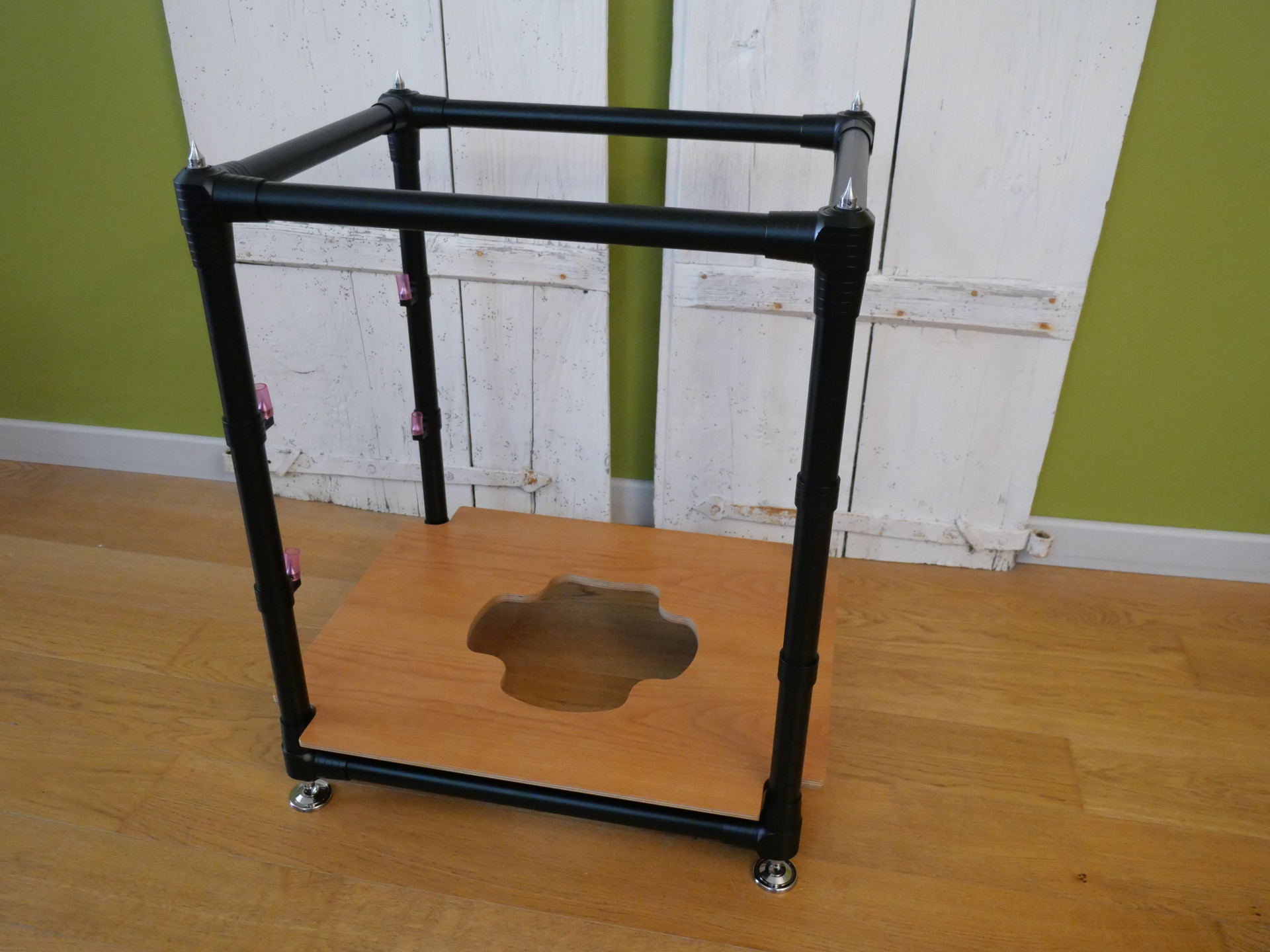
Each frame is constructed in three distinct stages. First the top and then bottom frames are built separately, each on the reference plane. If the frame is going to support intermediate shelves, support lugs are slipped over the uprights before the frame is then completed, with a special jig to ensure precise alignment of the top, bottom and intermediate levels, all bonded together simultaneously. It’s an approach that delivers remarkably consistent alignment between the different levels, a fact reflected in the ease with which you can level the rack when installing it. Get the top-shelf level and the rest will be level too. Try that with almost any other rack and you’ll find that the errors are significant.
Let’s look at the frame elements in slightly greater detail.
The Lugs
As I’ve already said, the lugs are precision machined from solid aluminium, with dedicated parts for the top, bottom or intermediate positions. Each lug takes approximately six-hours of CNC machine time to complete. On the Grand Tower racks, the surface of each lug is beautifully grooved or stepped, to help break up its resonant characteristics. The bottom lugs carry upward facing M8/1.0 narrow pitch and downward facing M10/1.0 narrow pitch threads, while the mid-level and top-level lugs each have a single, upward facing 8mm thread. The large diameter bottom spikes are used to level the rack in situ. But, contrary to expectations, the upward facing spikes are NOT used for levelling the individual shelves. Instead, they are precisely matched (±0.05mm across each set of four) and screwed down hard onto the seats precision machined into each lug, an arrangement as precise as it is rigid. One word of warning: the spikes are seriously sharp and the frame arrives with the intermediate ones mounted in place. Each spike is protected by a plastic sleeve. Leave those sleeves in place until you are ready to install the shelves, otherwise, in the process of levelling the rack, you are likely to gash your forehead or have your eye out! Believe me, this is not an idle warning.