
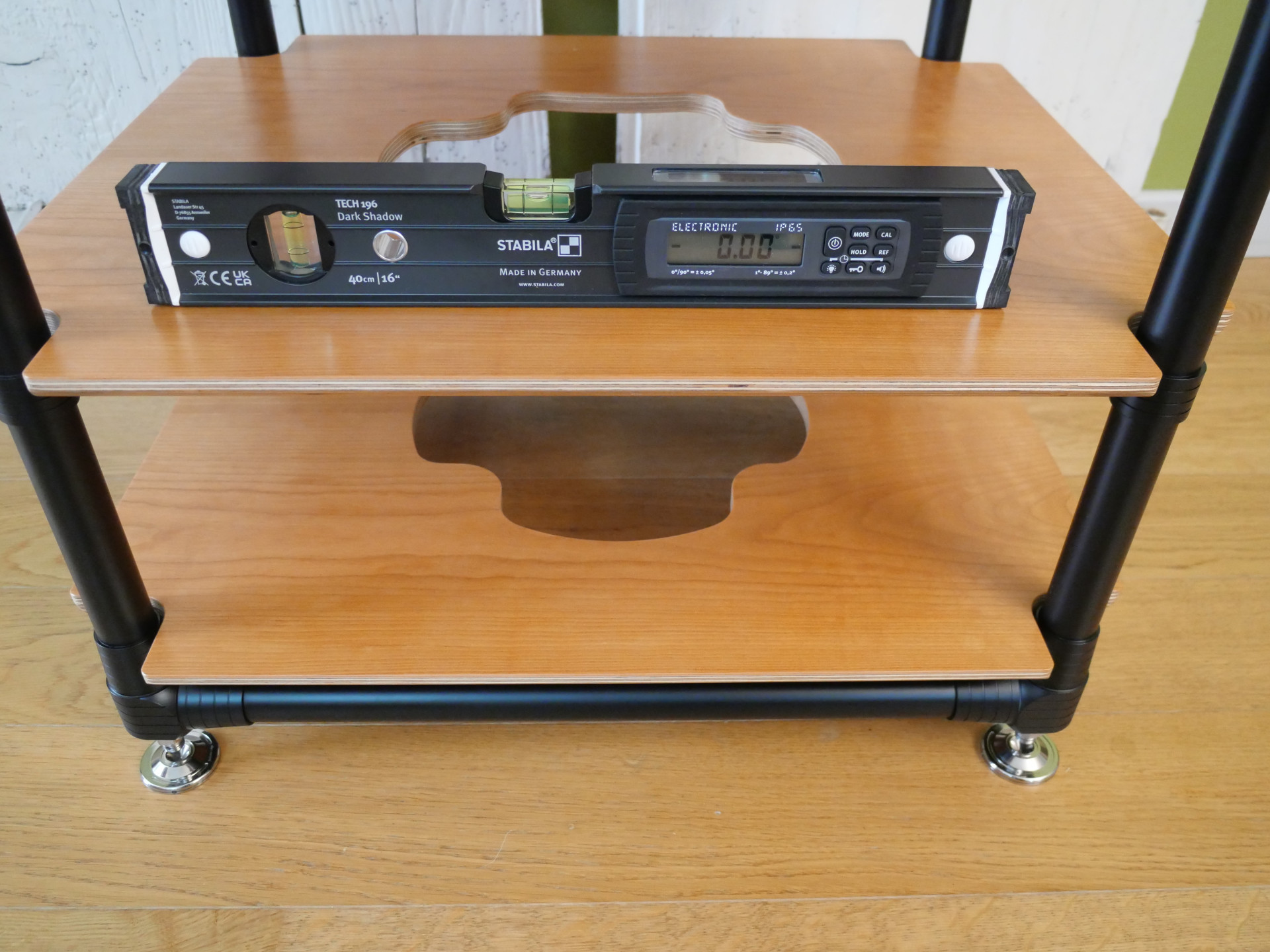
Compare the system placed on the Grand Tower to the Blue Horizon PRS and the Andante Largo rack offers greater weight and dimensionality, increased definition of the acoustic space, far more tonal sophistication and separation, a more rhythmically integrated performance and a more fluid musical presentation. Instruments have more shape, body, texture and a more developed harmonic signature. Switch up to the HRS RXR, upgraded with the GPA Apex footers and equipped with a mix of M3X platforms and R-Shelves and the system gains transparency and separation, a blacker background and bigger sound. But where the Grand Tower racks score in both cases, is in the natural sense of stable presence and integration they bring to their presentation. They are coherent across both the spatial and temporal domains and that makes for a more natural and more naturally convincing performance. Their background might not be as black as the HRS, but the overall acoustic is more developed, its boundaries more defined and the air within it is free from grain. The HRS might seem to throw a bigger soundstage, but that’s because it simply bleeds off at the edges.
Play XTC’s English Settlement (Virgin-V2223) and the Grand Tower brings out the insistent quality in the timing and the way the band are playing. The spacing of notes, the placing of leading edges is crisp and unambiguous: it’s a recording and a band that might have been made to demonstrate the adjective “tight”. On the Grand Towers, the playing is just that – tight – but the sound is anything but. It’s vibrant, driven, full of energy and life – but it breathes and it’s expressive too. There’s no sense of gating or constriction. This isn’t over-damped or sat on, but nor is it splashy or disjointed. The off-kilter rhythms, vocal hesitations and building dynamics and density of ‘Senses Working Overtime’ are an obvious example, but the following track, ‘Jason and the Argonauts’, is more telling still, with its driven tempo that pushes the pace, contrasting so starkly with the languid, elongated vocal phrases – right up to the switch and rapid-fire delivery of the chorus. This ability to not just change pace but simultaneously and effortlessly overlay different tempi and navigate halts in proceedings without losing the overall rhythmic pattern encapsulates the Andante Largo racks’ fluid, unobstructive handling of musical energy. Andy Partridge plays with gaps and hesitations to shape and emphasise his lyrics. The Grand Towers preserve that emphasis and expressive range, rather than smoothing it over or exaggerating it.
In the same way that these racks maintain the dynamic and temporal envelope, they allow instruments and voices to keep their colour and character. Whether it’s the tonal and harmonic difference between different violins, or the distinctions in weight, scale and tonal shading between forte and grand pianos, separating the close harmonies of Diane Christiansen and Steve Dawson, or the uncanny familiarity of a surprise Mark Knopfler guitar line, filling in behind Ruth Moody, the Grand Towers present the music without imposing themselves. Compare a system sat on the Andante Largo racks to the same system sat on alternative support and the differences are immediately obvious. The Blue Horizon PRS, with its bamboo shelves and stainless-steel uprights, is engaging and dynamic, with an attractive life and vitality. But it can’t match the engaging fluidity, tonal range and sophistication or the coherent spatial presentation of the Grand Towers. Back to English Settlement and, on the opening to ‘Senses Working Overtime’ the PRS sets the ticking side-drum stage right, solid and distinct, but also spatially separate to the voice and other backing instruments. Switching to the Andante Largo racks, the voice, instruments and drum are more focussed and precisely placed, but they are placed within a single acoustic and are more musically connected. The drum starts to set the tempo rather than distract from the vocal.