

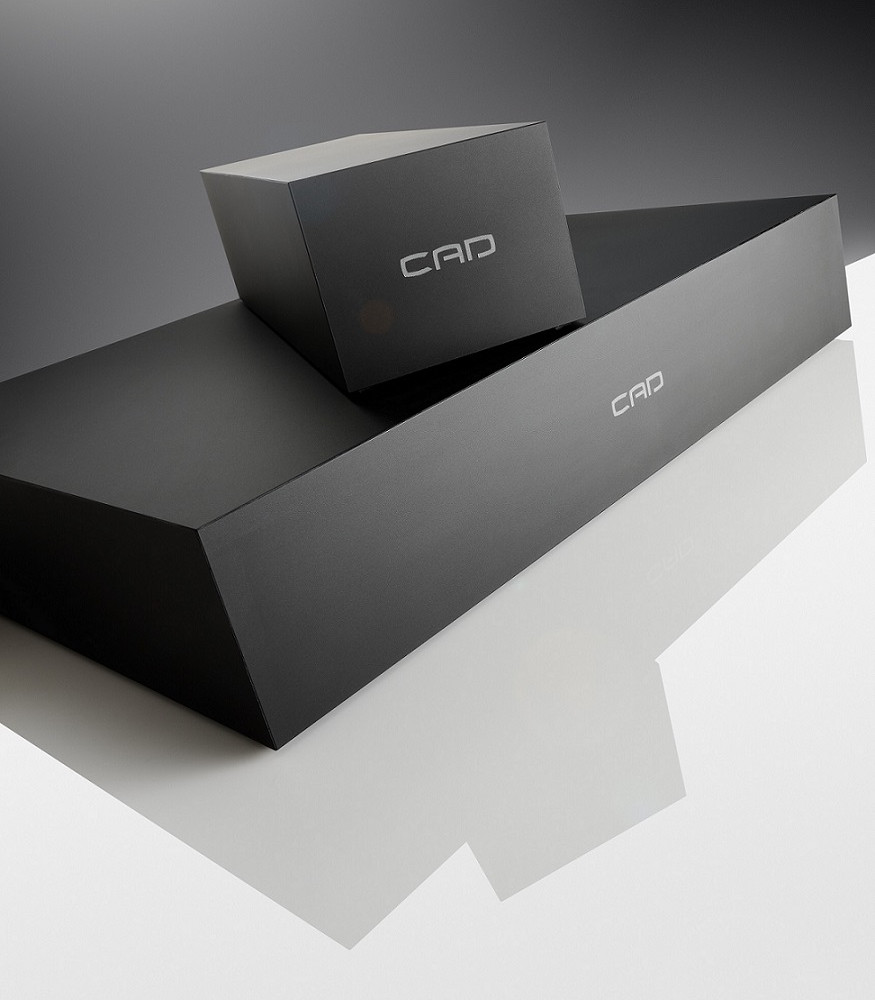
Historically, the CAD/Qkore comparison reflects the different backgrounds behind the products. CAD’s digital DNA is reflected in its focus on high-frequency noise – a top-down approach if you will. Nordost’s Qkore units have always been more concerned with dynamics, body and low-frequency transparency – or, bottom-up. As the units get larger their performance envelopes tend to converge, meeting in the middle. But while the latest GC3.1 extends its virtues further down the range, it doesn’t upset the status quo. The Qk6 delivers greater presence, dynamic range, body and rhythmic integrity – a more compact, intimately integrated musical presentation. The GC3.1 offers greater separation, space, texture, tonality and harmonics.
In part, I suspect this reflects a difference in approach, despite the outward similarities of the two products. The golden rule of parallel grounding is, don’t hook up a ‘quiet’ component (like a phono-stage) to the same ground sink as a much noisier one (like a DAC or CD player). To this end, the Qk6 has a segmented internal structure, with one binding post dedicated to the AC distribution, the rest split two and three for digital or analogue connections as appropriate. In contrast, the GC3.1 is a single, monolithic sink, with all sockets connected in common. In this particular scenario, with a whole system connected to a single unit, that potentially gives the Qk6 an advantage. CAD prefers a more ‘modular approach, with separate boxes for separate functions. So, in this instance, they’d recommend using a separate GC1.1 on the phono-stage. Of course, that comes at a price, but it’s an approach that, as I’ve already mentioned, we’ll be revisiting with the CAD Control components in the near future.
Meanwhile, you pays your money and takes your choice, but that choice will likely be system dependent. The Qk6 worked a special kind of magic in the context of the Jadis/R25 set-up, while the air and delicacy of the GC3.1 was preferred with the Peak Sinfonias. But what wasn’t in dispute was that either system sounded substantially more musical and engaging with parallel grounding attached, flat, insipid and bland when it was removed.
Given their early entry to the parallel grounding market, not to mention the established reputation of their various GC units, it would have been easy for CAD to rest on their laurels. But the .1 updates to both the GC1 and 3 are both musically compelling and obvious enough to keep both products firmly in contention, well to the fore when it comes to system grounding solutions. They offer their own particular blend of virtues or sonic flavour, but it’s a taste well worth acquiring. The latest GC3.1 not only underlines the appeal of the CAD grounding solutions, it also underlines the importance of grounding as an issue, the gains to be had and the musical cost of ignoring it.
Price and availability
CAD Ground Control GC3.1 – $5,995 USD (plus tax)
Ground Control Cables – $395 USD each (plus tax)
Manufacturer:
Computer Audio Design