

A variation on clamped shelf construction, the supporting surface is held between an upright below the shelf and a top-cap above it, creating support levels that can be stacked on top of another. It offers the same challenges and advantages as fully clamped designs, but its stackable nature certainly adds a degree of installational ease. That covers what might be termed the ‘serious but affordable’ offerings. More expensive racks tend to be variations on the following models:
- Massive frames with separately support shelves or platforms (HRS, Grand Prix Audio and Critical Mass)
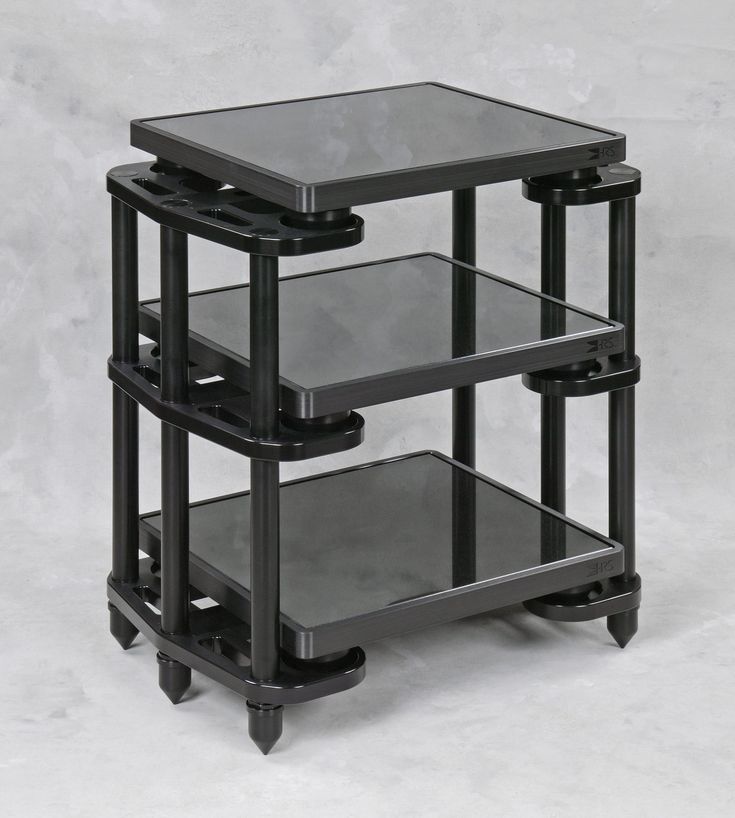
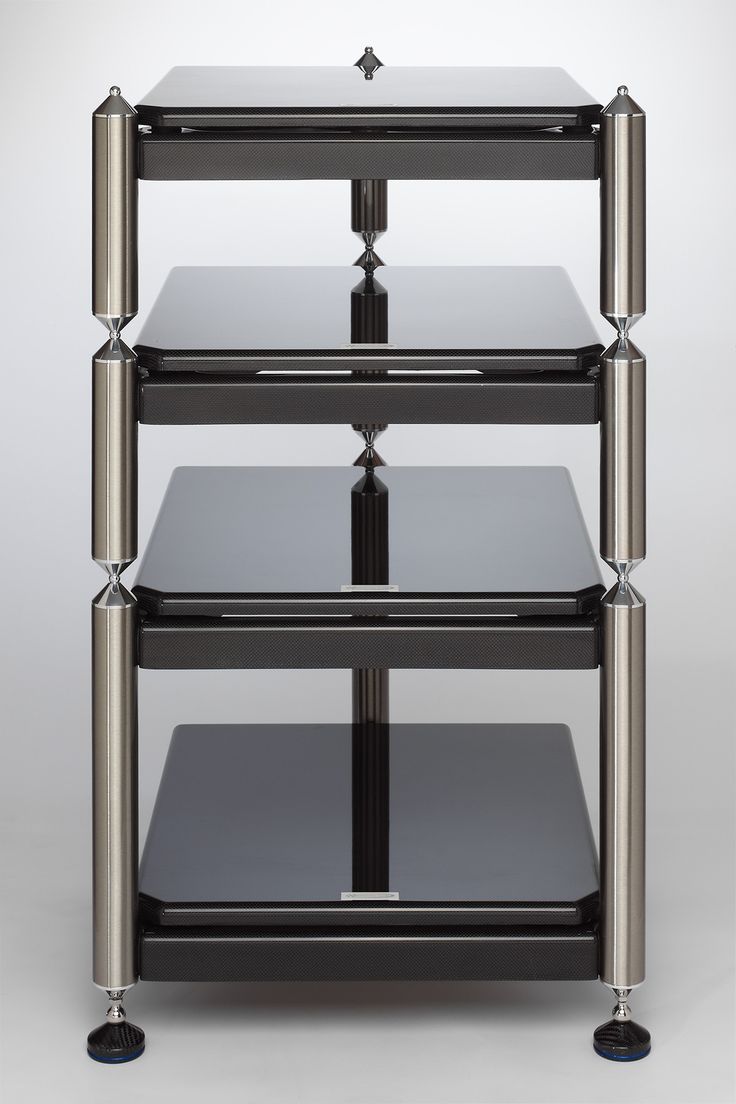
These racks generally rely on a massive structural frame, assembled from machined elements and designed to support individual ‘isolation’ platforms. The self-assembly frames allow for adjustable spacing of the levels and future system expansion. The use of separate support platforms means that manufacturers can offer a modular, upgradable solution that can be adapted to budget and system priorities. It is not surprising that this has become something of a norm in high-end circles
- Wood framed racks (finite-elemente, SRA and Roboli Design)
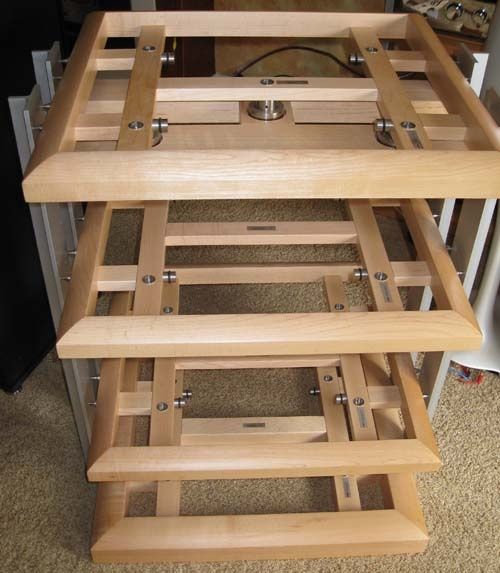
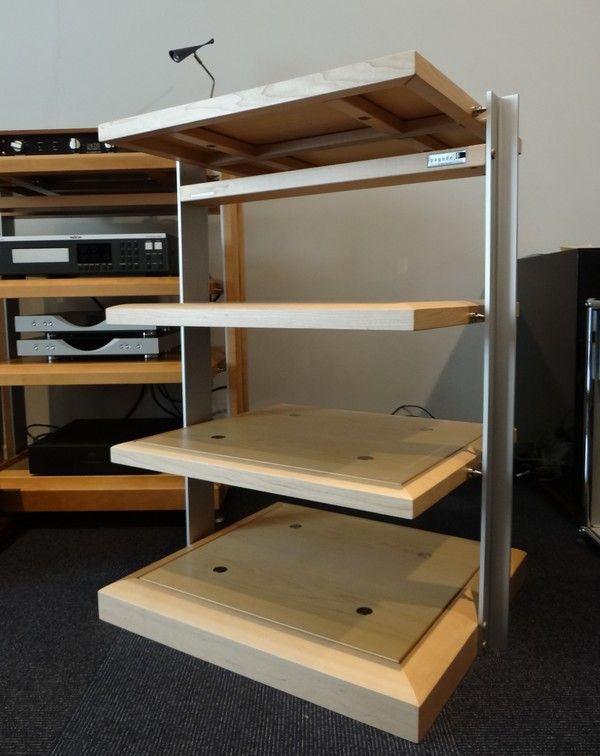
Jointed wood, one-piece frames with fixed or separate supporting surfaces. These tend to score high on the furniture scale, looking a lot less like oil rigs, but sacrifice adjustability, versatility and practicality when it comes to shipping and storage.
Finally, it’s worth mentioning a couple of skeletal racks that might seem to take a different path but actually fit into the third category. Both Stillpoints and the original Artesania racks are essentially, pared-back versions of the engineered frame and separate support level structure. Both attempt to eliminate the ‘shelf’ by substituting point supports, but that simply transfers the shelf function to the ‘rails’ on which the point supports rest. In fact, one of my all-time favourite show-shots, taken at RMAF a few years ago, features a top-of-the-line Stillpoints rack, upgraded with a bunch of Ikea bamboo bread boards placed betwixt the rack’s point supports and the installed equipment.
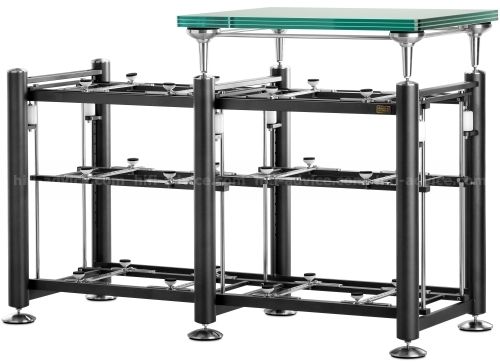
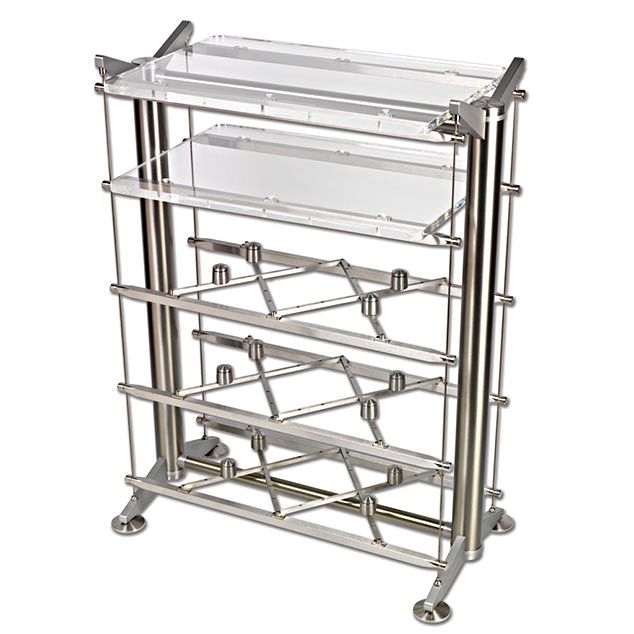
What’s wrong with the racks we’ve got?
Apart from the compromises made in the name of practicality and aesthetics, there’s one other, huge issue that afflicts almost all audio racks – and it’s summed up in the universal use of the term “isolation” to describe what they do. Once again, appearances are deceptive. Sit your components on a rack: isn’t the rack isolating them from the outside world? Yes it is; at least it stands between your components and mechanical energy transmitted through the floor. Most racks do nothing to deal with airborne energy. That’s an important distinction, not least because it’s not the components that you need to isolate and protect: it’s the signal. That signal is inside those components: components that generate their own internal energy in operation – from transformers, transports or power supplies; components that are impacted by and absorb acoustic, airborne energy. What’s more, that energy that inhabits the chassis and circuitry of your electronics, is right where the fragile audio signal exists, transiting connectors, circuit boards and cables.