

Play with equipment support and mechanical grounding and one thing that quickly becomes apparent is just how susceptible to mechanical interference audio circuits – especially low-level audio circuits like those in DACs and phono-stage – really are. Even tiny amounts of vibrational energy acting at critical points in a circuit can seriously erode performance. We don’t just need to eradicate the energy we are aware of or can measure. We need to eradicate it all – or at least as much as we possibly can.
Take all these factors into account and it soon becomes apparent that, while considerable energy might be likely to enter the rack from the floor, the combination of internally generated and airborne energy that exists within the components is, due to its proximity to the signal, far more critical in nature. Our goal should be to sink that energy into the component’s chassis (something electronics designers are really only just beginning to address) and providing an exit path from the chassis into a dispersive supporting surface. No matter how efficiently that surface deals with the energy entering it, offering an onward path – a managed cascade of dispersive potential throughout the rack’s structure – ultimately reaching the mechanical ground provided through its supporting feet or spikes. It also becomes apparent that it’s not enough to disperse energy: we need to disperse that energy evenly, rather than risking narrow bandwidth spikes, or reflected frequencies.
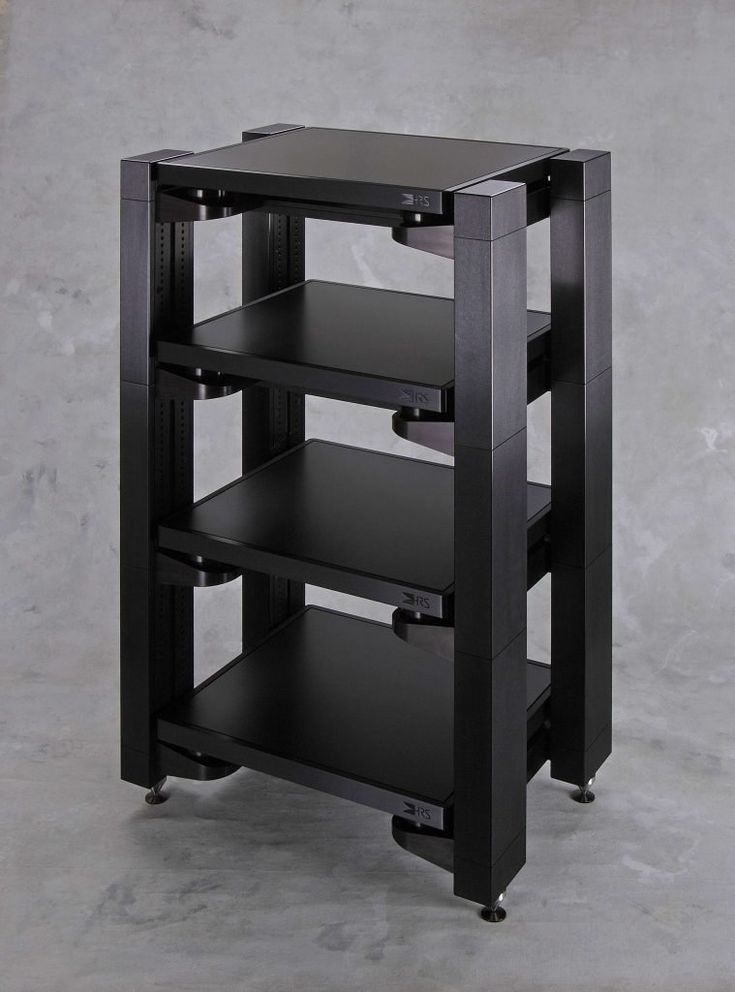
There is certainly more than one way to build an effective audio rack, but one look at those already on the market is instructive. If you want to take the high-mass route, just how high a mass is involved? The HRS VXR arguably offers an answer: that answer is, A LOT. With its massive, billet aluminium uprights and frame elements, not to mention the substantial mass of each M3X2 platform, a three or four level VXR rack really does seem like it’s cemented into the floor. Mind you, the SXR racks aren’t exactly lightweight. But the uplift in performance offered by the VXR (using identical supporting surfaces) demonstrates just how much mass is ‘enough’. Meanwhile, equivalently priced offerings from the likes of Critical Mass, Grand Prix Audio or SRA tend towards complex combinations of often exotic materials.
Pay to play…
The range, nature and cost of such structures make these racks inevitably expensive. If you go this route, you can make it work – but it will cost you to do so. That they sell so well is simply testament to how important system support really is. But not everybody can afford them, or wants to accommodate the (often) massive physical presence. Combine that realisation with the practical considerations of system installation and levelling and it seems obvious that the brute force approach to system support has left a gap in the market, inviting a more elegantly engineered and cost-effective solution. Start thinking in those terms and you soon arrive at the argument for a single, integrated structure, designed around managed energy paths, lossy construction/materials and low energy storage, an approach that potentially offers a viable route to more cost-effective, high-performance products. Products that challenge the ‘heavy-weight’ contenders in terms of performance, but which sit between them and the likes of Quadraspire, Solidsteel or Box Furniture in terms of price.