
Because small can (still) be beautiful…
By Roy Gregory
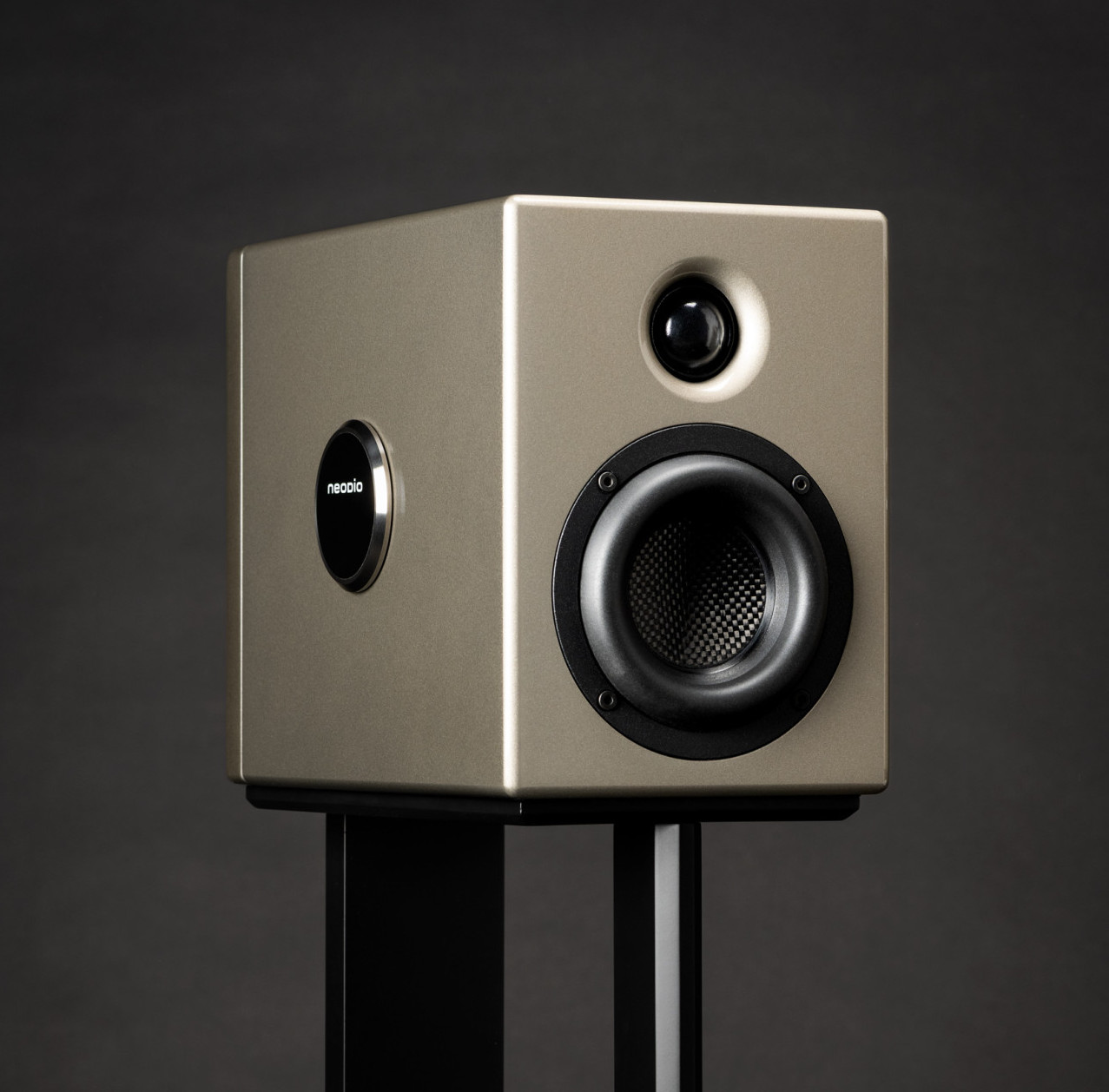
“Less Is More” is a mantra repeated with almost-Pavlovian regularity by the audio community as a whole. It’s a deceptively simple construct with an appealing apparent clarity, but like many philosophical constructs, it’s little more than the label on the lid of a very large can of worms – starting with the whole concept of “Less”. Less of what? And what constitutes less anyway? Less parts, less mass, less volume, less cost, less material, less power, less silicon… The possible less-list is almost end-less! All of which makes it particularly ironic that the one place in which you rarely hear the trope is referring to loudspeakers.
Bigger, more complex, more costly (and way heavier) loudspeakers aren’t just the final destination of most audio journeys, they’re the Holy Grail of audiophilia. Whatever else audiophiles struggle to agree on, the absolute need for (and desirability of) large loudspeakers is pretty much a given. Yet it’s indisputable that, the more loudspeaker you have, the more problems you face: from amplifier and room matching, to integration within and the mechanical behaviour of the speaker itself. Nowhere in audio is the conflict between size/complexity and musical performance more immediately apparent than it is with enormous, multi-driver speaker systems. Get it wrong and it’s the equivalent of sticking a sonic moustache on your musical Mona Lisa – often a serious handlebar moustache at that! Which at least in part explains why the few, really successful large/wide-bandwidth speaker systems are invariably expensive. There simply isn’t a simple solution to what should be, in many ways, the simplest part of the audio chain.
But if you do apply the Less Is More mantra to loudspeakers, where does it take you? Well, we could reduce the number of drive units, thus also reducing matching issues and the complexity of the crossover. We could make the cabinet smaller, using less material and taking advantage of the higher resonant frequency of smaller structures. Hell, why not eliminate the cabinet altogether? Ultimately, I suppose, you could argue that we should all be listening to single speaker, single driver, open baffle systems. After all, there’s no denying that ‘going mono’ offers a whole raft of cost and complexity savings – from the microphone all the way through to the listening room: No more spatial anomalies and fewer phase issues, only one speaker to accommodate and no bass problems… Except that stereo does have a very real role to play in recorded music sounding, well, ‘real’; and you can say the same about bandwidth.
Like everything in audio, you need to be careful not to throw out the baby with the bathwater. Simplicity is all well and good, but taken to the (il)logical extreme, it’s a limitation in itself. It’s impact on bandwidth in particular, limits its relevance to serious high-end systems. But further down the price range it certainly starts to come into its own. Which means that the question quickly becomes, how little can you get by on – or, how much is enough? In practice, there’s a very real tipping/price point, below which you are very likely better off with a smaller speaker than a larger one – at least as far as conventional box speakers go.
Kan can…
Linn’s Ivor Tiefenbrun is indisputably one of the audio industry’s iconoclastic characters. Most people would point to the LP12 as his most significant product – and in terms of sheer numbers, they’d be right. But in many ways, if you look at the early days of Linn, it was his smallest, apparently most conventional and most affordable product that actually presented the greatest challenge to accepted industry wisdom. The Linn Kan was an LS3/5a sized loudspeaker that demonstrated exactly why the BBC monitor really wasn’t (and still isn’t) a serious hi-fi product. It demonstrated just how effective a miniature speaker could be, especially when it came to musical communication and involvement. Discarding the ‘gold standard’ of flat frequency response, the Kan rested its considerable musical capabilities on the twin foundations of rhythmic and dynamic integrity.