
Audio seems addicted to automotive analogies – but are we choosing the right ones?
By Roy Gregory
Just as audio writing has developed its own expressive terminology and descriptive language, so it has developed a set of associated analogies and clichés. But for every ‘state-of-the-art’ or ‘massively over-built’, I’d be prepared to bet there’s at least one automotive analogy. And why shouldn’t there be? Despite the risks of repetition, reader fatigue and contempt born of familiarity, there are, after all, an awful lot of parallels between designing and building audio products and motor cars – at least on a conceptual level: both involve conversion of one kind of energy into another; both are examples of performance orientated engineering; both are perceived as an expression or extension of the owner’s tastes and personality. For example, notions of power to weight ratio and how that relates to performance are certainly useful, when it comes to understanding the particularities of how audio systems work. Of course, the standards and cost basis of automotive engineering vary, just as different products pursue different performance goals, although arguably that just makes the analogies potentially more useful.
But what I find most interesting is how almost all of those analogies are deployed to positive effect – and just how narrow a spectrum of analogy is employed. Indeed, the product specific negative analogy is a rarity indeed – perhaps reflecting just how rarely you’ll read a negative review. That’s a whole different issue, mired in misunderstanding, inappropriate expectations and the resulting conspiracy theories. There are a number of well-established reasons why you don’t see negative reviews and, whether you agree with them or not, they aren’t going to change anytime soon – and I’m not going to waste time on debating the issue. Instead, I am more interested in looking at a few of the less flattering parallels that exist between the automotive and audio worlds – and what lessons we might take from the former and apply to the latter. Time for an example…
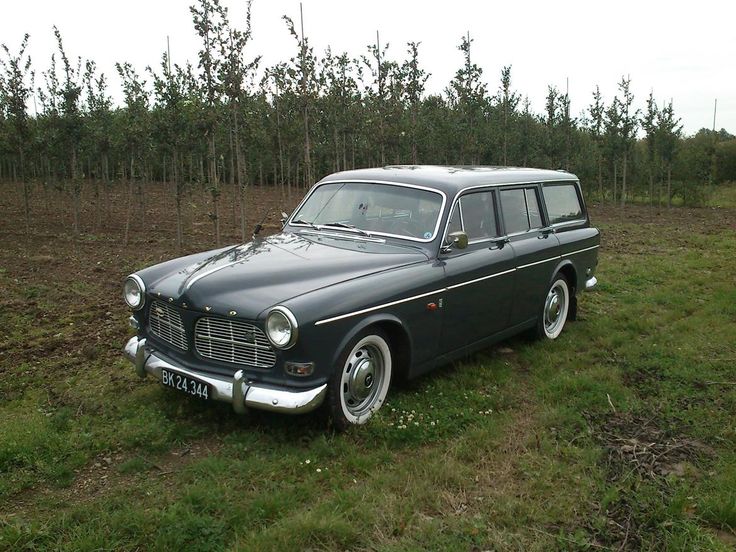
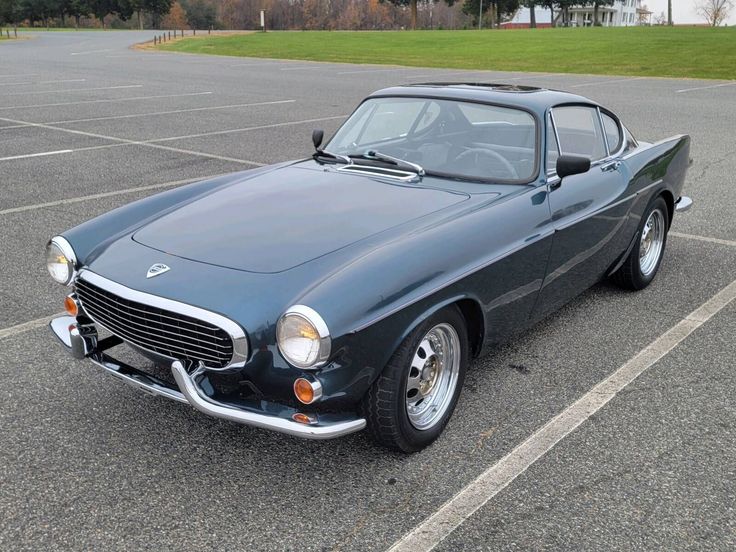
Back in 1956, Volvo introduced the Model 122 Amazon, in both two and four door sedan versions, with considerable success: success that drove subsequent development of the basic design. In 1962 they launched a five-door estate or station wagon version, an evolution that pretty much set the standard for execution and practicality when it came to domestic load carriers – a status that’s reflected in the considerable affection that the car still attracts today. But a year before the estate car, the company launched a grand tourer or sports coupé, the P1800. In an almost breathtakingly prescient step, pre-dating modern product placement strategies by decades, the managed to insinuate their new model into the soon to be massively popular TV series The Saint, transport for the fast-rising star of the show, Roger Moore (incidentally gazzumping Jaguar in the process). It was an association they exploited mercilessly and the rest, as they say, is history. Moore bought a P1800 for his own personal use and the model’s success – and TV profile – was sealed. Even after production ceased in 1973, after nearly 50,000 had been produced, it was still a popular ‘vintage’ choice, featuring in shows such as Stargate SG1.