
Doing the “system shuffle” – big time!
By Roy Gregory
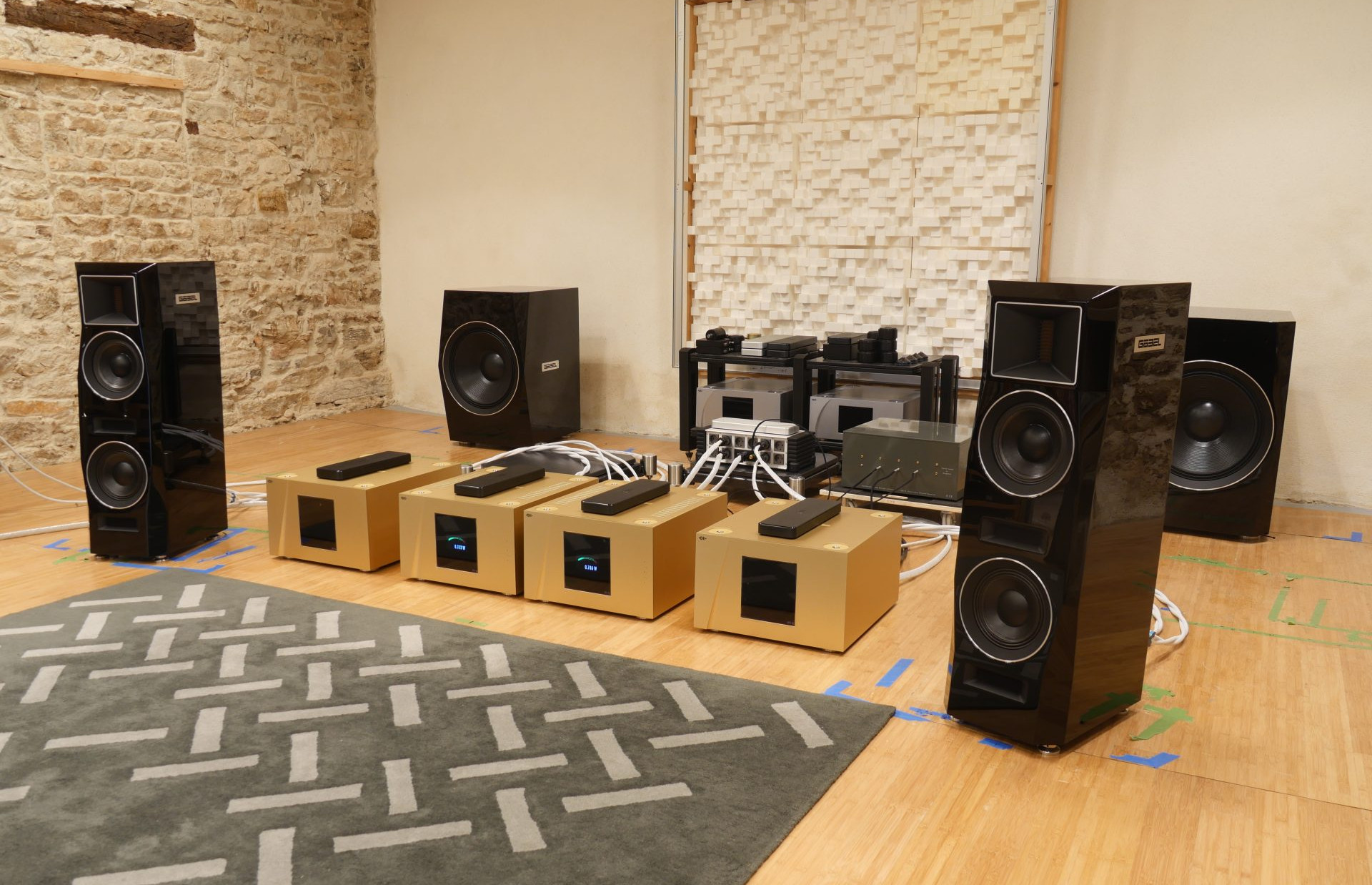
One of the most misunderstood aspects of this audio hobby is to do with reviews: not how important they are (or are not) but the effort and process behind them. Whilst many pixel-populated page has been filled with a barrage of complaints levelled at magazines and reviewers, websites and reviews, much of it is misdirected or misguided. Readers might not find what they’re seeking in reviews, but in many cases what they’re seeking is unrealistic or unlikely. There’s nothing anybody can do about expectation bias, but understanding the process a little more should at least help explain what’s actually achievable.
I use the term ‘process’ because it’s critical to both the activity and the results achieved. Like any observational or scientific process, the quality and consistency of the results depend absolutely on the methodology employed. In the case of audio reviewing, a big part of that relates to what you listen to, how you listen, your frame of reference and your goals. Do you compare the device being reviewed to peer products? Do you simply connect it to a known ‘reference’ system in place of an established incumbent? Or, do you mix and match components around the review product with the aim of building a system to maximise its potential? All valid questions – but questions for another day and another article. What I want to look at here, using a recent (possibly extreme) case, is the bedrock on which reviews rest, the establishment of a functional platform on which to base the review.
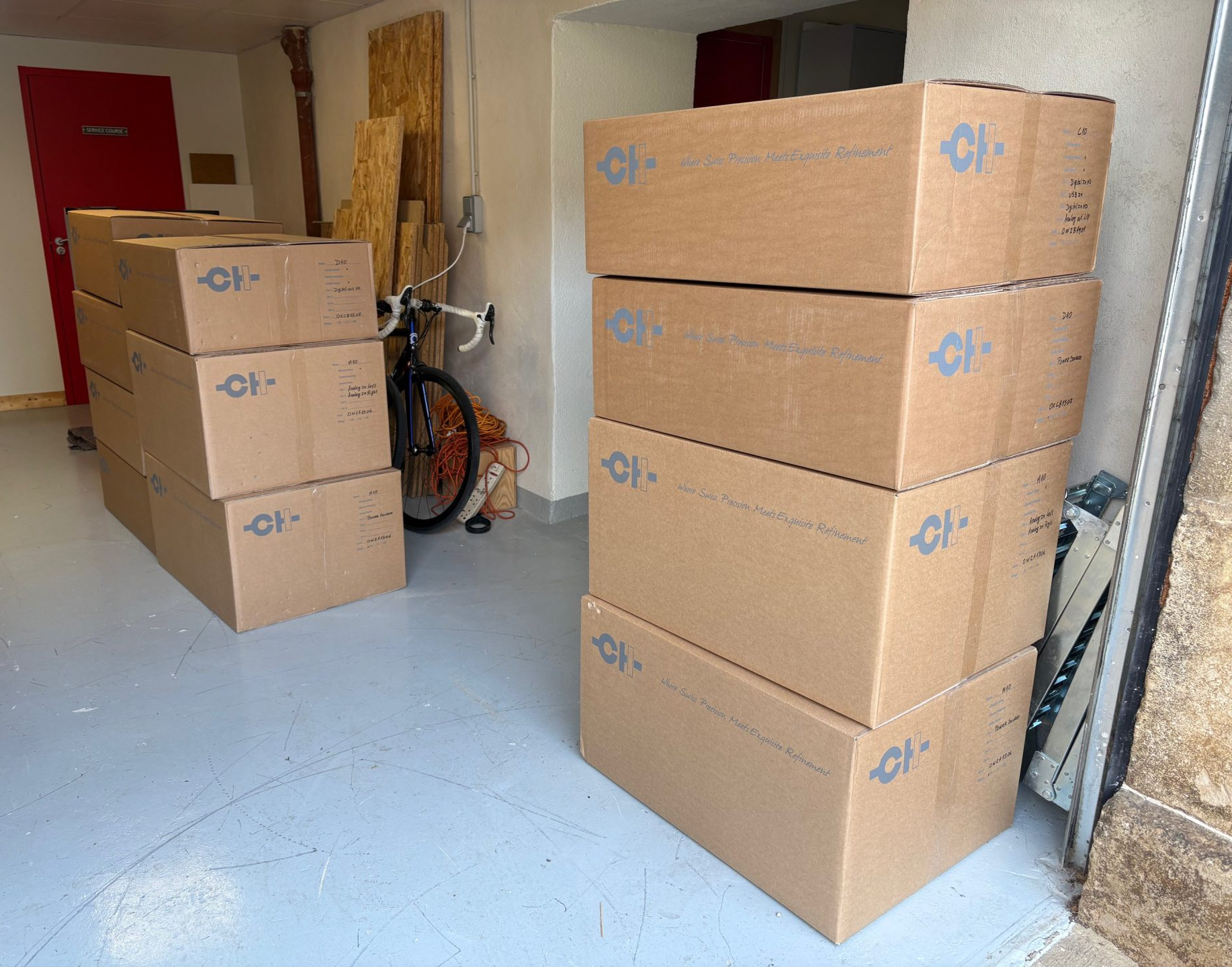
Facebook followers might have seen the mountain of CH Precision boxes that recently arrived at Gy8. For those that didn’t, here’s a picture to put you in the picture, so to speak. That’s 11 large cartons, each containing a heavy, expensive and flawlessly finished component. Together they constitute the required additional elements to start the review of CH’s new, flagship digital system, itself an eight-box extravaganza. Stage one involves the D10, top-loading transport and C10 DAC, both two-box units with substantial external power supplies, along with a T10 Time Reference 10MHz clock. That’s the first half of the digital set-up. Along with it, CH also supplied an L10 two-box line-stage and a pair of M10 twin-chassis power amps. That’s a lot of weight and each piece needs to be handled with considerable care: not so easy when the M10 power supplies tip the scales at around 80kg/175lbs each!
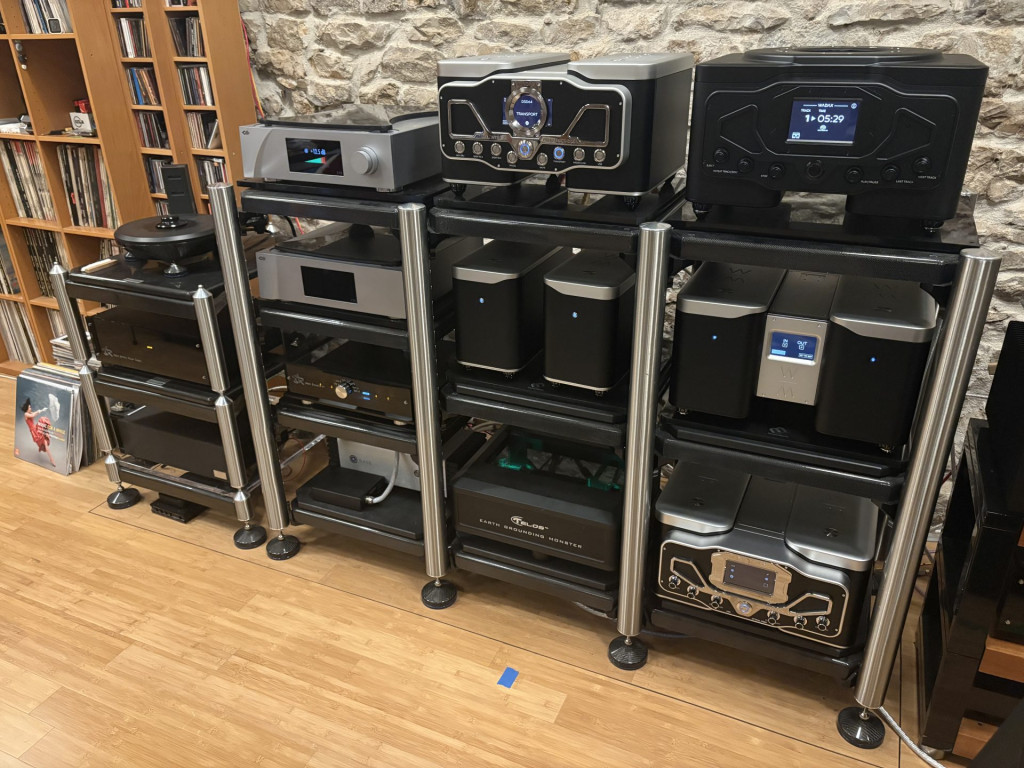
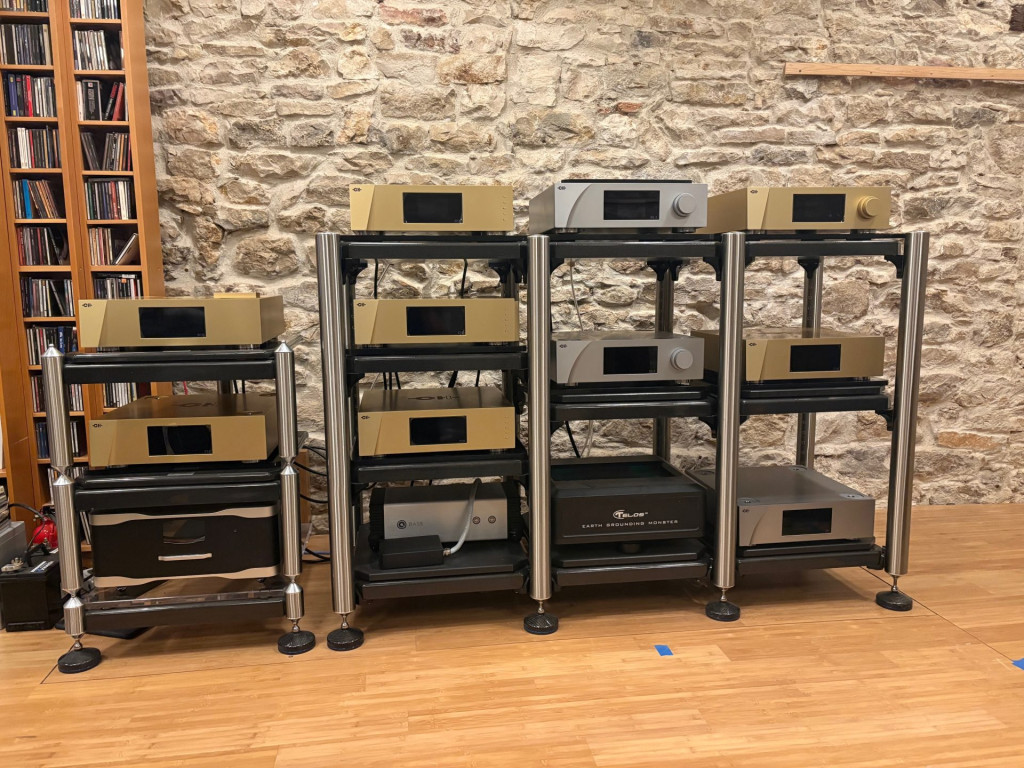
You might think that unpacking and placing almost a dozen components is a serious task: believe me when I say it’s not even the half of it. Although the 10 Series digital review is obviously a serious project, it’s not the only review going on or the only review that will use this system and the room it’s in. Scheduling reviews is like a surreal game of chess in which the board keeps constantly changing shape and the pieces are too heavy to move. The CH components might be the most obvious, numerically dominant part of the system, but they’re far from the only story here.