

Before doing anything with the CH pieces, it was first necessary to clear the existing system out of the way. That meant moving (and finding homes for):
The entire Wadax Reference rig (Transport, Server, Reference Power Supply, DAC and its two power supplies).
The Wadax Studio Player.
The emplaced CH components (P1/X1, L10, two M1.1s and an A1.5)
The six-chassis ASR Emitter II and its phono-stage.
The Grand Prix record player, controller and power supply.
The Peak Consult El Diablo loudspeakers.
The PureLow GR sub-woofers and Wilson crossover.
In addition, you can add to that, the cables necessary to lace the whole lot together (count ‘em – that’s 20 power cables before you even get to the network components and ancillaries), multiple power distribution blocks and grounding components as well as the network for streaming and file replay.
Because the system being installed would be switching from Odin 2 to the Chord Music, that meant cleaning, coiling and storing all those Nordost cables. Along with signal and speaker cables, that amounts to two, large storage crates: at least they’re stackable. Why the cable switch. The sheer quantity of electronics supplied might seem (indeed, is) profligate, but not only is it essential to the process – as we shall see – it’s also doing double duty. These products have arrived for stage one of the review. For stage two, we’ll be adding The Conductor Source Switching/DSP twin-chassis and a second power supply to the C10 DAC. But in between, the first 11 components, having reached the EU, will also be visiting Vienna to perform at the High-End show, yet another link in the logistical chain reaction that typifies any major review.
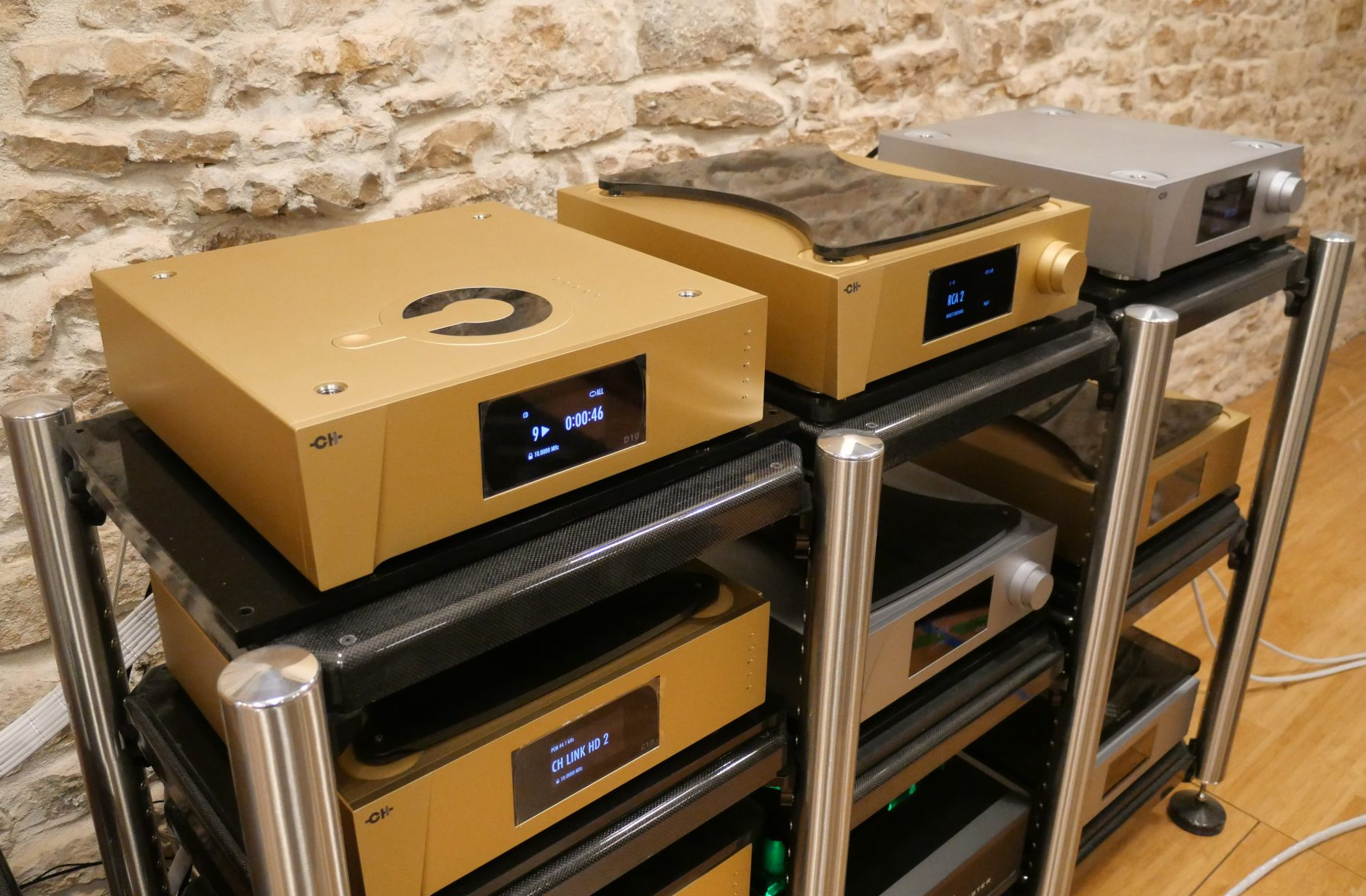
Having removed the existing system, the racks and room were given a thorough clean before the system supports were reconfigured to match the incoming components – a component list that extends beyond just the recently delivered 10 Series pieces. A major goal for stage one of the review was to establish what performance benefits the 10 Series digital components offer over their 1 Series predecessors and how wide the musical gap has been opened. That means adding the D1.5 transport, C1.2 DAC and a dual output X1 to the mix. Fortunately, the T10 and T1 clocks are essentially identical, just the casework changing to match the partnering components. With six clock feeds, the T10 can be used to supply 10MHz signals to both the 10 and 1 Series digital pieces simultaneously.
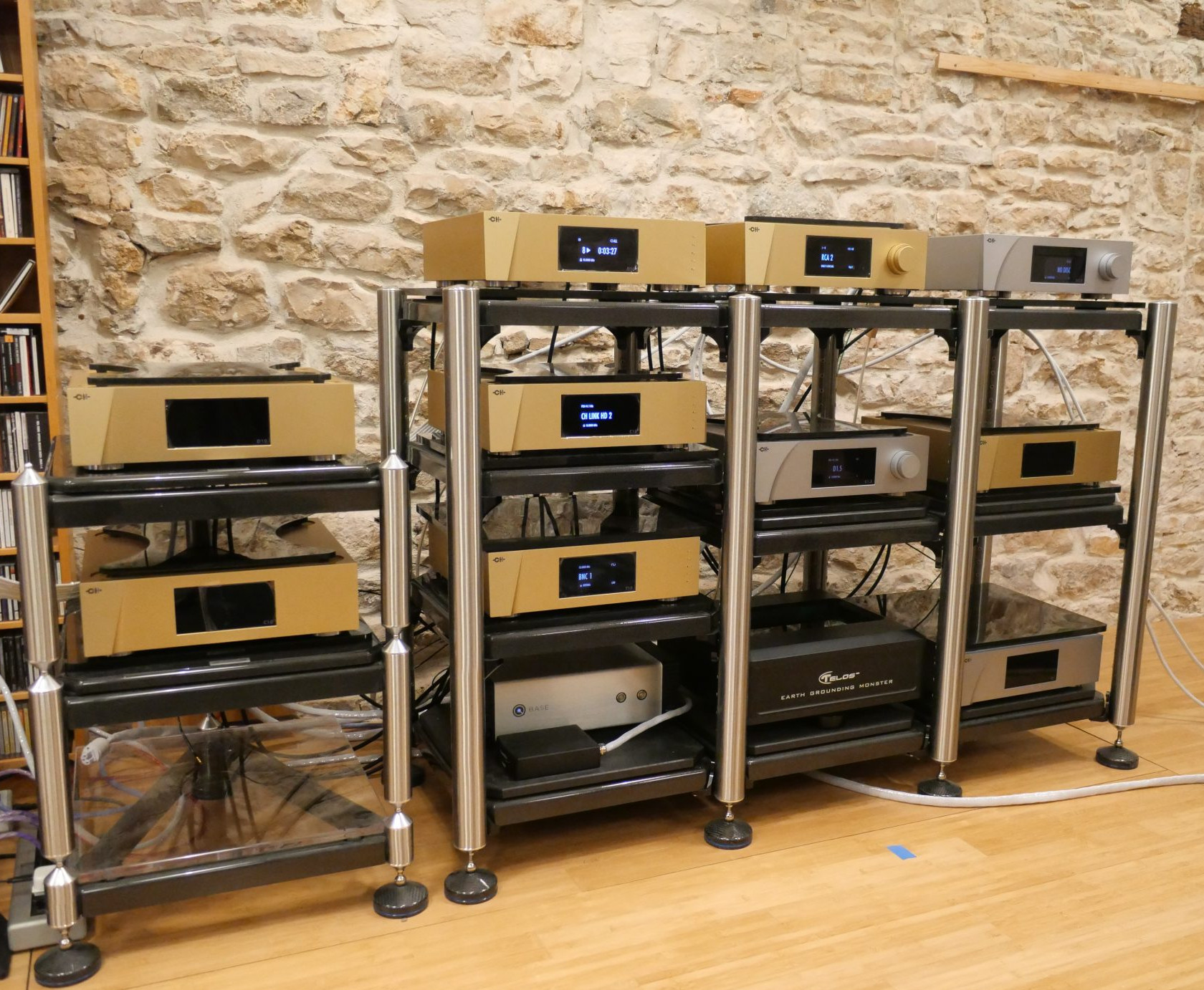
Look at the pictures of the main rack and you’ll notice the patchwork layout of the components, with audio chassis and power supplies off-set and arranged around the L10 and T10 Clock. That component distribution was the result of some serious pre-planning and a few last-minute shuffles in order to keep cable lengths between the two front-ends and the line-stage identical, while also keeping both transports on a top shelf, both DACs one step down, thus ensuring as near identical support as possible (and yes, different levels on the same rack do sound different). In order to maintain consistency of support, all of the CH pieces used their internal grounding spikes, the 1 Series being outfitted with the worthwhile option of the same titanium pieces that come as standard on the 10 Series.