

The power-amps are a whole different story. Even the ‘lighter’ audio chassis weighs a far from trivial 53kg – or almost 120 pounds. The golden rule here is simple: never lift any piece of an M10 until you absolutely have to. That means leaving the units in their boxes until they’re right next to where they’ll live, sliding rolling or shifting them on a skate, but avoiding lifting and carrying them. Unboxing them is itself an art: slit the top of the carton, fold back the flaps and then roll it upside down. Lift off the box, lift off the foam packing piece that wraps the bottom half of the amp and, having removed the cables and accessory boxes too, roll the amp gently back onto its feet and remove the upper foam cap. If you’ve thought it through, the unit will be pretty close to ideally placed. Now, shift it into the perfect position before removing the heavy-duty polythene wrap. Leaving the polythene in place makes it possible to slide the unit easily and precisely – something that’s impossible once its rubber shod feet contact the floor. Finally, open the polythene wrap and slide it down the unit, rock it one way and slipping the polythene under neath, then the other to remove it completely. Result – one impractically heavy yet delicate component placed – all without ever actually having to lift an entire unit clear of the floor. Now just repeat another three times…
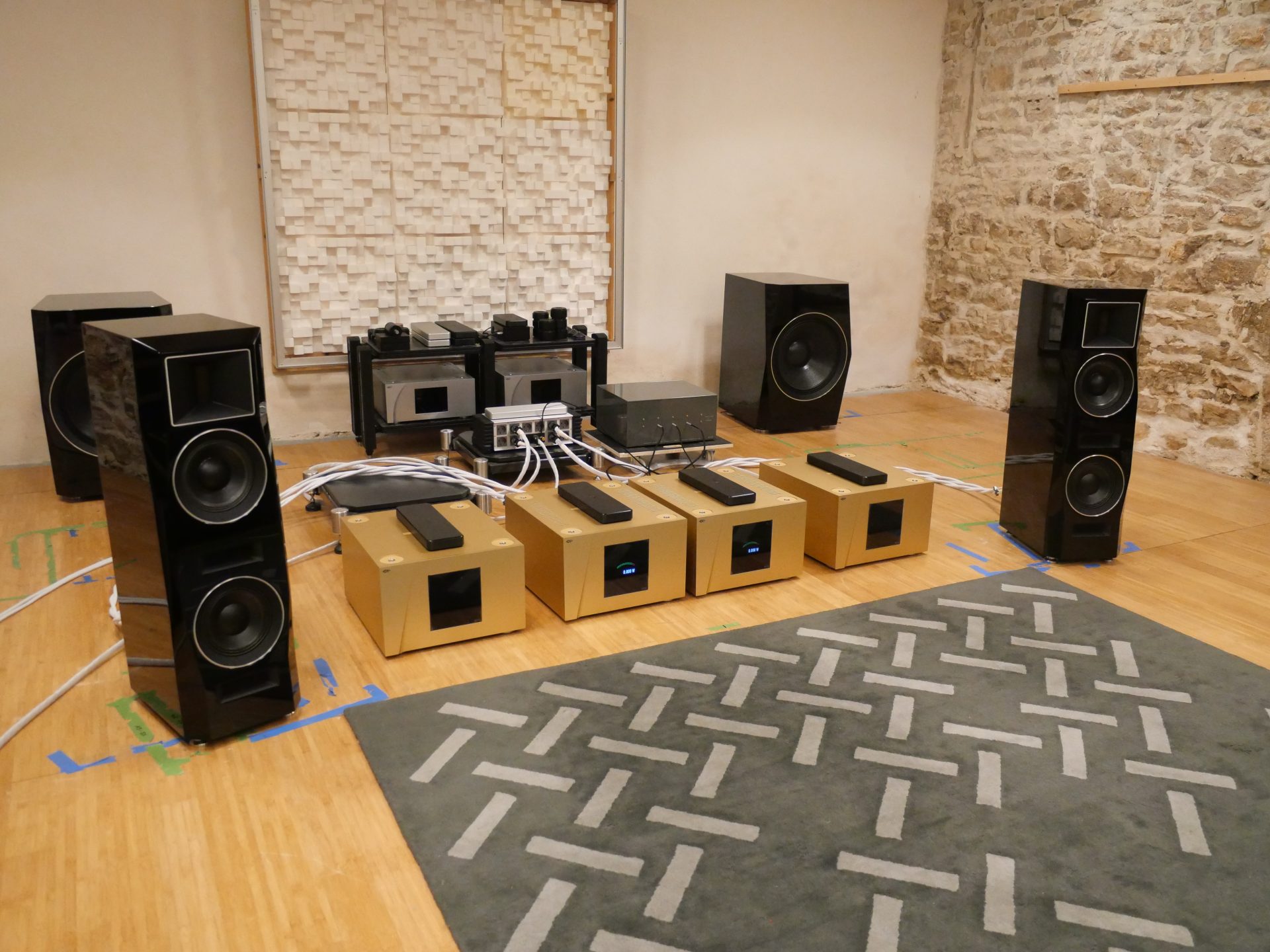
You’ll notice that the M10s are sat directly on the floor, despite the availability of amp-stands. The reason is simple. In order to reconstruct the system, I leant shamelessly on the generosity of an ex-dealer friend. Two pairs of hands make the job not just easier: in some cases they make it possible. Passing the source components into the rack is significantly easier if you have a person both front and back, one to present and one to receive the unit. Likewise, cabling the whole lot is considerably easier if someone else is looking after the other end of the cable in question. But when it comes to manoeuvring the chassis of an M10 onto – or off of – an amp-stand, it’s simply not sensible or possible to do so single-handed, without risking serious damage to furniture, floor, component or self. So, while we could have placed the M10s on amp-stands, I would have struggled to get them off on my own, when they need to depart for Vienna. Fortunately, the Music Room is also a workshop. Whilst I don’t go out of my way to wreck the joint, I’m also not as precious about the state of the floor as I might be in a domestic setting. I simply used the internal spikes to couple the chassis directly to the bamboo flooring, itself glued directly to the 50cm/18” concrete slab.
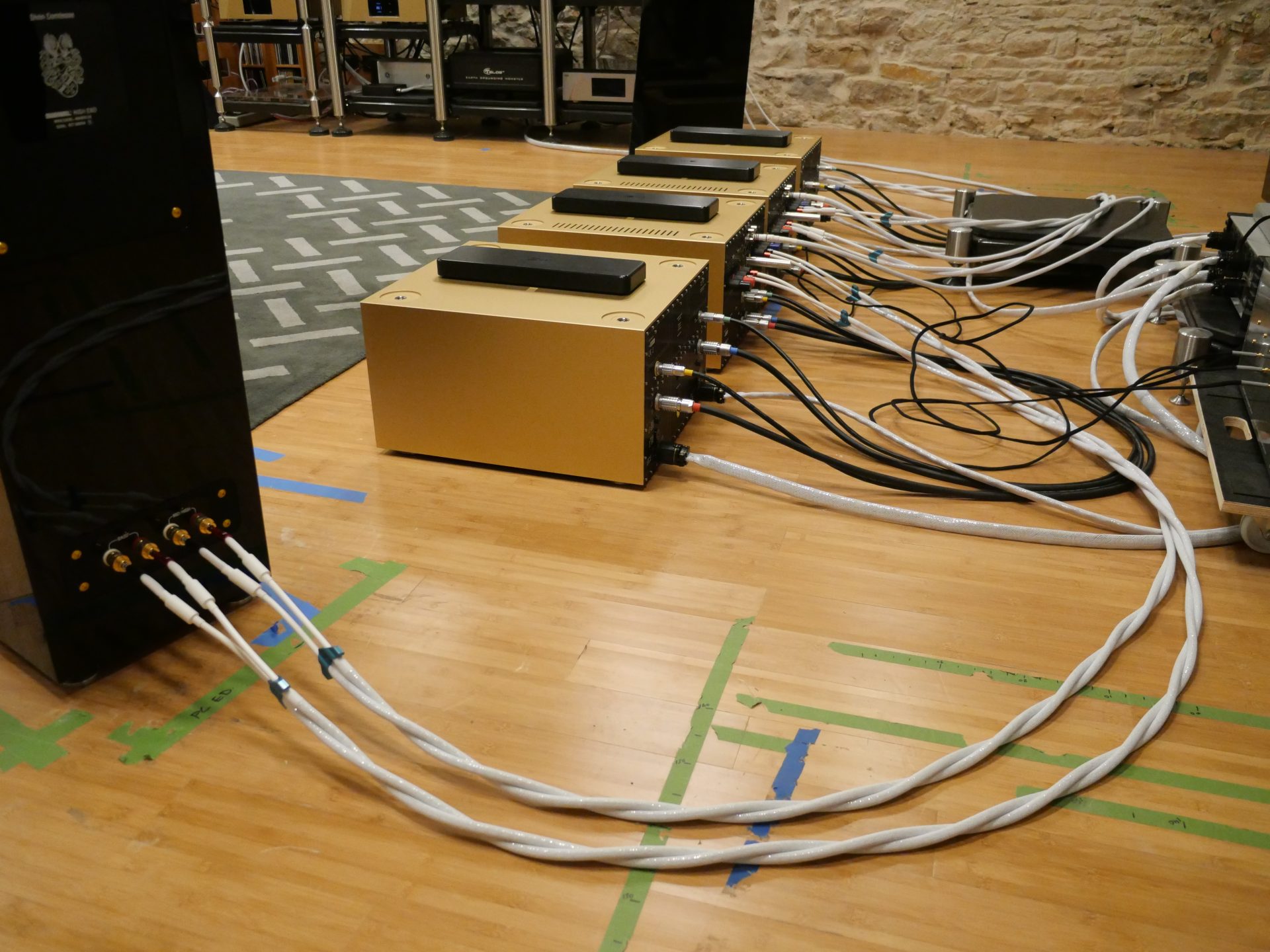
With everything placed, the next step was to wire it up and fire it up – a far from simple exercise in cable dressing when you have this many components to worry about. It was also necessary to relocate a separate rack to house the network elements, in this case a SOtM switch with linear power supply, fed from a Reiki SuperSwitch Pro, located next to the router. The SOtM was installed to allow me to include a server, the Roon Nucleus with a Sean Jacobs linear PSU. The signal from the SOtM was fed to the C10 or C1.2 Ethernet-HD streaming input via a second Reiki switch, but in this instance, I installed both a SuperSwitch Pro and the new SuperSwitch X with matching Pro X power-supply, allowing a direct comparison between the two (and thus fulfilling another review requirement).