
Small wonder…
By Roy Gregory
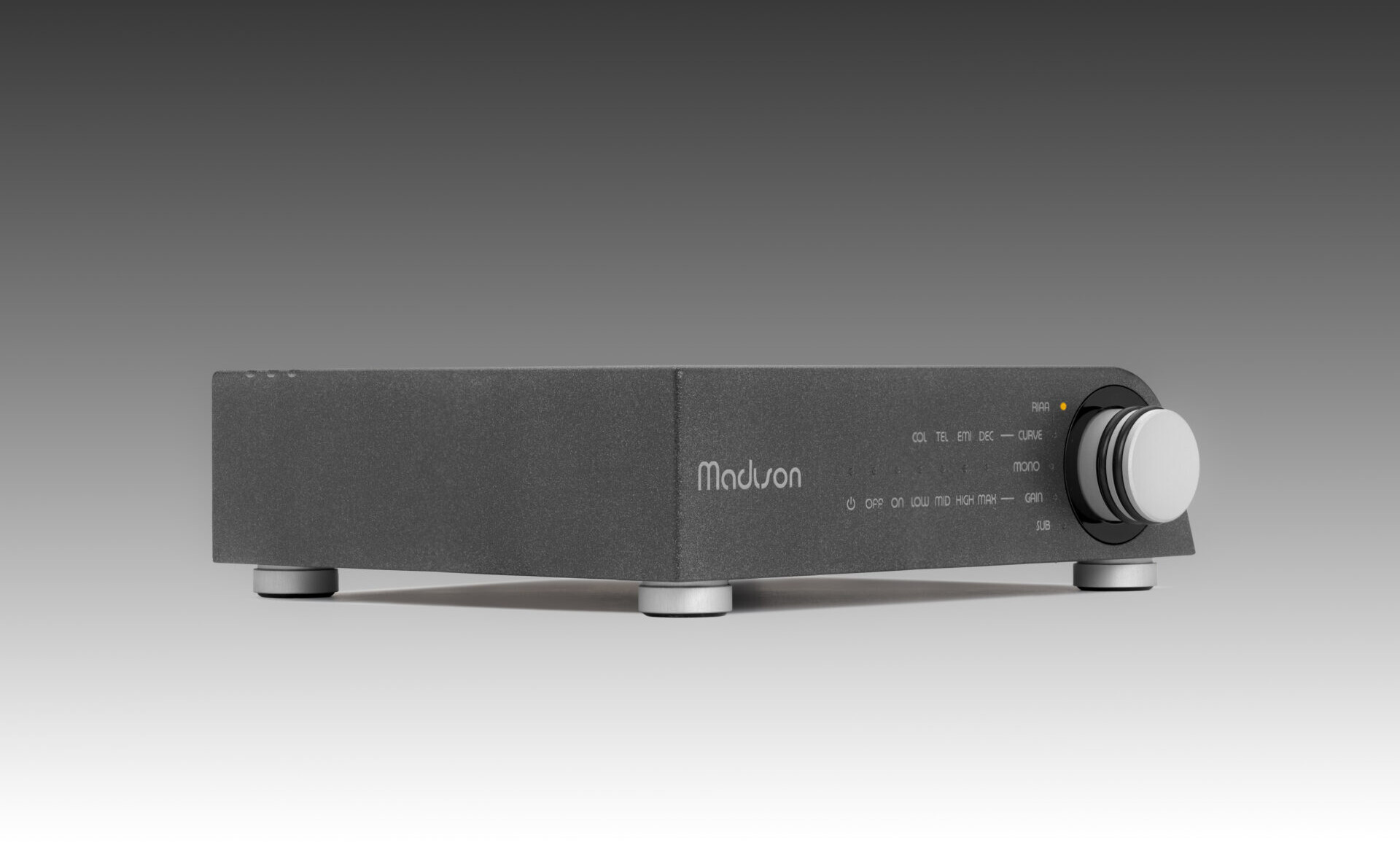
Announced in Vienna, the Wattson Audio Madison Phono is now available. Like other, recent Wattson products it is both unusual and incorporates more than a little thinking and technology from parent company CH Precision. Built into Wattson’s distinctive, compact, asymmetrical chassis the design is modular, hybrid and expandable, with a choice of input cards to suit different cartridge types (including optical), digital EQ and the option of adding the external PowerS power supply.
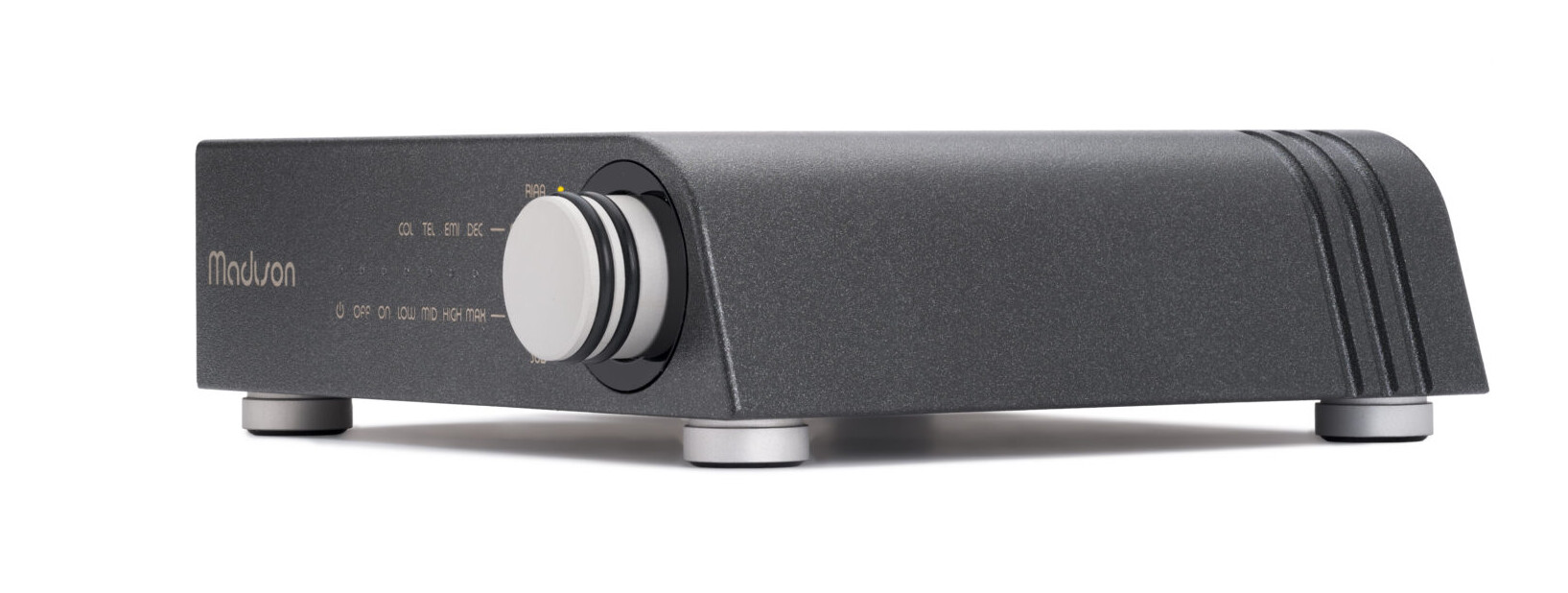
Taking the signal from a record player, any record player, and digitizing it might be anathema to analogue die-hards, but it’s an approach which CH has employed with considerable success in their I1 integrated amplifier. In fact, so successful is the I1 implementation that few listeners ever realise that the signal from their precious records is being processed through an A-to-D, unless they’re told. But whereas the I1’s inputs are current-sensing, trans-impedance only, the Madison Phono allows users to specify the nature of the input: voltage-sensing for MM or high-impedance MC cartridges, current-sensing for low-impedance MCs or an ‘Optical’ input (and power source) to suit DS Audio optical cartridges. Modular construction means that the input card can be changed at a later date if a cartridge change demands it.
Processing is carried out at 32bit/384 kHz DXD resolution with one of the advantages of digital EQ being the easy provision of different record replay curves, executed to an accuracy of ±0.1dB. As well as RIAA, the Madison Phono offers front-panel (or App driven) switching for Columbia, EMI, Decca and the all-important Teldec/DGG. If you own older, pre-1970 pressings the benefits of switchable EQ, especially for UK or European labels, can be substantial, with significant improvements in rhythmic and dynamic integrity, musical coherence and tonal balance. DGG never adopted RIAA, so for anybody with an extensive classical collection or simply wanting to investigate Deutsche Grammaphon’s stellar artist roster, the Teldec curve is a God-send. Ignore the nay-sayers: it’s becoming increasingly obvious that anybody who thinks this is just a tone-control or that all records pressed after 1958 were RIAA, either hasn’t listened or doesn’t have the records to benefit.
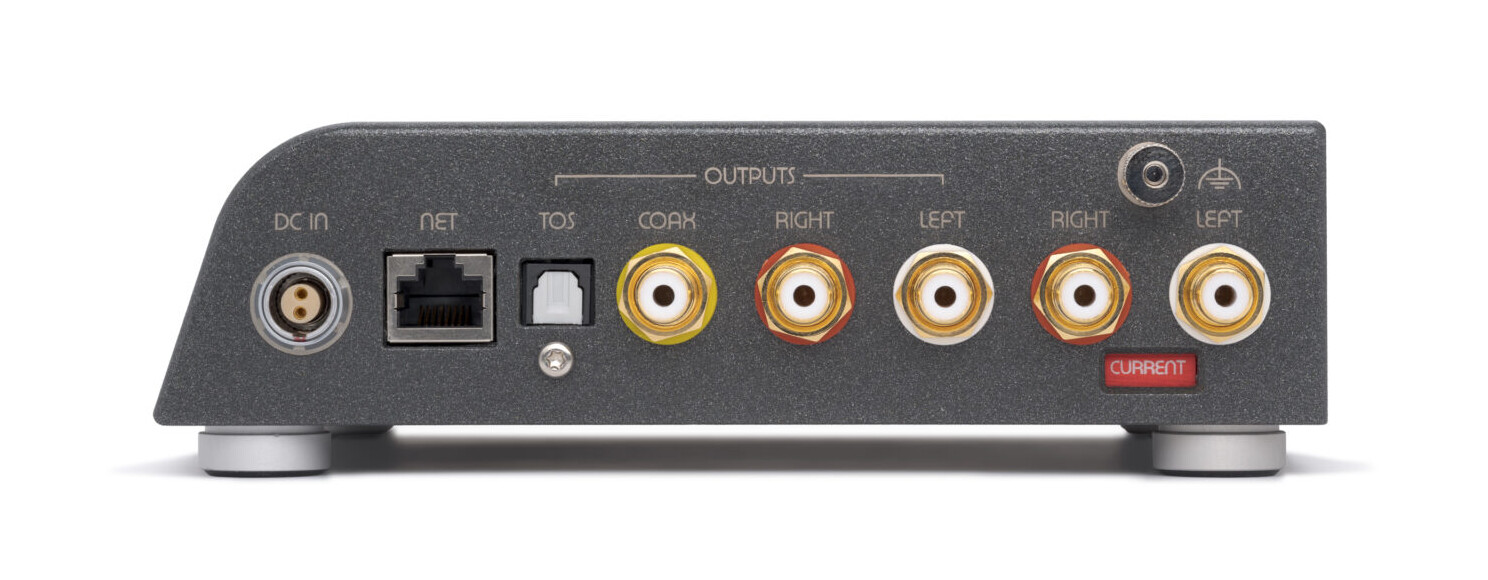
In addition, the Madison Phono offers variable gain, a mono setting and a switchable sub-sonic filter. Both digital and analogue outputs are provided, on RCA, Co-axial S/PDIF and Toslink, allowing easy integration into both traditional, analogue-based amplification chains or digitally control units – like Wattson’s own Madison LE DAC/controller.
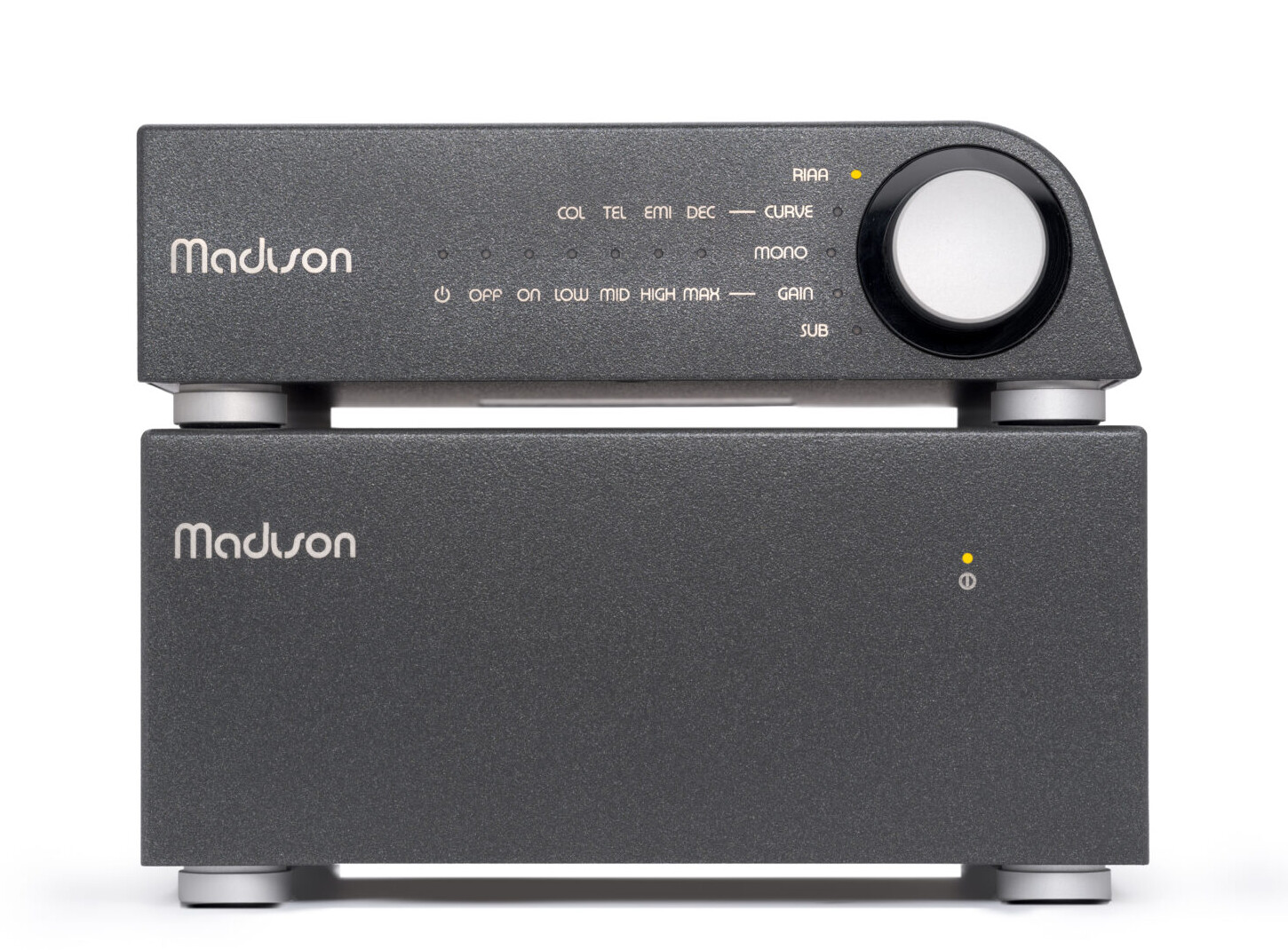
The Madison Phono is priced at €5,240 (inc. VAT) or $5,495 USD (ex. Sales tax), with additional input cards costing €500/$500 each. Thankfully, as well as Wattson’s signature, pale gray/taupe finish, the Phono is also available in dark gray, allowing it to integrate into more systems, more easily. Although there are a few more affordable phono-stages that offer some alternative replay curves (notably from Gold Note) they don’t offer the range of curves or matching options delivered by the Madison Phono. While Decca and Columbia curves are reasonably easy to access, Teldec – perhaps the most useful of all – has been limited to higher-priced products – until now. Given past experience with the CH Precision I1’s phono-inputs and curves, the Wattson phono-stage promises to be very good indeed, while its input options, compact dimensions and upgradability make it very ‘up-to-the-minute’ relevant. Arguably it’s the most interesting product from Wattson since the original Emerson streaming module.
- 1
- 2