
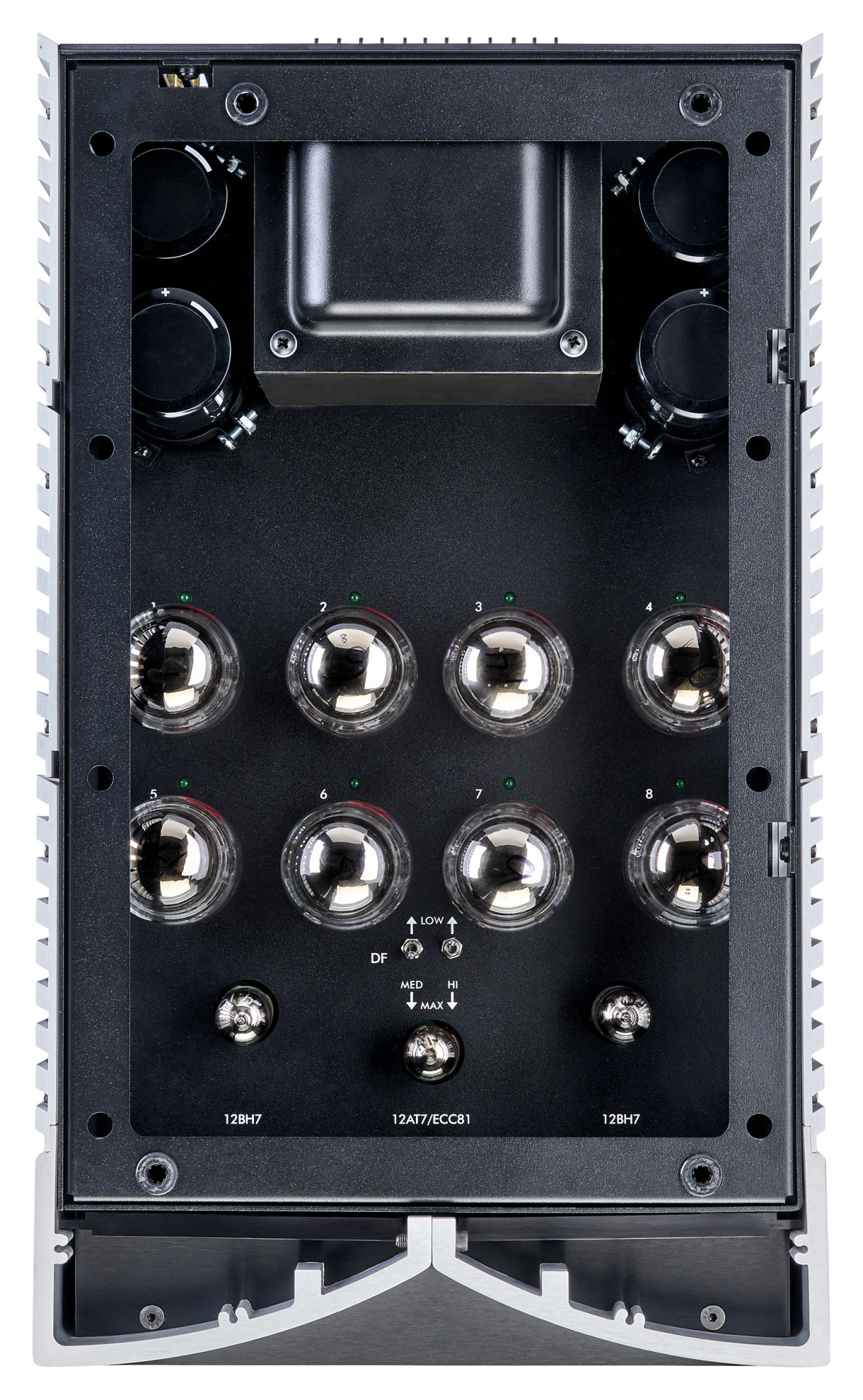
At first blush, this is an LP that sounds great whatever the equipment used to reproduce it. However, even with a “legacy” title of uncomplicated music like the Carl Perkins, the Lohengrin makes its grip and control obvious without sounding, dare I say, solid-state. But there is a reason the album has the word “dance” in the title, and it should be almost impossible to listen to it without moving your body. The Lohengrin’s ability to flow through the music’s rhythms, drive its beat and capture subtle differences in articulation brings the rhythmic patterns, the enthusiasm and the ‘danceability’ right to the fore. Yes, there’s plenty of control and definition, but there’s nothing static or immobile about the pace, attack and musical energy projected by the Lohengrins.
Stepping up a notch to a more complex and better recorded LP, I queued up a new re-issue of Pepper Adams Quintet. (Gammaut 001). Like the Carl Perkins LP, this was recorded in 1957, but in stereo, and as the re-issue demonstrates, in exceptional sound quality. The wider bandwidth recording underlined the extremely well-focused and taught bass, coupled to an extraordinarily well-developed acoustic space, peopled with precisely located and dimensioned images. This spatial definition and clarity helped maintain the amps’ fluid articulation and rhythmic flow, even at low volumes. Often in open plan spaces, extraneous noises can be intrusive, but the Lohengrins held the music together, so solid and focused that it resisted such distractions, even at lower volume levels.
And tonal colour and harmonic identity! One of my favourite, but undervalued, jazz instruments is the baritone saxophone, and the Lohengrin captures Pepper Adams’ sound as well as I’ve heard from any stereo component. The amps’ ability to create lifelike dimensional imaging elevated this great sounding LP to jaw-dropping status. The piano sound, from Carl Perkins (not the same Carl Perkins who sang ‘Blue Suede Shoes’) wasn’t just rhythmically on point, the instrument was perfectly placed upon a convincing stage, along with the trumpet, bass, drums, and Pepper Adams’ sax.
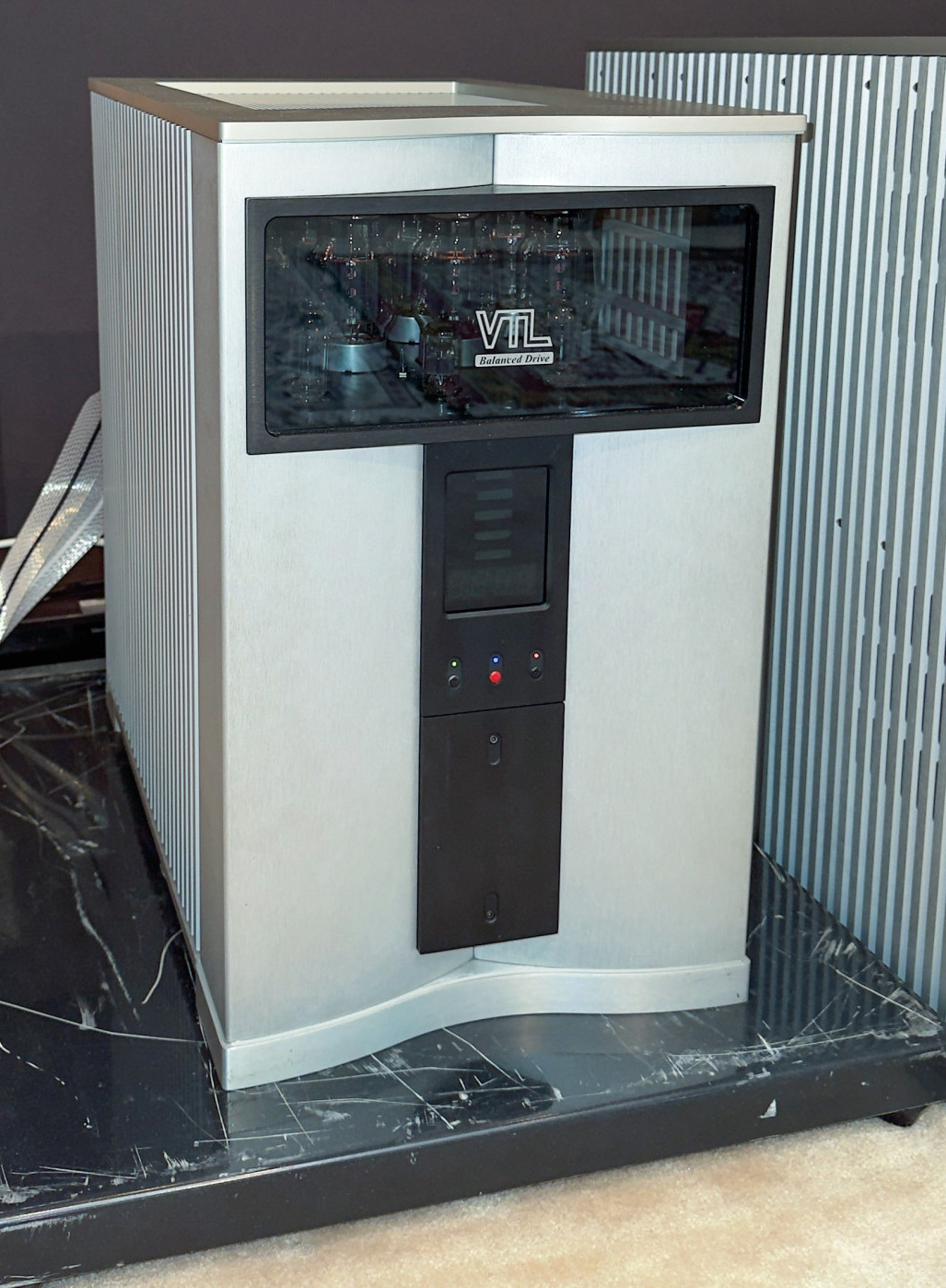
As you might expect, the toughest test for a world class amplifier is its ability to reproduce a large orchestra. To evaluate the Lohengrin’s performance, I brought along a Deutsche Grammophon Original Source re-issue of Berlioz’s Symphonie Fantastique (DGG 2530 358) with Ozawa conducting the Boston Symphony Orchestra. The piece calls for an orchestra of about 90 players. It really does put all of Lohengrin’s attributes on full display. Despite being a vacuum tube amplifier, it demonstrates the sort of grip and transient speed more often associated with the top solid-state amplifiers – but combined with the body and presence that only tubes seem to deliver. The soundstage on the Berlioz disc was not only deep, wide and high, but also displayed exceptional dimensionality. Perhaps the most striking attribute was its low noise floor. Over the last few years, we’ve watched and listened as some of the best solid-state designs have caught up with the midrange neutrality and bloom of tube amplification. A brief time listening to the Lohengrin with classical music suggests that the best tube amps have also advanced, not just in the quality of their mid-band, but by stretching that quality further up and down their range.