

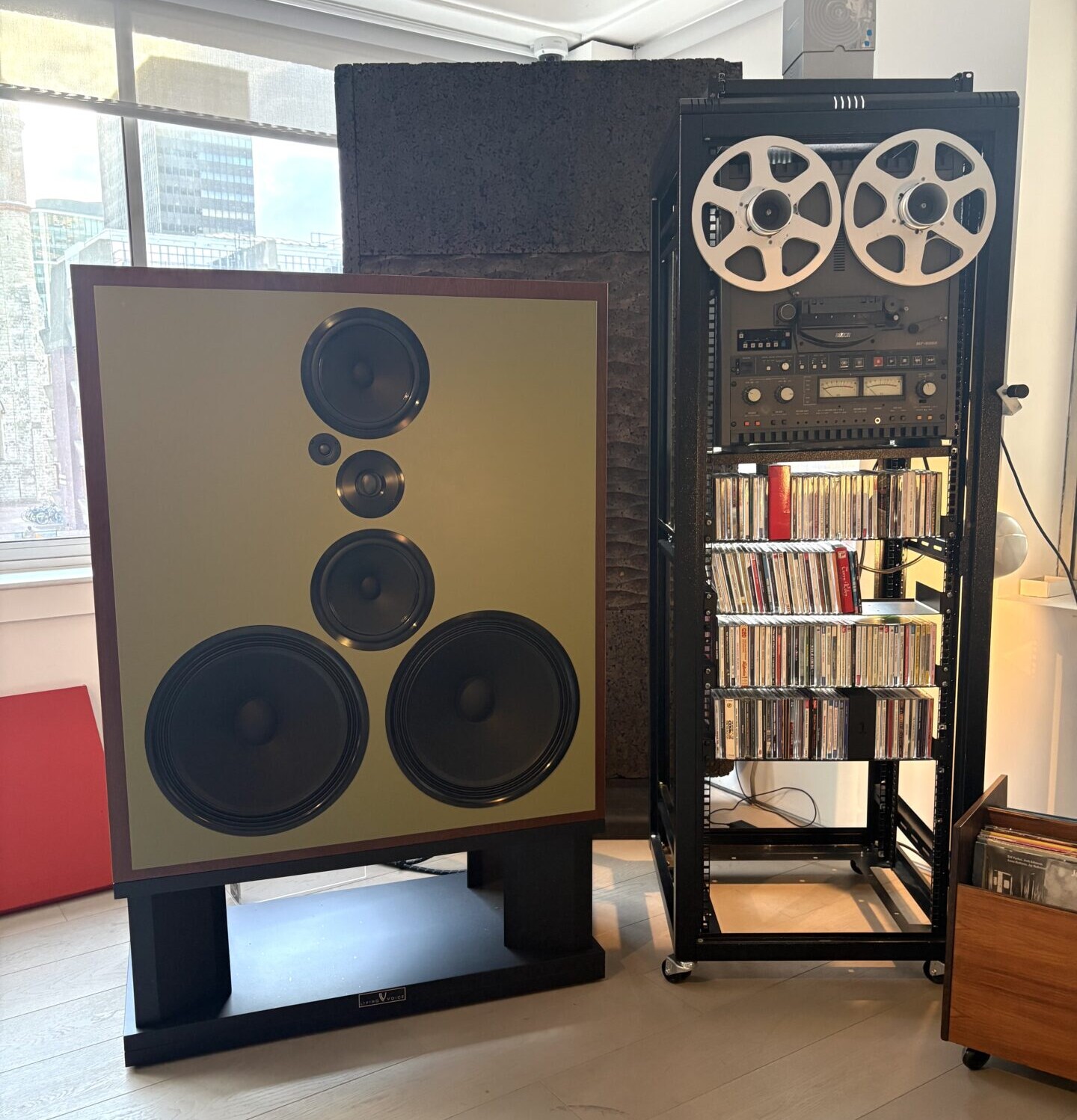
Tear your eyes away from those bass drivers and sat above them you’ll see a pair of 210mm Scanspeak paper cone mid-units, built around an elliptical voice-coil motor (technology that steps straight across from the R80). These flank a 34mm silk-blend, dome tweeter, again driven by an elliptical voice-coil. Above that, a 19mm fabric dome super-tweeter extends the bandwidth out to 40kHz. It’s exactly the sort of arrangement (if not exactly the sort of drivers) you might expect to find in many a high-end speaker. But the devil is in the detail, especially when it comes to the crossover. No surprise that this uses shallow, first or second-order slopes and conjugate load matching to ensure a non-reactive, dynamically coherent response. Rated at 6Ω nominal, the impedance characteristic never drops below that or rises above 9Ω. But by placing the mid drivers in a carefully calculated, sealed enclosure, the speaker exploits their natural low-frequency roll-off to eliminate the need for a crossover to control their low-frequency output, in effect creating a direct-coupled mid-band.
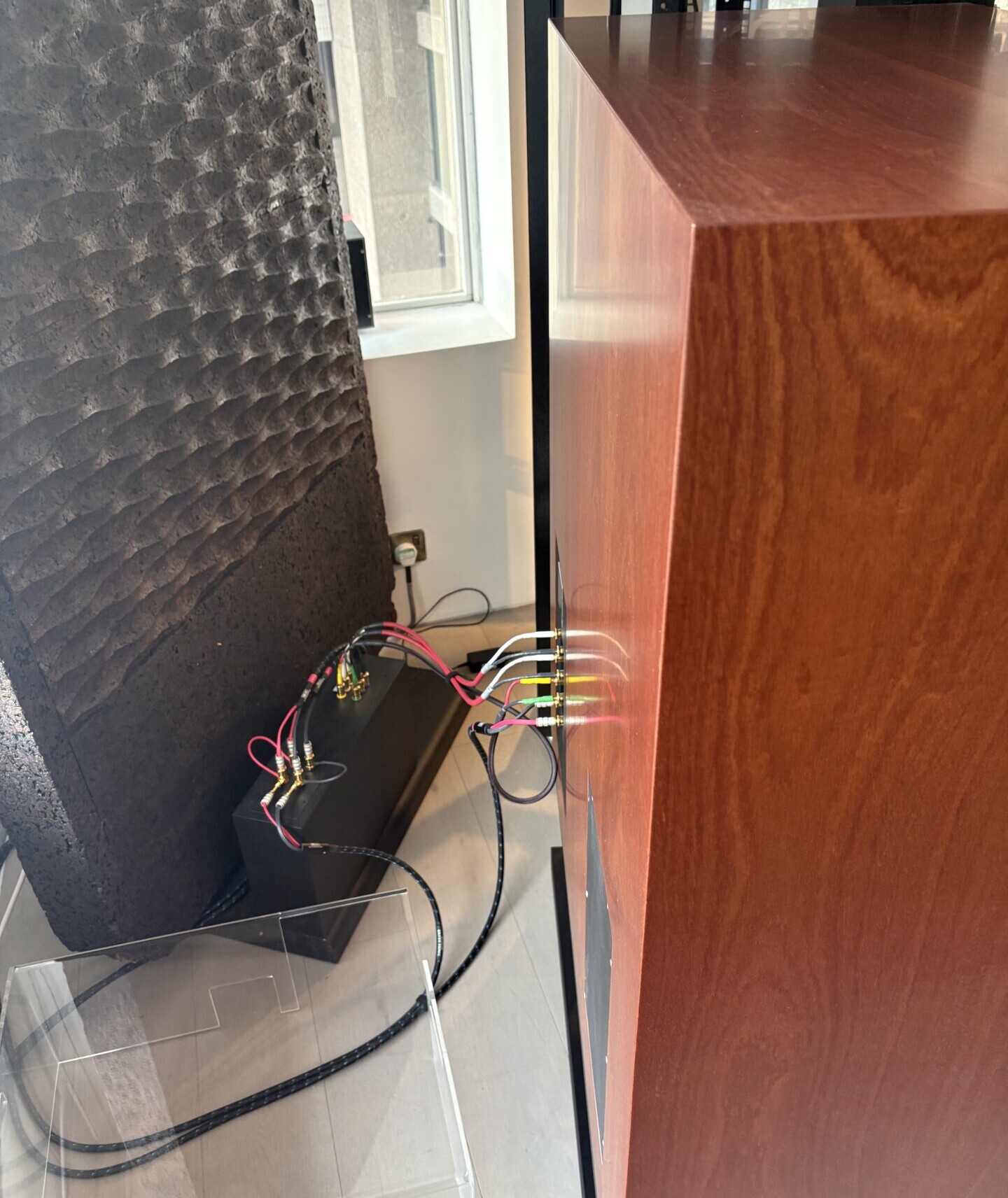
That benefit is further exploited by driving the bass units actively, with the added benefit of tunable low-bass output – “low” being the operative term here. Those 15”, Scanspeak paper-cone drivers also use the elliptical voice-coil motor design and are housed in a (you guessed it) 252 litre, reflex loaded cabinet. The downward firing port is critically spaced from the floor by the integral stand that lifts each speaker by around a foot off the floor, together creating an imposing visual presence to go with the equally imposing bass extension, that reaches down below 20Hz. Combine that with 94dB system sensitivity and “potent” is the word that springs to mind. In development, like many a product, this one attracted its own, in-house identity, generally being referred to as the Rude-Boy. It’s an affectionate appellation that nonetheless perfectly captures the musical connection, boisterous energy and a hint of potential menace. Gangsta speakers? Sure – but so much more besides.
The R80 has built a solid reputation by combining rhythmic and textural subtlety with expressive dynamics. The R252 takes that a whole lot further, adding serious bandwidth while neatly side-stepping the complexities of three-way design and the issues with hoisting a massive driver, way off of the floor, or jacking an MTM array up higher than it wants to be. The Barbican environment presents a challenging acoustic, but it’s a challenge the speakers are more than capable of meeting, with a coherent, dynamic and naturally expressive sound. The broad baffles might be anathema to those raised on the paired-away frontal aspect or skeletal structure of the latest and most extreme audio offerings, but the Living Voice speakers project energy and a sense of performance and, crucially, do it across a broad listening area.
