
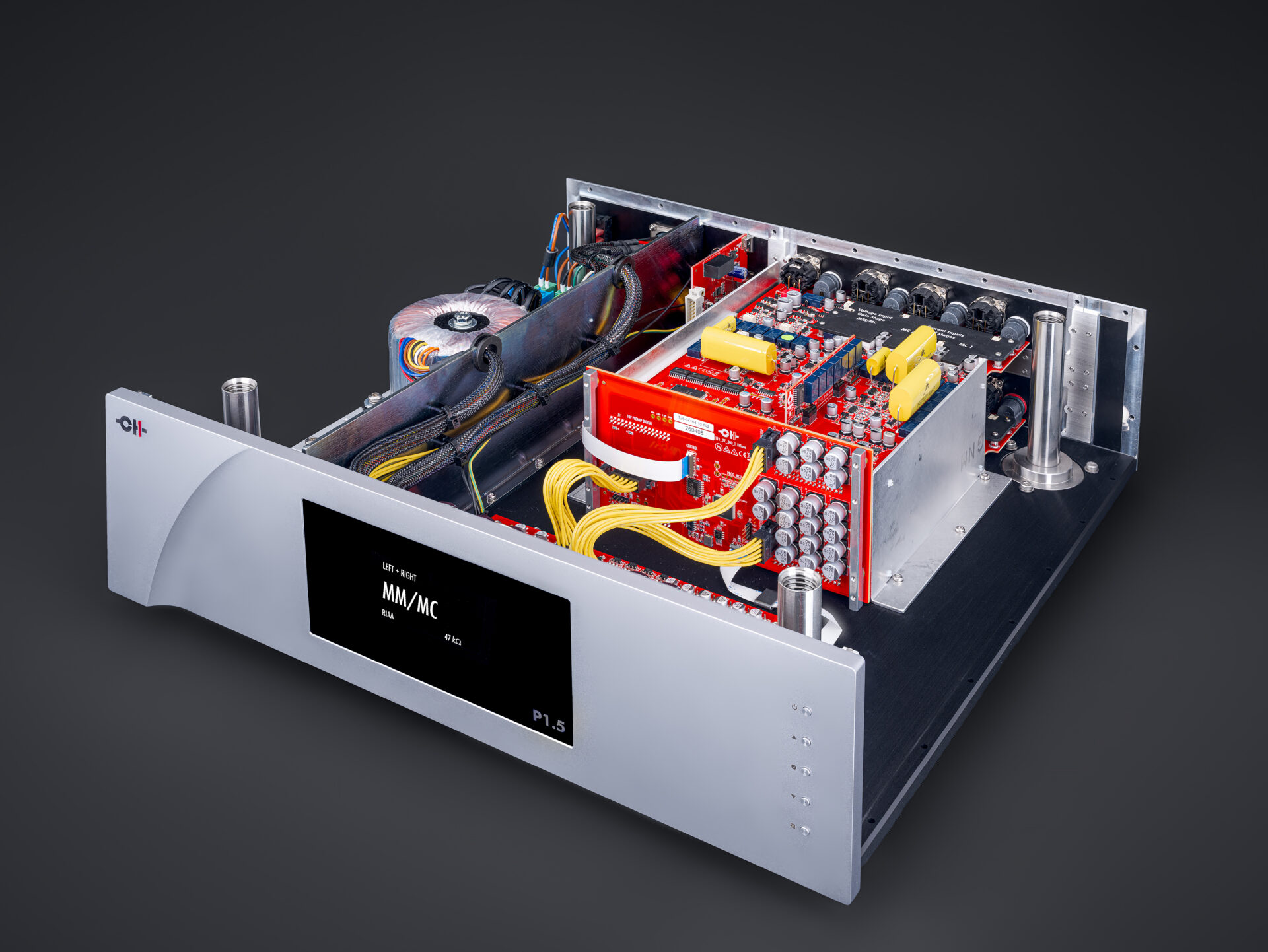
Like their predecessors, the P1.5 and L1.5 can be further upgraded with the existing X1 external power supply, creating two-box units that threaten to come close to the 10 Series in performance terms, but at a lower price level and with the advantage of staged investment. With both components in-house and burning in, alongside original P1 and L1 units, we’ll be in a position to report on the sonic and musical benefits shortly.
In price terms, the .5 models represent a relatively modest up-tick:
- P1.5 – €41,500 (inc. 20% sales tax) or $39,500 USD (exc. Sales tax)
- L1.5 – €41,500 (inc. 20% sales tax) or $39,500 USD (exc. Sales tax)
Where things get a little more squirrely is when it comes to upgrade pricing. CH has always held upgrade costs to the difference between original and current retail price. It’s long been the jewel in the crown of their offer, promising customers a future-proof and financially neutral investment path that’s unique in audio. For P1/P1.5 and L1/L1.5 upgrades that still holds true – for the original owner and as long as the original unit is less than three years old. That makes the upgrade price $5,000 USD for the L1 and $8,500 USD for the P1. In Europe that translates to €5,250 and €9,000, while UK owners will be looking at £4,100 and £7,000.
But the suggestion is that upgrades to older units will cost more. Quite a bit more. Using the US as an example, the P1 upgrade jumps from $8,500 to $14,000, the L1 from $5,000 to $12,500! I’m not sure what justification there is for this price lift – or how it will play with customers. It’s not based on differences demanded by the age of the original units – otherwise there’d have been series changes or previous upgrades. Whether the unit being upgraded is two-years old or ten, the hardware required remains exactly the same. But more baffling is the thinking behind the decision. Given the power of the cost-neutral upgrade policy, why abandon it now? If it’s no longer sustainable in this instance, given the involved nature of the upgrades, why maintain it for younger units? If the purpose of in-built upgradability is to protect your customer’s investment and, at the same time, build consumer loyalty, how does financially punishing your older installed base – your most loyal customers and your early adopters – make any kind of sense?
What’s more, I’m far from convinced that it’s a policy that’s sustainable in the market place. CH components are individually expensive enough that even 1 Series buyers (let alone 10 Series owners) constitute ‘special’ customers for dealers and distributors. You can bet your bottom dollar that those customers will be quick to lean on that status and demand the lower price, irrespective of the age of their unit – and there’s not much of an argument the dealer can deploy in response. I’d expect major and immediate push-back on this plan from both dealers and distributors – as, ultimately, it’s them that will get squeezed. The good news is that, with six-months between now and the availability of the first upgrade kits, there’s still time for common sense (as well as business sense) to assert itself…
