
Glenn Armstrong, 1956-2026
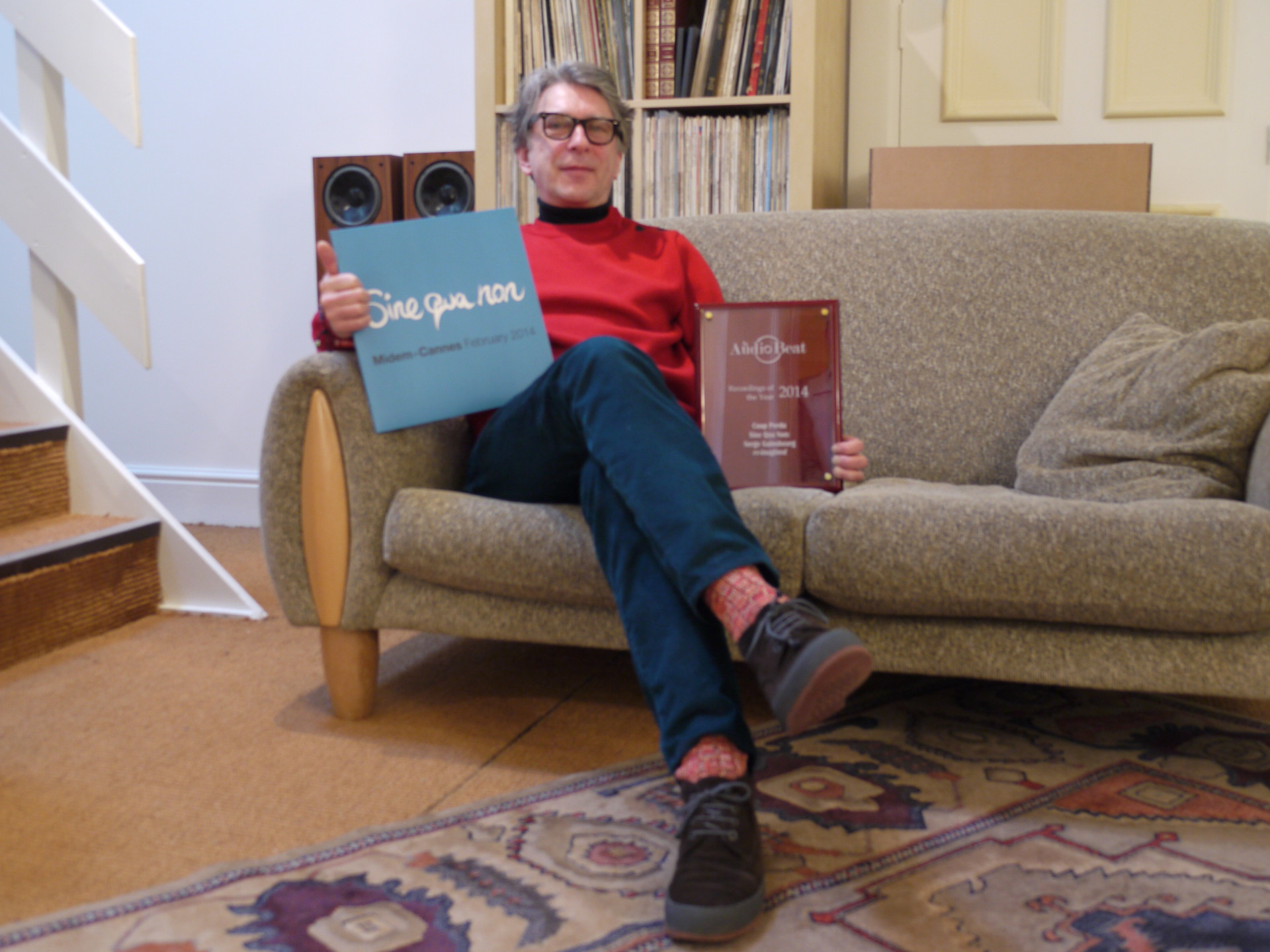
It is with enormous sadness that we report the untimely death of Glenn Armstrong, the man, the passion and the energy behind Coup D’Archet records.
I remember the first time I met Glenn. The conversation didn’t just turn to music – that’s where it started.
“What’s your favourite Violin Concerto?” he demanded, to which I replied, “The Sibelius”.
“And which recording?” Slightly taken aback I said, “I know everybody loves the Heifetz, but I prefer the Haendel on EMI, with Berglund.”
That caused a pause, before he responded, “Hmm, not bad… I quite like that” and rummaging on his record shelves he pulled it out and played it; the whole album. When it had finished, he lifted the disc and, looking thoughtful, said again, “Hmm, not bad…”
“Which performance do you prefer?” I asked. “Ohhh – the Camilla Wicks” he replied, as if it were the most obvious thing in the world.
That was my first step into Glenn’s world, the world of rare and collectable recordings by little-known classical artists from the late-mono era. But unlike those who covet those rare records and pay (or charge) large sums to own them, Glenn was doing something about it. Major label recordings (the fodder of audiophile re-issue labels) of artists such as Michéle Auclair, Yvonne Lefébure, Camilla Wicks and Jeanne Gautier – artists who definitely deserve a wider audience, as I was to discover – are few and far between. But many of those performers played live concerts broadcast on European radio stations – concerts that were recorded and archived by those stations. What the indefatigable Armstong realised was that here was a mother-lode of historically significant material, just waiting to be unearthed and offered up for public consumption. Thus was born Coup D’Archet, a label that pressed previously unreleased recordings of legendary artists on 180g vinyl (and CD). Chief amongst those artists – and Glenn’s particular passion – was the violinist Johanna Martzy: she accounts for well over half of the CD’A releases, including two large boxsets, one of the recordings that she did make for EMI (before a ‘falling out’ with Walter Legge, who subsequently blackballed her from the recording industry – a real ‘Me Too’ moment before social media existed to carry that message) the other of recovered radio recordings. Thanks in no small part to Glenn’s constant advocacy and the CD’A discs, Martzy is finally reaching the wider audience her astonishing talents so richly deserved.
In order to really understand the depth of his commitment to this musical legacy, you need to appreciate one further fact. Those radio broadcasts were almost without exception, mono recordings. So, what he was proposing was to release 180g records of classical music, by artists few people were familiar with – and in mono to boot! Not exactly a better mouse-trap. Yet despite the monumental task he’d set himself Coup D’Archet was only his first project. It was followed by the subscription series, L’Archet D’Or, beautifully produced slipcases each containing four records with a selection of gems and shorter pieces by a whole range of artists, insufficient to warrant an LP of their own, uncovered during his musicalogical travels around the radio stations of Europe. Finally came Coup Perdu, a range of modern, stereo releases of contemporary jazz and classical music, including a double LP of John Aram’s music for the seminal film Saturday Night and Sunday Morning, played by the John Aram Quintet and Kenny Wheeler. Sine Qua Non, the first Coup Perdu album, featuring the music of Serge Gainsbourg reimagined, was TheAudioBeat’s Recording of the Year in 2014.
- 1
- 2