

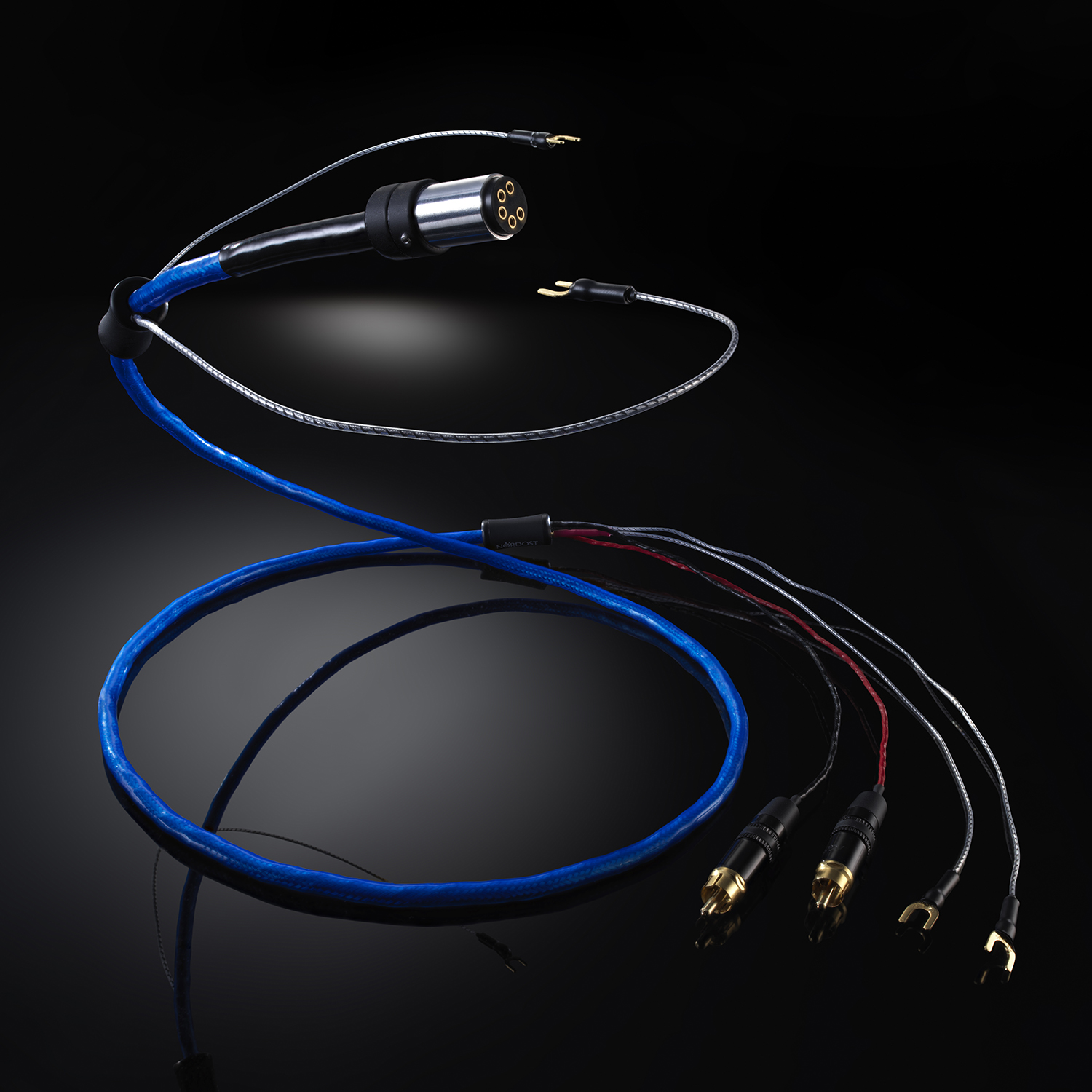
It’s worth reiterating that the OL tonearm cable is far from terrible, especially compared to most examples out there. Consider the size of the signals both the internal and external tonearm cables carry and in many cases they won’t even be approaching run-in. For years now, I’ve used a home-made adaptor to burn in internal cables. Cannibalized from a patch cord and a dead cartridge body, it allows me to run CD on repeat through the tonearm, from headshell to output connectors. Just don’t connect it up to your phono-stage! For those who can’t be doing with the DIY exercise, Origin Live actually offer a neat version of their own, that I highly recommend.
Step 3.2 – Line-level interconnects
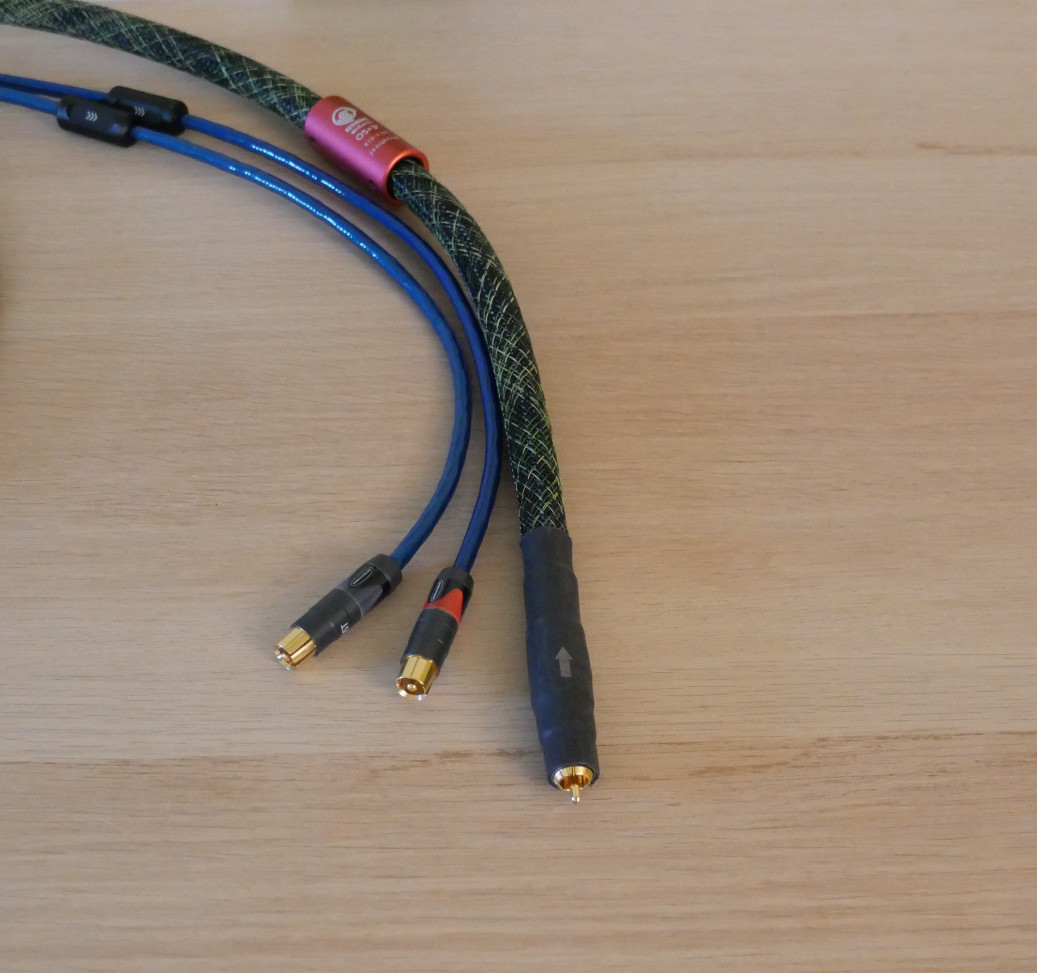
While it makes sense to try and replace the signal path en masse in a single step, for the purposes of this exercise I’ve divided the steps by cable type. Starting at the front of the analogue signal path, the tonearm cable comes first. But many listeners don’t use vinyl, or don’t want to sink additional funds into the vinyl rig they have. In many cases, the first link in the analogue chain will be the interconnects from a digital source to the amplification, followed by pre-power leads if they are present. I changed both at once, the TEAD electronics offering RCA inputs and outputs only.
Playing the Vivaldi violin concerto, the Blue Heaven interconnects opened out the soundstage, flooding it with colour as the sheer variety of instruments and their individual tonalities were revealed, from the chuffing of the pipe organ to the vibrant complexity of the harpsichord, the throbbing presence of the celli and lutes. Timbral, textural and spatial resolution all improved, as did instrumental location, separation and spacing. The texture and bowing of the violin parts started to emerge, along with a directed sense of musical energy and purpose. For the first time, this recording not only sounded like people, but people with a collective sense of purpose and fun.
Those benefits are just as apparent on the other two discs. The pianos on the Rachmaninoff gain volume, shape and harmonic complexity, more natural, more explosive shifts in dynamic intensity and density. The Adderley band pulls together spatially, with greater individual presence in a more developed acoustic. The drums are significantly more natural, with a defined skin and a hollow body. Again, as soon as the piano intro is over, the sound explodes with richer colours, greater substance and more dramatic dynamic contrasts from drums and bass. Miles’ trumpet brings a new precision to his lines, while the relationship between Cannonball’s sax and the bass and piano lines becomes clearer and more intimate.
Step 3.3 – Speaker cables – the final touch…
One small step for cable kind: one giant leap in system performance. In quantitative terms this is probably the smallest step we’ll make, yet musically it’s by far the largest.