

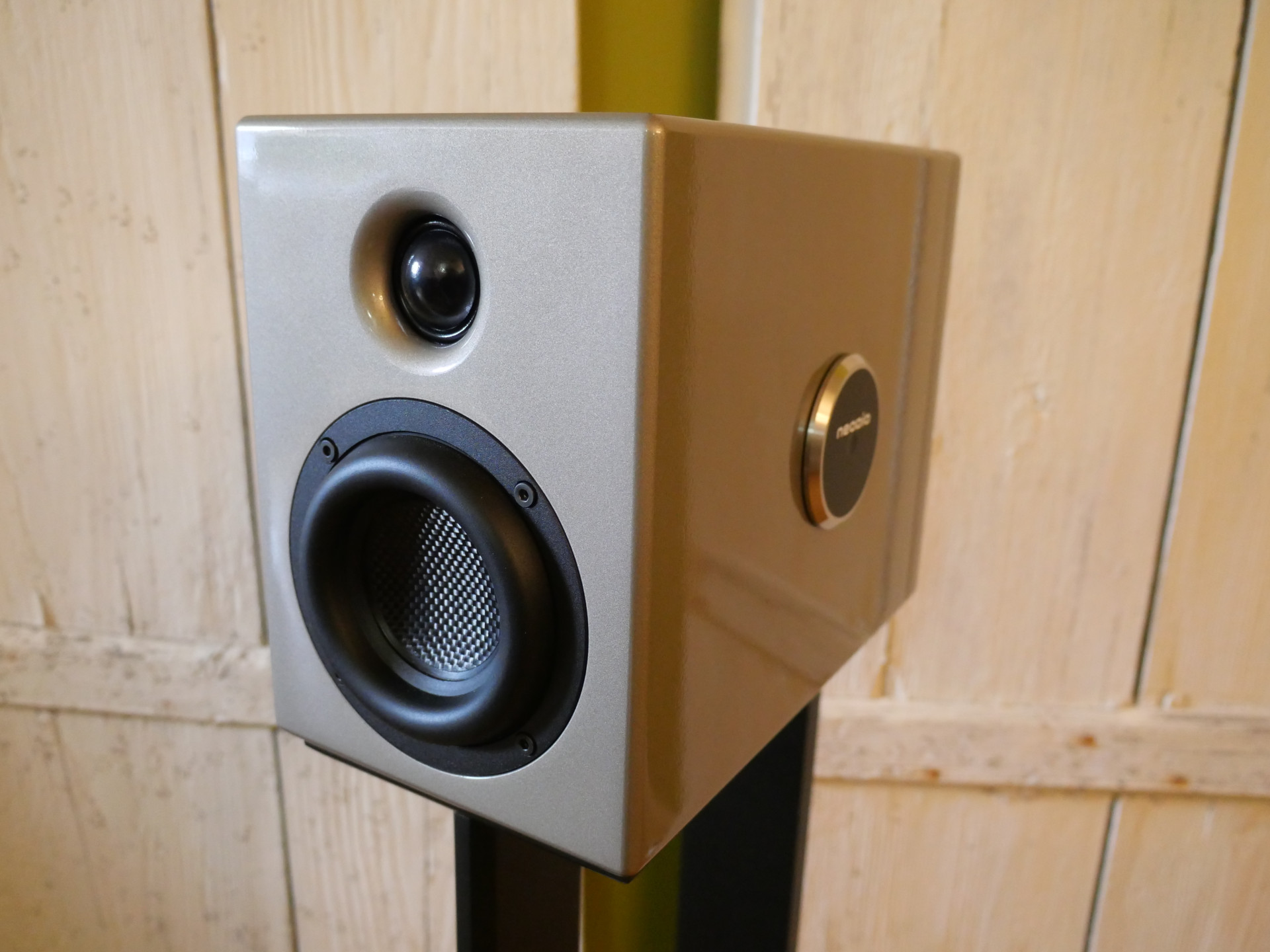
Nor is Lilli’s affection for the TEAD electronics a coincidence – given their resolution, transparency and twin design goals of time and phase coherence. The electronics deliver a clean and organised signal with plenty of inherent musical integrity: the speakers pass it on, adding about as little of themselves as a small and relatively affordable speaker can. At the end of the day, that cabinet and the low sensitivity can’t help restricting the bandwidth and the ultimate dynamic range, but there’s enough bass to deliver the music’s rhythmic foundation, the dynamic steps are scaled so clearly and naturally that their diminished stature passes all but unnoticed.
Tonally, Lilli delivers a surprisingly natural mid-band and a clean, sweet treble, devoid of glassiness or edge. There isn’t the rounded warmth of a classic plywood cabinet, but there isn’t the sterile cleanliness of ceramic coned miniatures either. Sitting slightly on the leaner side of neutral, lacking the longer, harmonic tail to notes, helps explain how the speaker manages to sound musically so immediate and present, without having the efficiency one normally associates with that quality. She might only measure 82dB in terms of sensitivity, but her crisp dynamic response makes her sound a lot more energetic than that – a crucial factor in making her music so listenable.
If you can’t have it all, perhaps you shouldn’t try?
Even the biggest systems can’t match the sound and presentation of live music – although size definitely matters. As you draw back from the scale and extravagance of those super systems, you move deeper into a world of compromise: a world in which you have to start choosing what you’ll do without. By the time you reach the classic, compact four-box system (source, amp and two speakers) those choices have become critical and, in many cases chronic. That’s the reality that was confronted by the Kan – and now, by Lilli. Advances in materials (or at least, the understanding of them) and drivers make the Neodio a far more balanced performer than the Linn, but in musical terms it’s still a case of, “All the bits that matter – none of the stuff that doesn’t!” In listening to Lilli, it quickly becomes apparent that both sides of that equation are equally important. It’s hard enough for a speaker this size to do what it must to present a musically intelligible picture. Lightening the load by getting rid of ‘unnecessary clutter’ contributes directly to Lilli’s uncomplicated clarity and purpose, leaving no place for ambiguity to hide.
Listening to Lilli’s unadorned musical structures and incisive rhythms it’s easy to understand how listeners back in the day got addicted to the direct and engaging performance of the Kan. This is music as pattern, first, foremost and beyond doubt. Lilli dresses that pattern more – and more convincingly – than the Kan did, but she still cuts right to the music’s bone. In doing so, she delivers astonishingly entertaining and involving performance(s) – especially when carefully matched to an amp and source(s) that share her sensibilities. Shorn of the muddle and smudging that smears the clarity of so many systems, music takes on a familiar sense of direction, shape and purpose. Music with drive, like guitar driven roots or rock, gets turbo-charged. If the amps don’t go to 11, the attitude definitely does.