

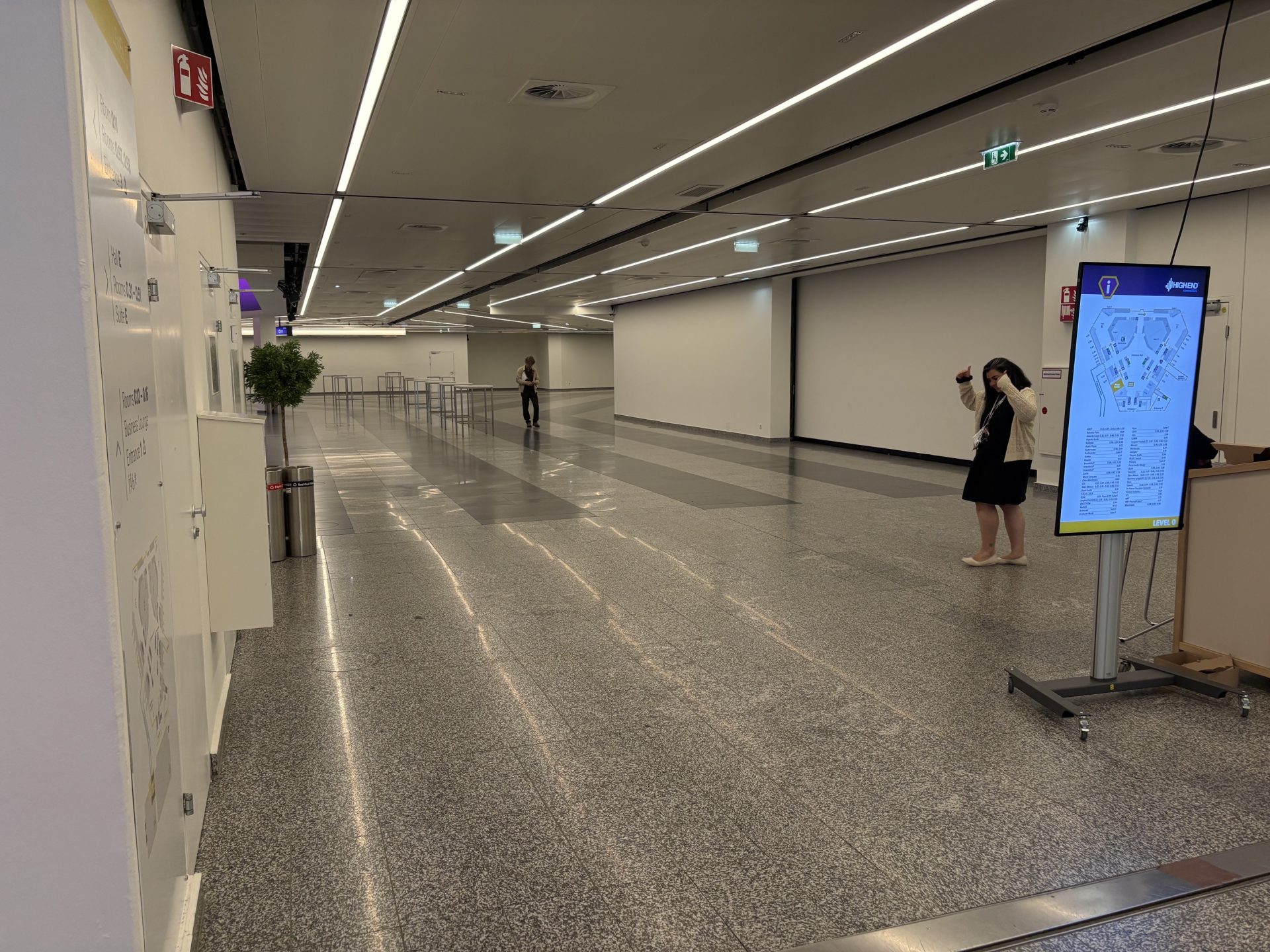
The other big differences between Vienna and Munich from a visitor perspective were the lack of crowding and the fact that every room visited seemed to be different to the last. If Munich was hot, crowded and filled with identical spaces, Vienna was the complete opposite. It wasn’t unusual to step into a long, wide corridor or open hall and see barely one other person. It would take way more people than even the biggest audio show might attract to fill this venue. Meanwhile, although there were a number of large rooms, many exhibits were in small spaces, with tiny ‘gaol cells’ given over to headphone listening or meeting rooms for business discussions. Perhaps this preponderance of tiny spaces lulled the organisers into a false sense of room numbers and availability, but none of those spaces could be used for serious presentation of serious systems.
That variation in the size and nature of the rooms, not to mention how successfully exhibitors had risen to the acoustic challenges they presented, meant that performance was beyond variable, making the comparative listening so popular amongst the public and some commentators somewhere between meaningless and impossible. It was a variation reflected in the response of the exhibitors themselves, which varied from the ecstatic (the irrepressible Maria Gansterer from Vienna Acoustics) to the world weary (most of those I quizzed) to the deeply disgruntled (Jean-Pascal Panchard of Stenheim, who spent the whole show with an AC vent bellowing in the roof of his smallish space).
Going up, going down…
Despite the considerable structural and organisational challenges presented by the shift to a new and unfamiliar venue, there were still rooms that sounded great. We’ll be covering those in subsequent pieces, but for the moment it’s worth reflecting on the show itself and the implications or conclusions for the future.
The first and most important conclusion is that we are not in Munich any more! Whilst that might be stating the obvious, the implications are extremely significant. This is a very different venue and for the event to work we need to think in terms of a very different show.
The ACV is not a natural match for an audio show: it’s got too much space and not enough room(s). While time and experience will solve or mitigate many of the issues experienced this time round, with the organisers far more aware of problems related to AC noise, early provision of internet services and restrictions or lack of information regarding access (both to parking/unloading areas and the venue itself once set-up commenced) there’s little they can do about the significant structural problems or the sheer size of the venue.
The diabolically challenging acoustics and the severe noise breakthrough actually suggest that selecting those rooms that are more acoustically favourable and placing passive, barrier rooms between them might be one way forward. Of course, that in turn limits the amount of active exhibits – unless you build (more) sound cabins. With all those open spaces in the centre of the building, you’ve certainly got the room to do it. But expect to see a conscious (or unconscious) move towards smaller systems and more passive displays at future shows.