

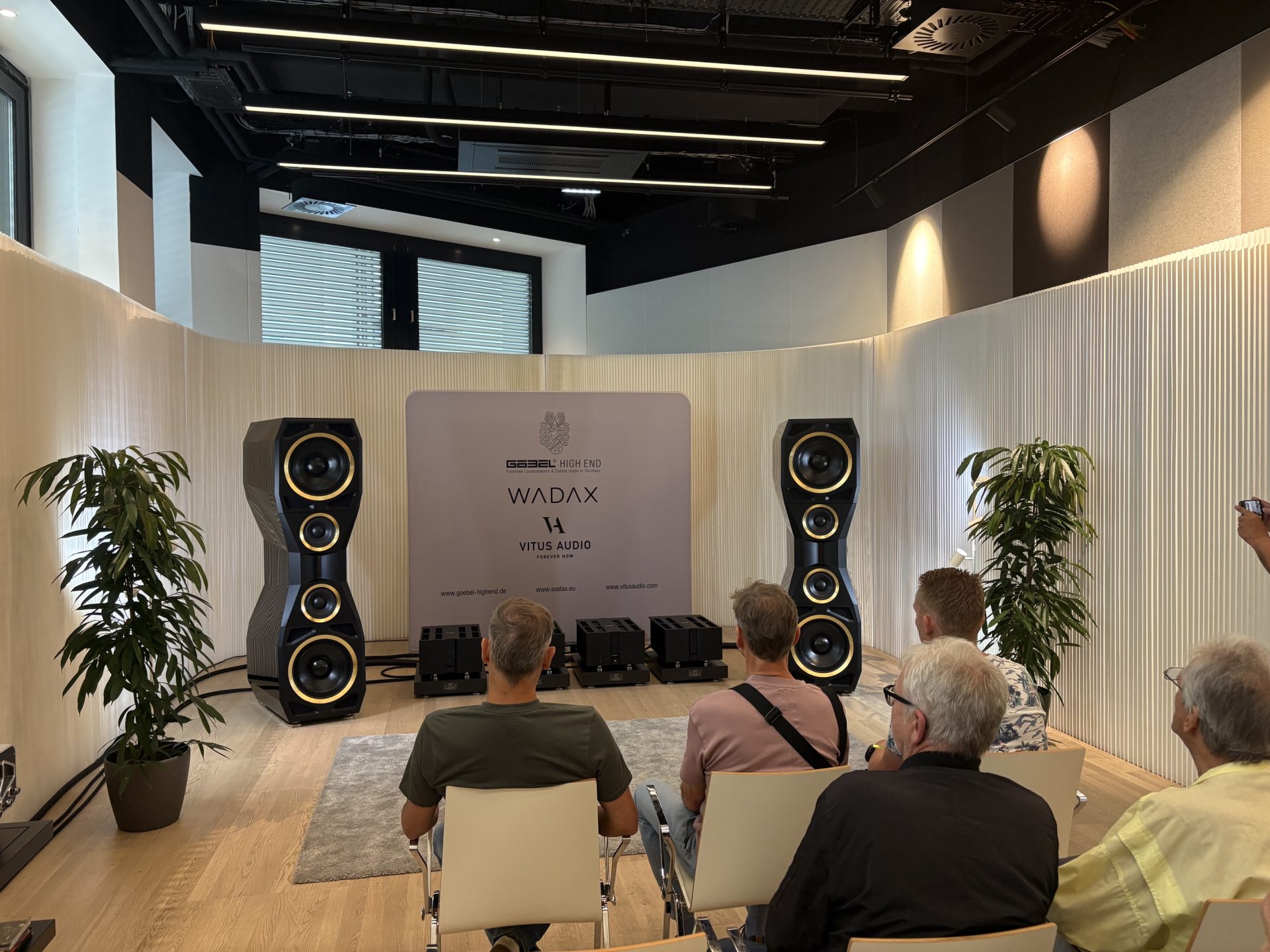
But, compounding the acoustic problems, the floating wall partitions were anything but barriers to acoustic breakthrough, with sound travelling through (or over) them with such ease that you couldn’t just hear the system next door, you could clearly identify what was being played. The nature of the construction at the ACV, with long spaces arranged along the building’s external walls, each designed to be sub-divided into smaller ‘rooms’ as required, meant that the majority of the larger listening spaces all suffered at least one floating wall. While that was also true in Munich, at least the walls there were significantly more substantial and sound resistant.
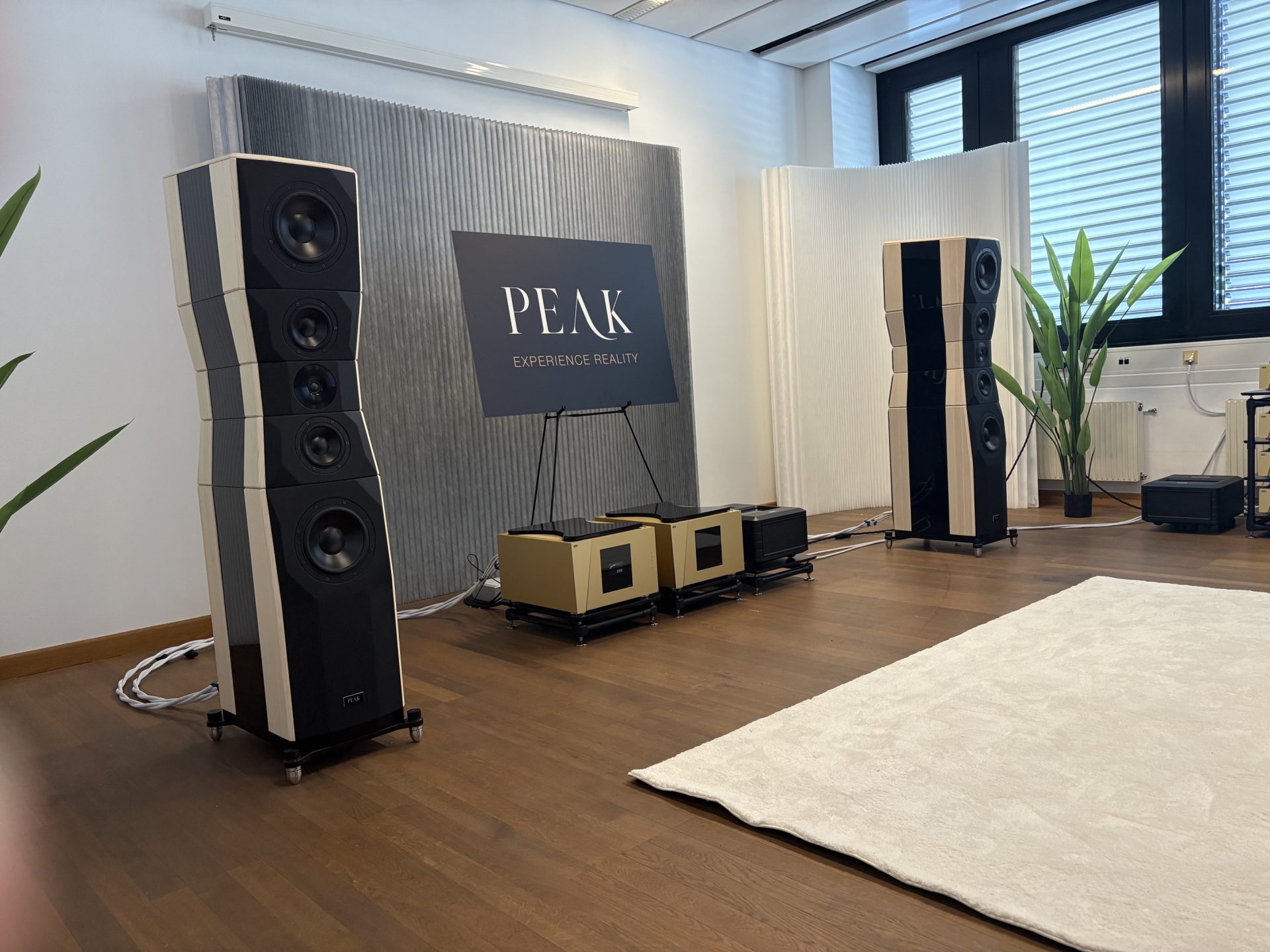
Even those who brought copious quantities of acoustic treatment struggled not only with noisy neighbours but the arrangement(s) of the ACV itself. The placement of all power and internet feeds on the outside wall, around a meter/39” off of the floor creates a situation in which trailing cables inhibit the placement of acoustics as well as complicating cable provision and dressing. But perhaps the biggest problem was the air conditioning. With such a huge internal volume, massive capacity and essentially glass exterior walls, the ACV is equipped with a mega-AC system with an equally huge acoustic footprint. Zonally controlled it wasn’t just impossible to limit its impact on a room by room basis, in some cases it wasn’t possible to turn it off at all. It created a noise floor so high as to make set up or critical listening virtually impossible – far higher even than the intrusive AC noise suffered at the MOC in the Covid years.
Even the Gods conspire…
Just to make matters worse, not only was the show ‘blessed’ with unseasonably warm temperatures, hitting 29°C /85°F on Saturday, a heavy storm across Northern Europe on the Sunday evening before the show severely disrupted flights, impacting many incoming exhibitors, a situation not helped by the complex routing into Vienna. Even those who made it for set-up on the Monday discovered that in many cases their (pre-shipped) equipment didn’t reach their room until after midday, while the ACV closed down at 6PM, limiting those companies with the biggest systems or the greatest commitment to sound quality to a half-day, despite getting to the show as early as possible. Many rooms, intent on at least getting sound by close of play on Monday, failed in that goal. With AC noise inhibiting set-up (even where it could be turned off, it didn’t happen until Tuesday afternoon) and the internet not arriving until sometime on Wednesday, many exhibitors were struggling to achieve satisfactory set-up by the time the show opened. Denying access to exhibitors until 9:00AM on show days added to the issue, as systems needed to be re-set each morning, with only an hour to do so.
The visitor experience…
If the exhibitors struggled, so too did the press and public – although that was as much down to the scale and maze-like nature of the unfamiliar venue as anything else. By Saturday, the sight of foot-sore journalists still seeking some elusive room was commonplace, although it wasn’t all bad news. The size and capacity of the venue meant that elevators, escalators and toilets were available in abundance, while the adjacent, rectangular halls with their shell schemes were smaller and far easier to navigate than the open reaches of the MOC.