
The Stack Audio Auva EQ equipment supports
By Roy Gregory
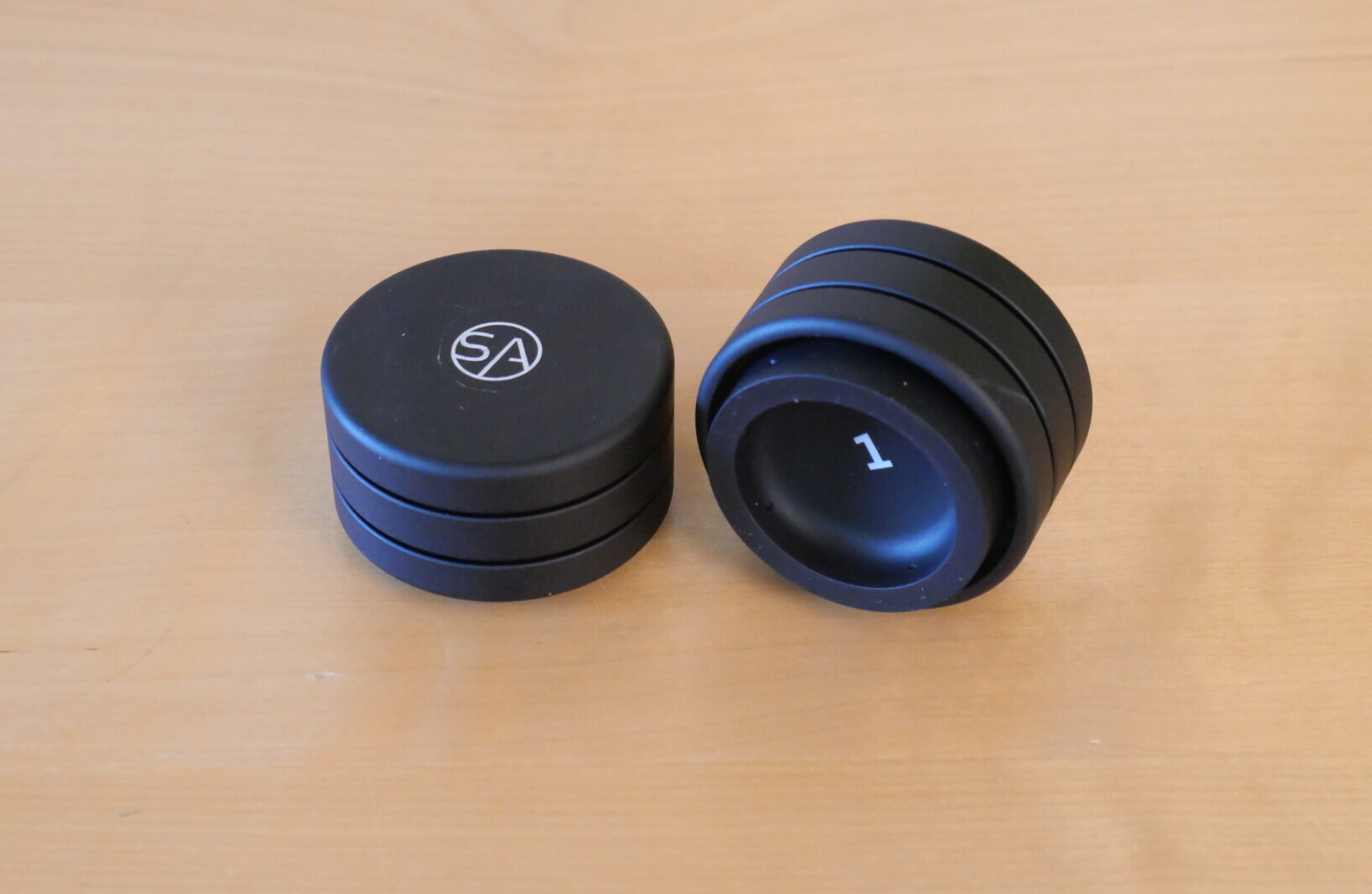
As the importance of set-up moves firmly front and centre in audiophile thinking (or if it doesn’t, then that audiophile is both behind the times and sacrificing significantly undermining the performance of their system) so equipment supports have received a new level of attention. Once seen as tweaks or accessories, serious listeners are finally beginning to understand their potential to release previously inhibited performance and the strategy to do so. Collective thinking and understanding might well develop or evolve at a glacial pace but that is at least due to behavioural resistance and habit. Increasingly, we’ve become inured to (over)paying for performance. If it ain’t expensive it can’t be that good and shouldn’t be taken seriously. It’s the same logic that says that the $600K speaker must be better than the $400K option – or even the $200K alternative – a conclusion that takes little or no note of system context, equipment matching or route to market, all of which impact performance to a dramatic degree. There really should be no question that the right $200K speaker will outperform the wrong $600K one – but how many buyers actually act on that premise? Isn’t it time we asked, “What price price as a performance guide?”
What has this to do with equipment supports and couplers? As our understanding of equipment support has improved (and as we have come to realise that it’s not the equipment but the signal that needs isolating – a very different proposition) the role of coupling or decoupling components from their supporting surface has come into sharper focus – with the inevitable result that the market is replete with increasingly expensive couplers or supports. Looking around the Music Room as I write this, I can see examples of Neodio Origine B2s, HRS Nimbus and Vortex, finite-elemente CeraBase, GPA Apex, Track Audio feet, Nordost Sort Kones, Stillpoints and Aria Audio RevOpods: and that’s not even listing footers/surface protectors. What do they all have in common? Price tags that extend well into four-figures for a set of three or four…
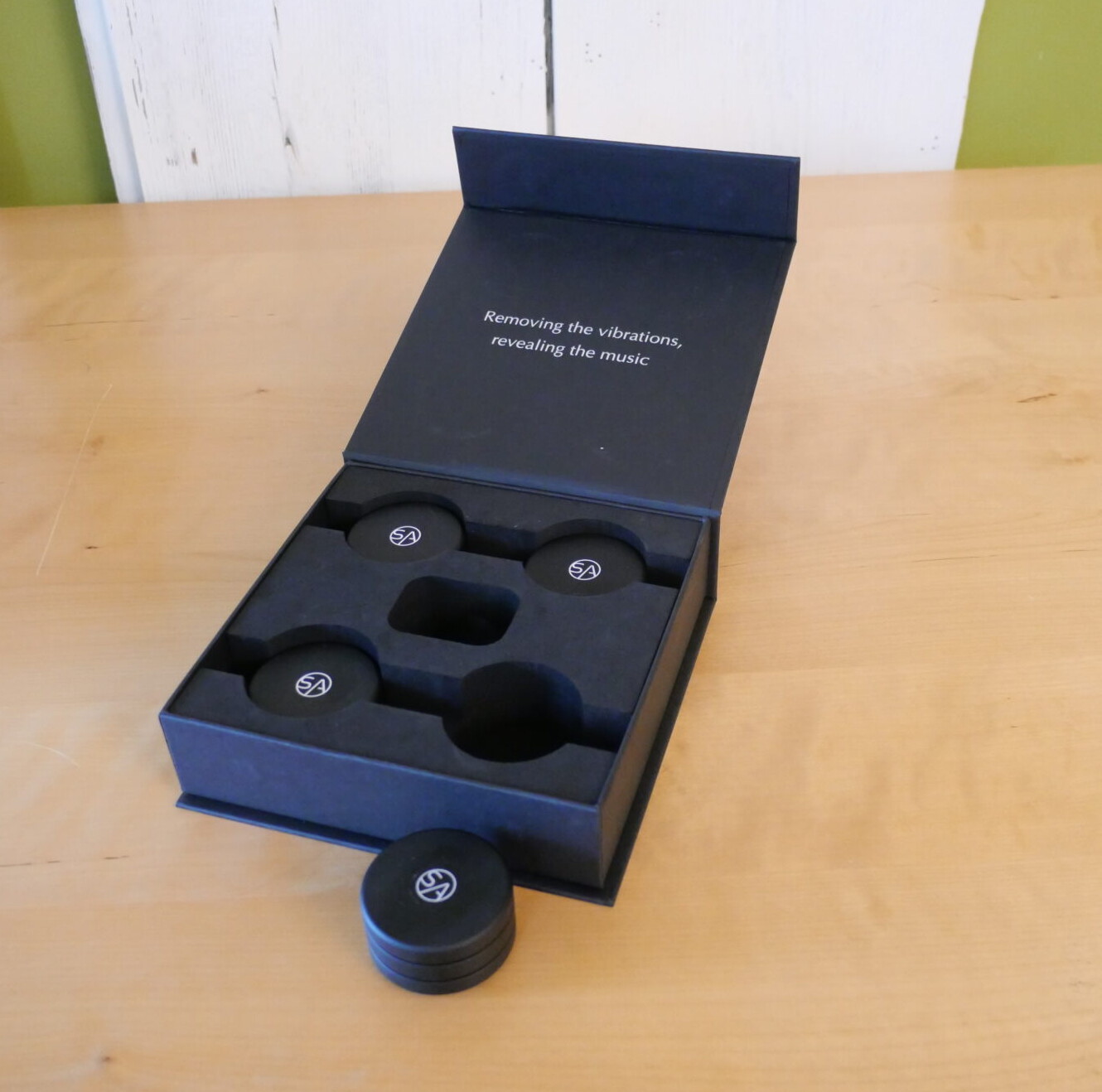
In the context of electronics costing twenty or thirty thousand clams a pop, two or three thousand spent on optimizing support makes a lot of sense. But in more affordable systems the cost/return equation becomes questionable, while the advantages of a consistent approach to equipment support combined with the proliferation of additional power supplies and network components in modern systems adds considerably to the requirement and the financial strain of implementing any all-embracing support strategy. It’s just so much more attractive to spend available funds on another, big, shiny box – even if it represents a poor investment in performance terms. There’s no question that we need more sophisticated, more capable and more affordable support products and a strategy to exploit them – even if only to overcome our own spending impulses!
K.I.S.S…
Make support products more affordable and you almost inevitably make them simpler. Once the prices start to be measured in two-figure numbers per unit, rather than three or four, you can say goodbye to complex structures, exotic materials and intricate mechanisms. At the base-end of the market you are talking about lumps: normally, shaped pucks or cones moulded or machined from solid material. Casting around I can produce examples in everything from granite, graphite or aluminium to wood, sorbothane or hard polymers like Delrin – and plenty more besides. Indeed, you can do a lot worse than carefully proportioned, laminated bamboo blocks to serve as equipment couplers. But you can do a lot better too, especially when it comes to some, specific applications. A little, detailed analysis and understanding can go a long way.