
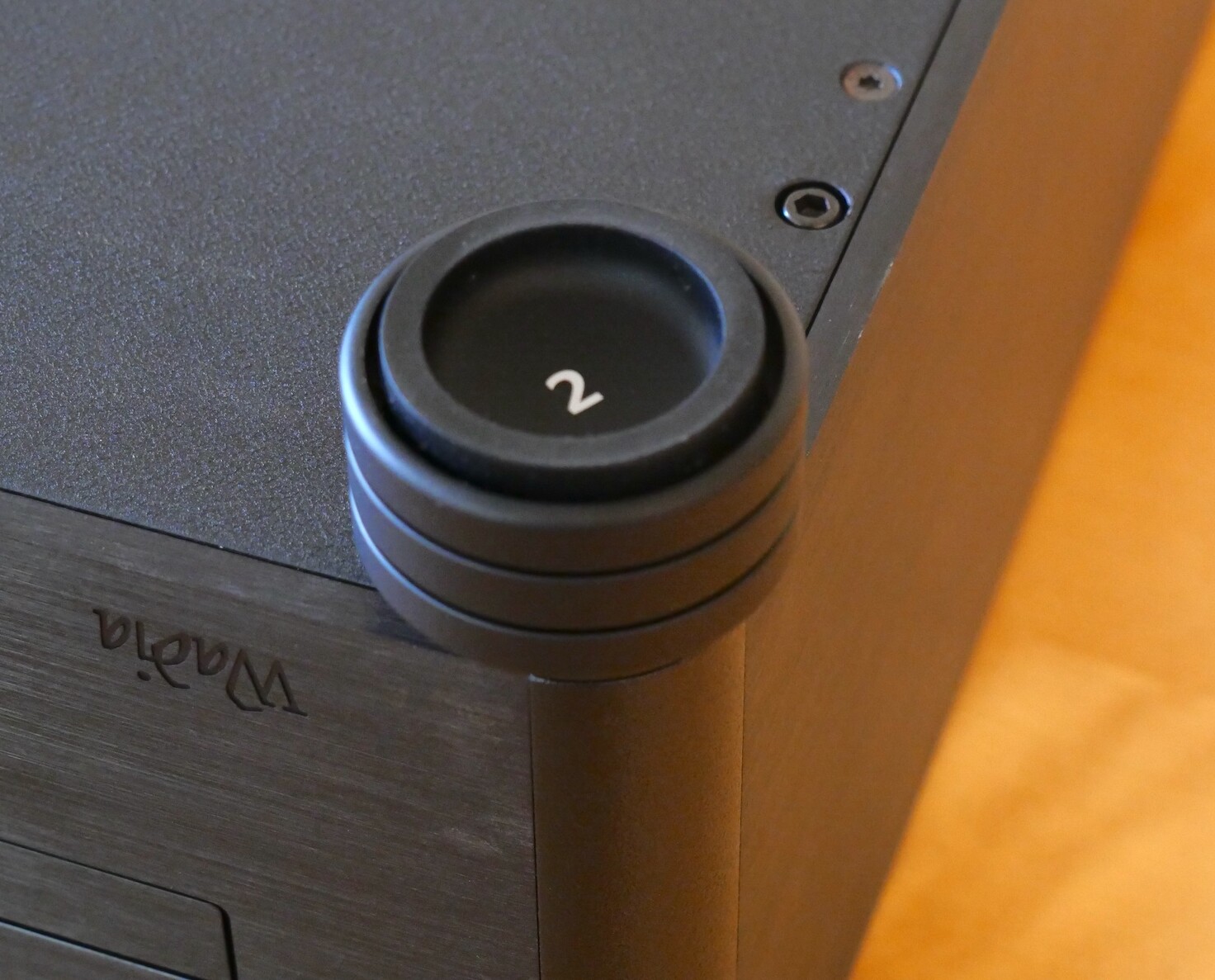
Given the explanation above, and its implications, the first place I sited the Auva EQs was under the Wadia S7i. The results were everything I’d hoped for, with a more fluid, more natural, more musically and rhythmically coherent presentation. Music was at once more relaxed but more connected, the additional separation and calm, quiet background bringing clarity to the musical and expressive picture. Impressive stuff. Impressive enough to take the Auva EQs seriously up-market, in a test to see just how far their benefits might extend. With that in mind, I reached for the Wadax Studio Player, a component that definitely responds to upgrades to its feet and supports. This is where the listening got serious.
I’ve been running a quartet of Arya Audio RevOpods under the Wadax, with great results – not least because of the ease with which they can be levelled and tuned. Interestingly, they are also another hybrid design, that combines a sophisticated adjustment system with a ceramic, point-contact ball and elastomer damping pad/Delrin foot. Comparing the RevOpods to the Auva EQs under the Studio Player (atop the Andante Largo rack) made for some interesting results. The RevOpods were immediately impressive, in terms of dynamics and immediacy. It’s a sound a lot of people would find attractive. In contrast, the Auva EQs were more restrained, with greater focus, separation, more natural tonality and a far less obvious presentation. Listen longer and it becomes clear that they are also more musically and rhythmically coherent, with better phrasing. Switching back to the RevOpods, those sounded pushy, congested and hurried, with a cluttered and overly busy presentation. The Auva EQs made more sense of the music, gave greater insight and delivered a more involving, expressive performance.
You want specifics? Play Locatelli’s Concerto in A major from il virtuoso, il poeta (Isabelle Faust, Antonini and Il Giardino Armonico, Harmonia Mundi HMM 902398) and the fragile solo line that teeters on the violin’s upper register has shape, articulation and solidity, its relationship to the enthusiastic vitality of the backing clear and incisive. Instrumental colours and separation are excellent, underlining the give, take and cooperation between players, instilling the whole performance with an unforced clarity and communicative integrity. The infectious groove of Womack&Womack’s ‘Teardrops’ (Conscience, Island Records 259 139) has space and subtlety within the playing, while clearly displaying the solid rhythmic foundation that comes with recording at Compass Point. The separation of lead and backing vocals (tonally and spatially) is effortless, the track’s fluid continuity catchy and beguiling.
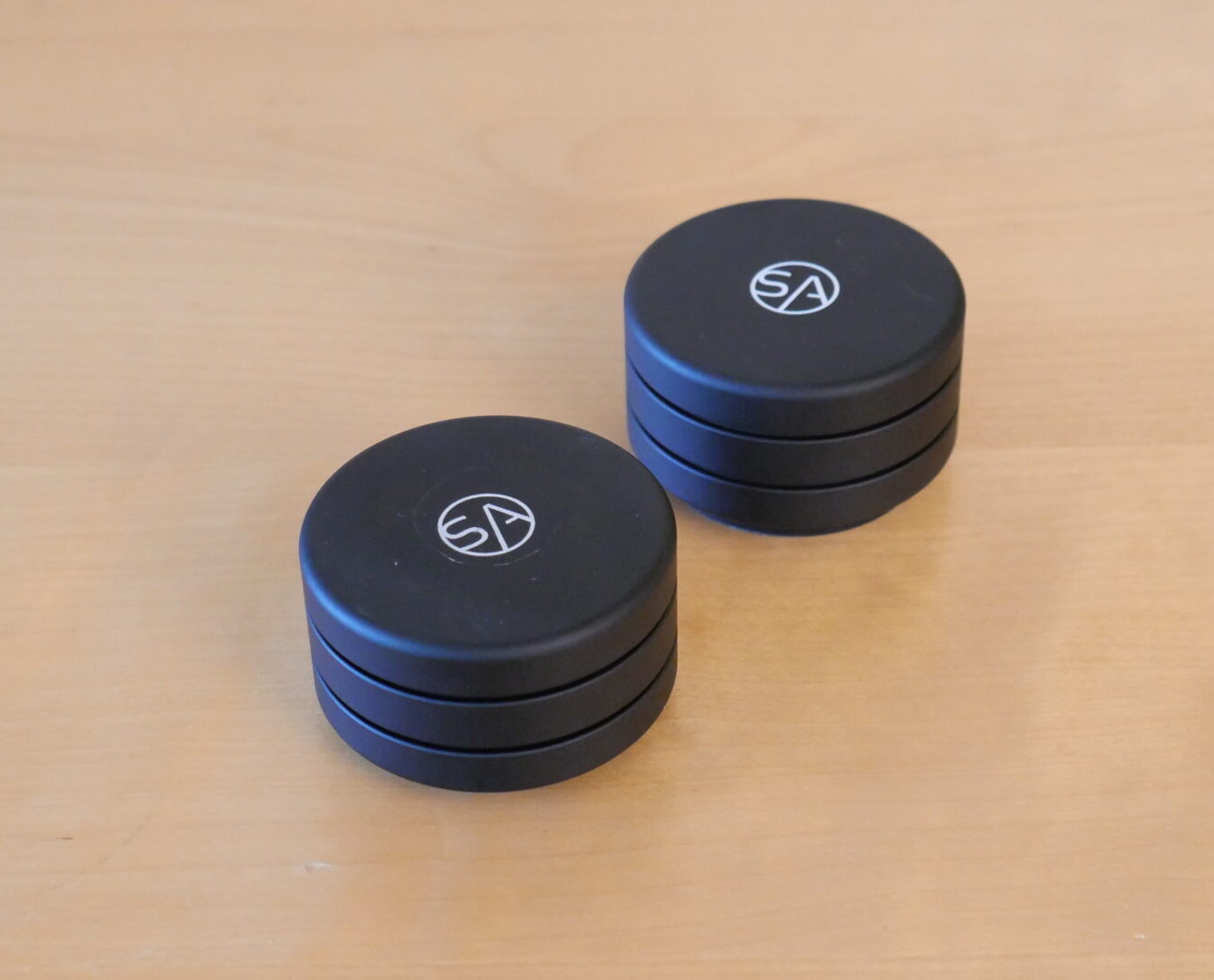
It’s this unforced sense of musical continuity, rhythmic integrity and the ease with which the Auva EQs allow the music to find its own pace that makes their contribution to digital replay so significant. I’ve already reported on what they do for the Reiki SuperSwitch X: they’re just as effective under the SOtM sNH-10G switches too. But what, I wondered, would happen if you extend the Auva treatment to the electronics in a whole system? The Studio Player is currently hooked up to the Trilogy Audio 921 integrated amp. I don’t have sufficient CSA 2 Auva EQs to put under that too, but being a solid-state design with a hefty, linear power supply, they’re maybe not the ideal solution anyway, the component being a shoe-in for hard coupling. Which is when I reached for a trio of the large, Auva 100 speaker feet. Slipped under the Trilogy’s chassis these worked a treat, further extending the calm, confident clarity the Auva EQs had brought to the Studio Player.