

Not surprisingly, switch up to something with greater energy and attitude and the gap between ET and Etna SL widens further. Play Elvis Costello’s My Aim Is True (Stiff Records SEEZ 3) and it’s hard not to be energised by the upbeat, foot-forward stance of the music. Yet the best-known track on the album is probably the winsome single, ‘Alison’. The Etna SL delivers a delicate, nuanced and intimate performance. The guitar line is poised, the vocal has a natural, expressive quality and the song as a whole is beautiful and beautifully coherent. The Clab dials up the immediacy and transparency. Instruments are more focussed and clearly separated, Costello’s voice is much more present and immediate, it’s nasal edge on the rising chorus line much more apparent. At the other end of the scale, the Clab can’t match the planted, rounded weight of the Lyra’s beautifully paced bass-line, but it offers more shape to the bass notes, spaces them more clearly and adds to that a whole lot more precision and resolution to the deft cymbal, percussion and drum work.
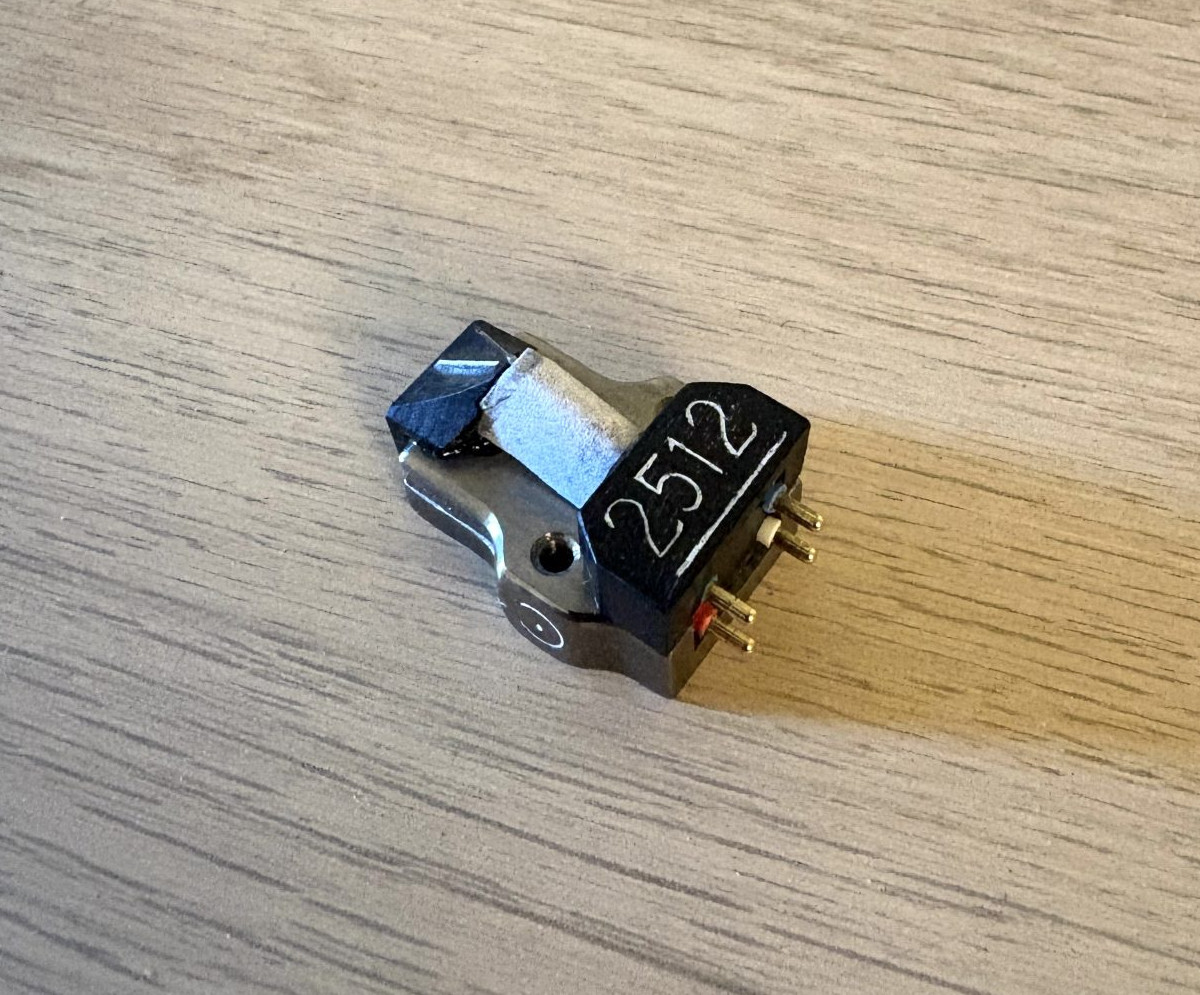
Right about now, it would be tempting to point to the Lyra’s greater harmonic development and centre-note balance, the Clab’s bias to leading edges and dynamic jump, but that would not only sell the Clab seriously short, it’s far from the whole story. Turn up the pace on tracks like ‘Welcome To The Working Week’ or ‘Mystery Dance’ and the ET’s sheer musical enthusiasm lifts its performance clear of the Lyra, leaving what is a very good cartridge sounding a bit polite, lack-lustre and disinterested. The Clab’s sense of clarity, shape and temporal coherence gives it the sort of inherent pace and balance that brings not just up-tempo tracks but all music to life. The ease with which it unravels the interlocking lines and traces the switchback rhythms and hesitations of ‘Less Than Zero’ is an object lesson in what the audio community has so often termed ‘musicality’ without ever defining that term…
If, to date, the examples I’ve chosen have all been drawn from the pop genre, don’t assume that’s all the Clab can do. These discs merely demonstrate its essential character, a character which is just as powerfully convincing on other types of music. When Leonard Bernstein recorded Mahler’s Second Symphony in 1964 with the New York Philharmonic (Columbia M2S 295) it played a central role in rehabilitating the composer’s work with the mainstream audience. Play those discs now and the Clab cartridge let’s you hear exactly why that was. From the opening bars, Bernstein balances weight, orchestral density and pace to lend the music tension, drama and impressive impact. That menacing opening motif is full of thrust and latent threat, the surging bass lines add drive and power to the music, while the sumptuous strings deliver calm, contrast and atmosphere.
It’s a masterclass in clear orchestral pacing and direction, Bernstein imposing his musical will on a willing orchestra, the Clab ET delivering the expansive, dramatic and emotive results. Yet preserving the musical coherence of such a vast and over-reaching musical vision is no mean feat, speaking volumes about not only the ET’s sense of time and place, but also its innate balance and top-to-bottom linearity. Lenny was clearly on a good day when they recorded the Mahler – and the ET leaves you in no doubt. If Elvis arrives with all that energy and attitude intact, it’s because the Clab keeps things that way.