
Four steps beyond?
By Roy Gregory
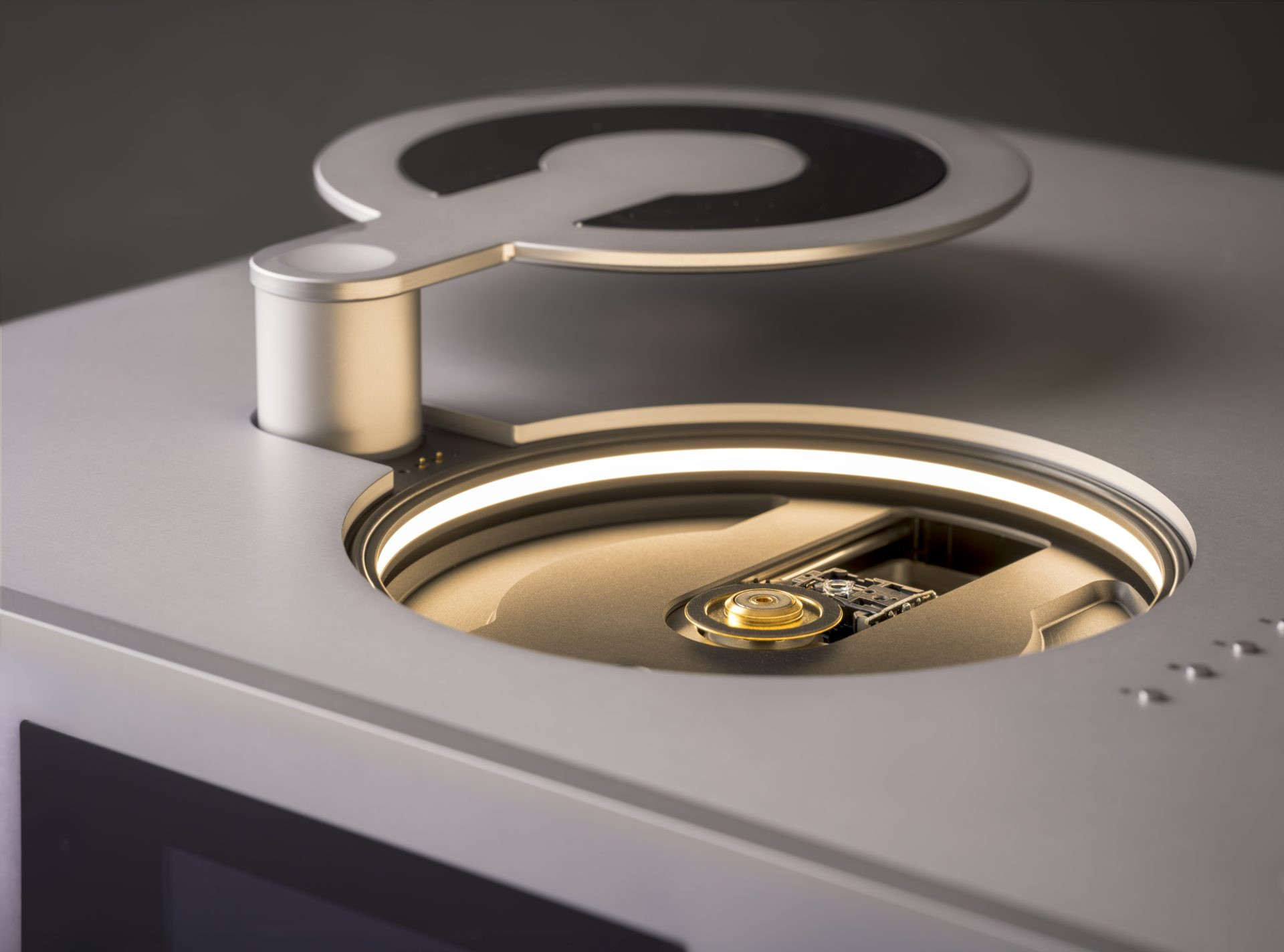
For many listeners and members of the audio community, CH Precision is viewed and best known as a manufacturer of innovative, sophisticated and configurable, solid-state, analogue amplification. Whether they appeal to you, personally, the P10 phono-stage, L10 line-stage and M10 amplifier have become established benchmark products, an accepted standard against which others compete. But if you ask Florian Cossy (the C in CH), he’ll tell you that the company considers itself, first and foremost, a digital engineering enterprise. Indeed, its first product was the D1 CD/SACD player/transport, a user configurable, multi-channel capable disc spinner, rapidly followed by the C1 DAC/Control Unit, a device that firmly established the modular/configurable template that has characterised the company’s products ever since.
After the D1/C1 came the A1 amplifier, intended for direct connection to the DAC’s variable output – this being before CH discovered the damage done to system performance by omitting a proper line-stage, a lesson that still hasn’t been learnt in some quarters. The A1’s significance lies not in its performance – it was, in truth, sonically speaking, something of a disappointment – but in its novel topology that allowed users to select input/output configuration (stereo, bi-amped, high power or bridged mono) gain, impedance and global feedback, as well as in the ExactBias system that ensured operational consistency. The result offered users unprecedented system matching options, as well as introducing the audio world to the potential benefits of software control in an analogue audio environment. The rest, as they say, is history…
The A1 was quickly joined by the higher-powered and far more capable M1. Along with the L1 line-stage and P1 phono-stage. Along the way, the X1 external power supply and T1 10MHz clock, appeared, while the A1 was replaced with the significantly superior A1.5, at a rate of roughly one product per year. As the company hit its 10th anniversary, it marked the milestone with the launch of its 10 Series amplification, ambitious, twin-chassis line-stage and amplifier designs that built on the technological foundations of the 1 Series products, but raised the performance bar significantly.
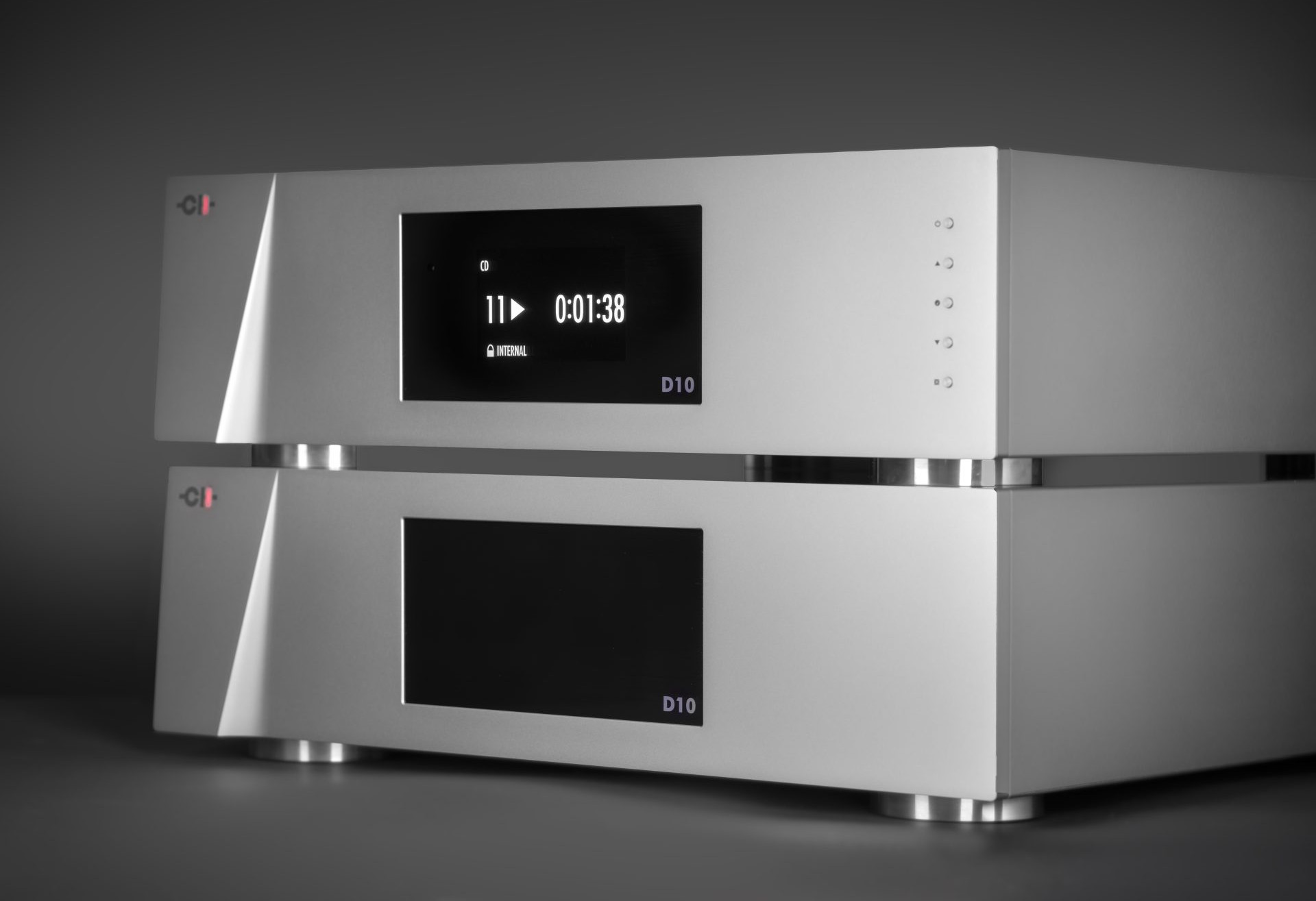
Meanwhile, CH had added another, significant string to their bow, establishing the ‘expandable/upgradable’ product concept, component topology that leveraged the unit’s modular construction to allow not just expansion through the addition of external power supplies or the splitting of chassis to independent mono operation, but the ‘future proofing’ of products through updated, modular elements – all in a cost neutral pricing structure. Cost neutral? Buy a P1 phono-stage and expand it, one step at a time, into a true-mono, four box unit with independent left and right channel power supplies and the final cost would be exactly the same as buying the four-box unit in one hit. That logic extends across the whole line. But it goes further than that. Upgrading to current spec is cost neutral too! Not only can a C1 DAC (now anything up to 15 years young) be upgraded to full, current status and performance, the cost of doing so is the same as the difference in price between an original C1 and the current C1.2. Even in the rare cases where units cannot be updated (D1 to D1.5 for example, where the mechanical demands of a new mechanism made the upgrade impossible) the company offers a generous trade-in on original units.