

But the really interesting part of the C10 is firmly on the inside, where you’ll find the new DSQ phase-array DAC architecture.
In the C1.2, CH employed their proprietary DSP with the advanced PEtER spline filters, combined with a conventional, dual differential DAC built around pairs of PCM 1704s, two pairs for each channel. The DSP processing is implemented in four stages, one dedicated to decode MQA data, one to convert DSD inputs to PCM and up-sample PCM data 16x. The resulting data stream (unfolded MQA or up-sampled PCM) is then fed to the independent left and right channel DACs. If the digital volume control (rather than the fixed output) is employed, it is executed by an additional 32bit fixed-point stage within the DSP.
In the C10, the DSP architecture relies on the same PEtER spline filters, but the topology of the DAC is completely different. In the C10, each phase of each channel is fed to an array of four DACs, with a 16 to 64x up-sampling stage in the DSP used to provide four data streams, each separated from the next by a 90-degree phase angle. In effect, the first DAC takes the first sample while the second DAC takes the second and so on, until the first DAC takes the fifth sample, the second the sixth etc. Each DAC operates in sample-and-hold mode, eliminating timing errors between streams when the algorithm recombines them, reducing noise and improving temporal accuracy. It’s a way of reaping the benefits of a 16 DAC array without introducing the timing errors and inconsistency that might otherwise emerge. The topology also results in a natural high-frequency filter, reducing the need for heavy post conversion filtering. The C1.2 uses a two-pole Bessel filter with integral buffering. The C10 uses a gentler three-pole Bessel filter and dispenses with the buffer altogether – an arrangement that both sounds and measures better than the C1.2’s solution. Finally, the I/V stage in the C10’s analogue output is closely related to the circuitry in the P10 phono-stage, whereas the C1.2 is closer to the P1.
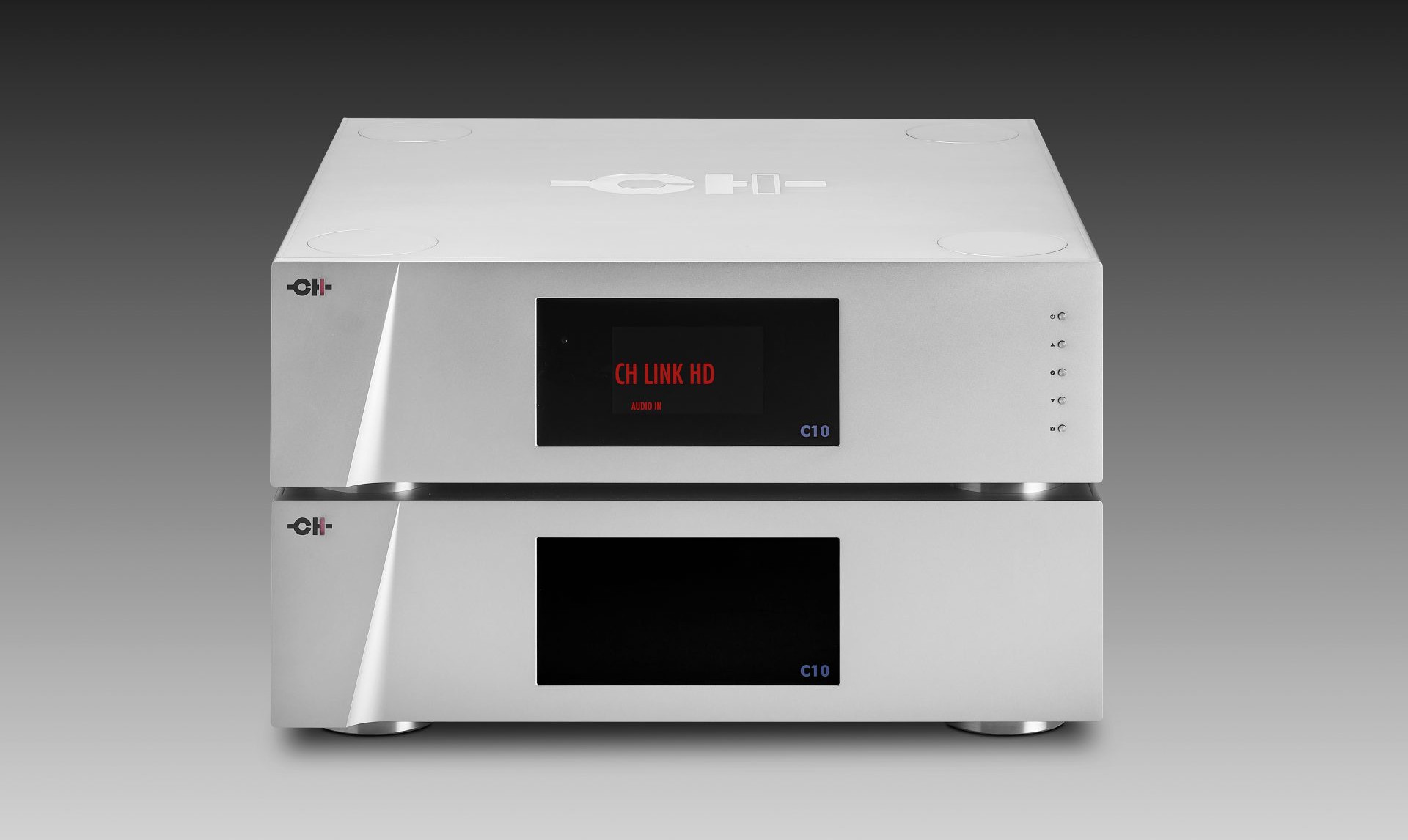
The C10’s dedicated PSU is equipped with four colour-coded umbilicals, feeding the left and right digital/control sections and left and right analogue sections. Although the digital and analogue sections of the supply are separated, the dual-mono layout of the DACs means that the umbilicals cross en route to the audio chassis. When wiring up the C10, it’s worth trying to keep the different types of umbilical as far apart as possible, rather than allowing the digital and analogue feeds to run beside each other. It might mean tying like to like, at least until they have to split, but sonically and musically it’s worth it. Also, be aware that although the Lemo sockets are orientated at TDC/12 O’clock on the PSU unit, they are arranged at 3 O’clock and 9 O’clock respectively on the back of the audio chassis. Once again, those detachable umbilicals (the early L10s and M10s had fixed umbilicals, tethered to their PSUs) come into their own and make perfect sense once you start to reconfigure the C10 DAC into a five-box Statement DAC.