
As in previous years, we’ll be adding to the product reports as we go, with new items appearing at the top of the column. Just check back on this article and any updates should be immediately obvious.
Hits and Misses in Vienna…
More like, “Couldn’t find the target.”
By Roy Gregory
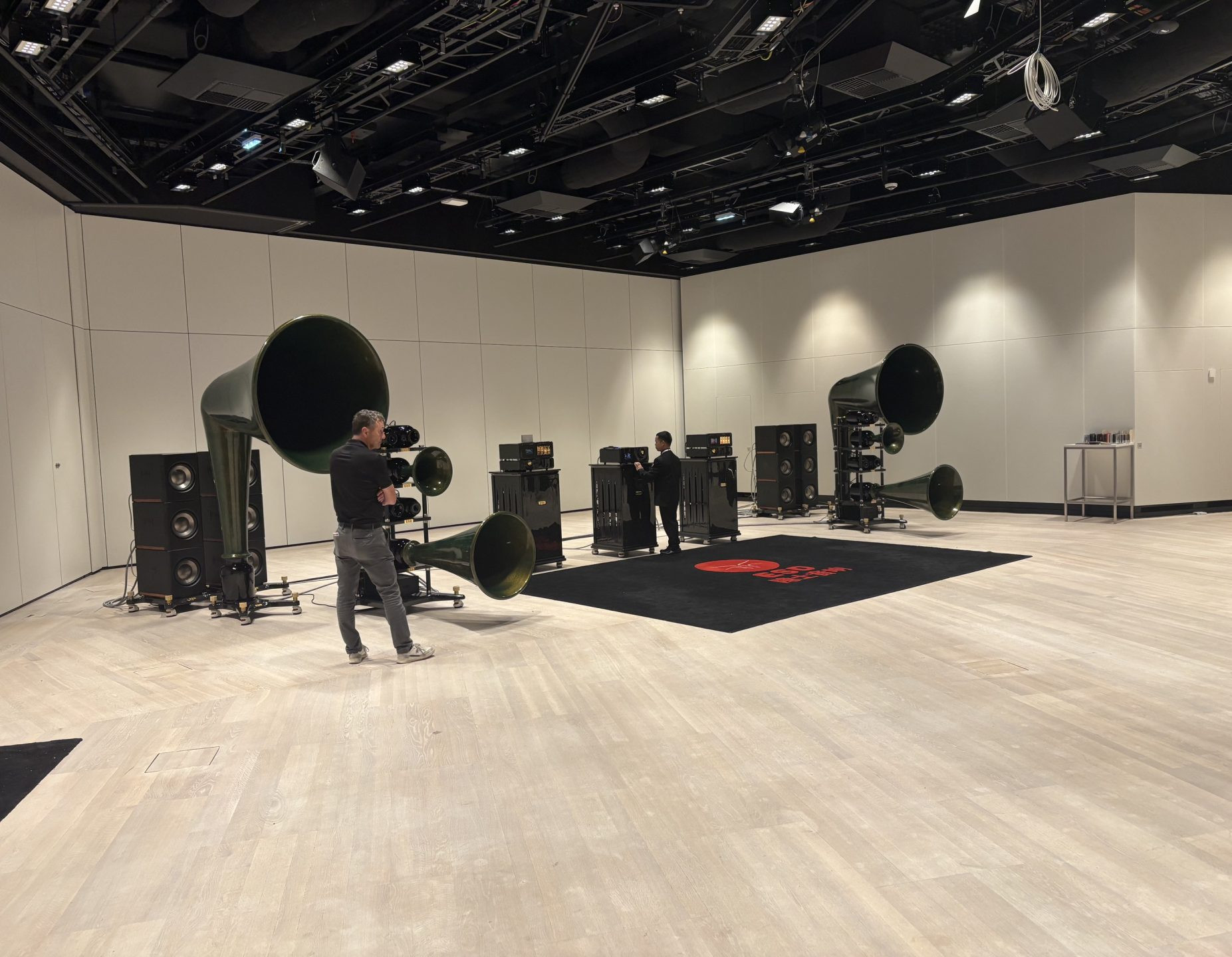
What to make of the first Vienna show? The inescapable conclusion is that the sonic and musical results were circumscribed by the acoustic and logistical (and reporting) challenges of the new venue. There’s no doubting that the ACV is an impressive space: the question should be, is it the right space? Why do I say “should be”? Because the question is rendered irrelevant by the three-year contract that the High-End Society has signed with the Vienna venue. This is the space we have. Instead, the question becomes, what can we do with it?
I have been astonished by the number of show reporters claiming that the acoustics and rooms in Vienna are better than those in Munich. Try asking someone who has set up in both and I’m pretty sure they’re going to tell you that the problems are different – but just as big. You can argue that Vienna offers more of a blank canvass, inviting the widespread application of acoustic treatment, in turn allowing greater freedom when it comes to room tuning, but – and it’s a HUGE but – too many of the problems in Vienna are structural and thus insoluble: Acoustic breakthrough was crippling loud in rooms with floating parti walls; the ceiling voids were acoustically problematic; the disposition of services and power a significant set-up issue; the AC is astonishingly loud and zonally rather than controlled individually by each space which, combined with the asymmetric disposition of large area windows, caused a whole host of issues. Vienna fanboys (and girls) will point to the parti walls in Munich, but not all parti walls are created equal and, while noise bleeding through from next door was a problem at the MOC, it was a minor irritation compared to the scale oof the issue in Vienna.
Bottom line? There were some rooms that offered significantly more potential than others: and some (too many) that were simply not fit for purpose, at least as far as installing an audio system goes. Under the circumstances, berating any company for failing to deliver representative (or even enjoyable) results seems akin to clubbing baby seals. There were those individual systems that managed to rise above the prevailing mediocrity, but it’s notable that several of them were in the prefabricated sound cabins rather than the ‘more desirable’, larger ACV rooms. It’s also worth noting that, in many cases it was the less ambitious systems that prospered, while the huge, seven-figure plus set-ups were almost universally awful. Huge horn speakers in huge, untreated spaces sound more like PAs than high-end audio systems, while ‘loud’ is no substitute for ‘good’ and can’t disguise the lack of musical and spatial coherence or proportions that result. Serial failures from Munich invariably failed in Vienna too. Most of them need no help from the venue and there’s little to be gained by pillorying the offenders. The majority of them neither know who they are, nor agree with the judgement, while more than a few of audio’s ‘sacred cows’ were shown in a less than flattering light. This year they get a pass, courtesy of the unpredictable conditions (even if some of the results proved to be all too predictable).