
For me, this CH/SunFyre system sits firmly on a short list of the very best I’ve ever heard. The CH Precision 10 series CD/SACD system and amplifiers are by some margin the best front-end I’ve ever spent serious time with (and I did spend far too long), but I can’t ignore the Sunfyres’ ability to realise that potential and the potential of this system as a whole. The driving system set a high-bar, but the speakers still cleared it with ease.
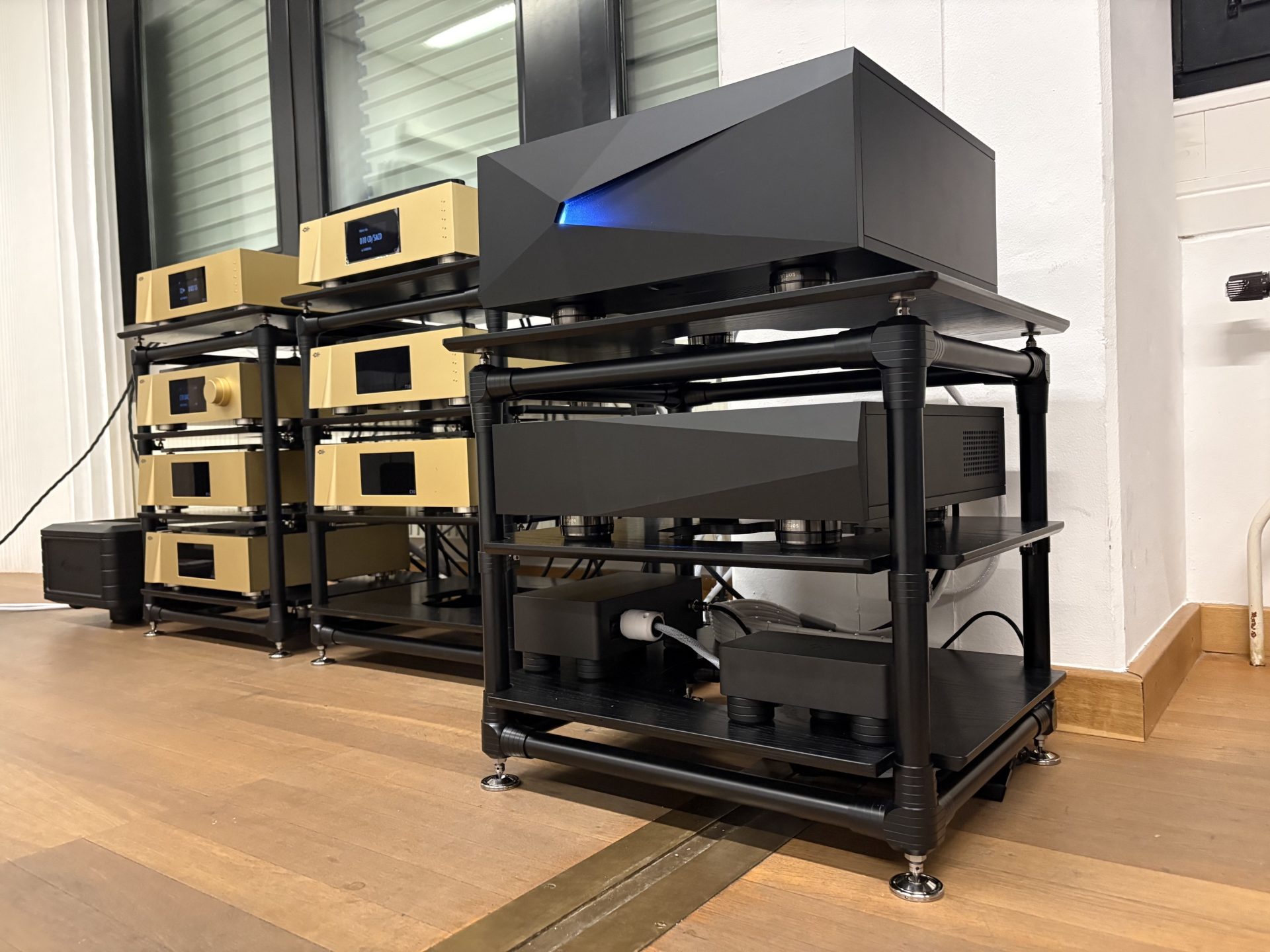
There was another lesson here, too. One of the other mini-dems being offered in the room was of a couple of identical CDs, one of which had been treated to a trip through the Audio Desk Système CD Lathe. The differences were not trivial – I’d say they were quite capable of musically eclipsing the benefits of SACD over CD. There’s clearly something going on with discs which aren’t truly circular; given the miniscule nature of the pits and lands on the disk, it’s easy to imagine how even minute out of balance wobbles might affect the tracking and focussing mechanisms, or otherwise confound the sensitive replay process. It seems the CD Lathe, long out of production, is about to be reintroduced. I suspect that, like a good record cleaning machine, it might become another essential gadget for the dedicated music listener. As CD/SACD replay improves – and the C10/D10 is awfully musically impressive – it’s hard not to notice how the results are becoming as sensitive to preparation and practice as record replay. Best sound in show from a system based on optical disc: it looks like yet another format is defying its death notices…
Wadax, the Studio Transport and Studio DAC
By Roy Gregory
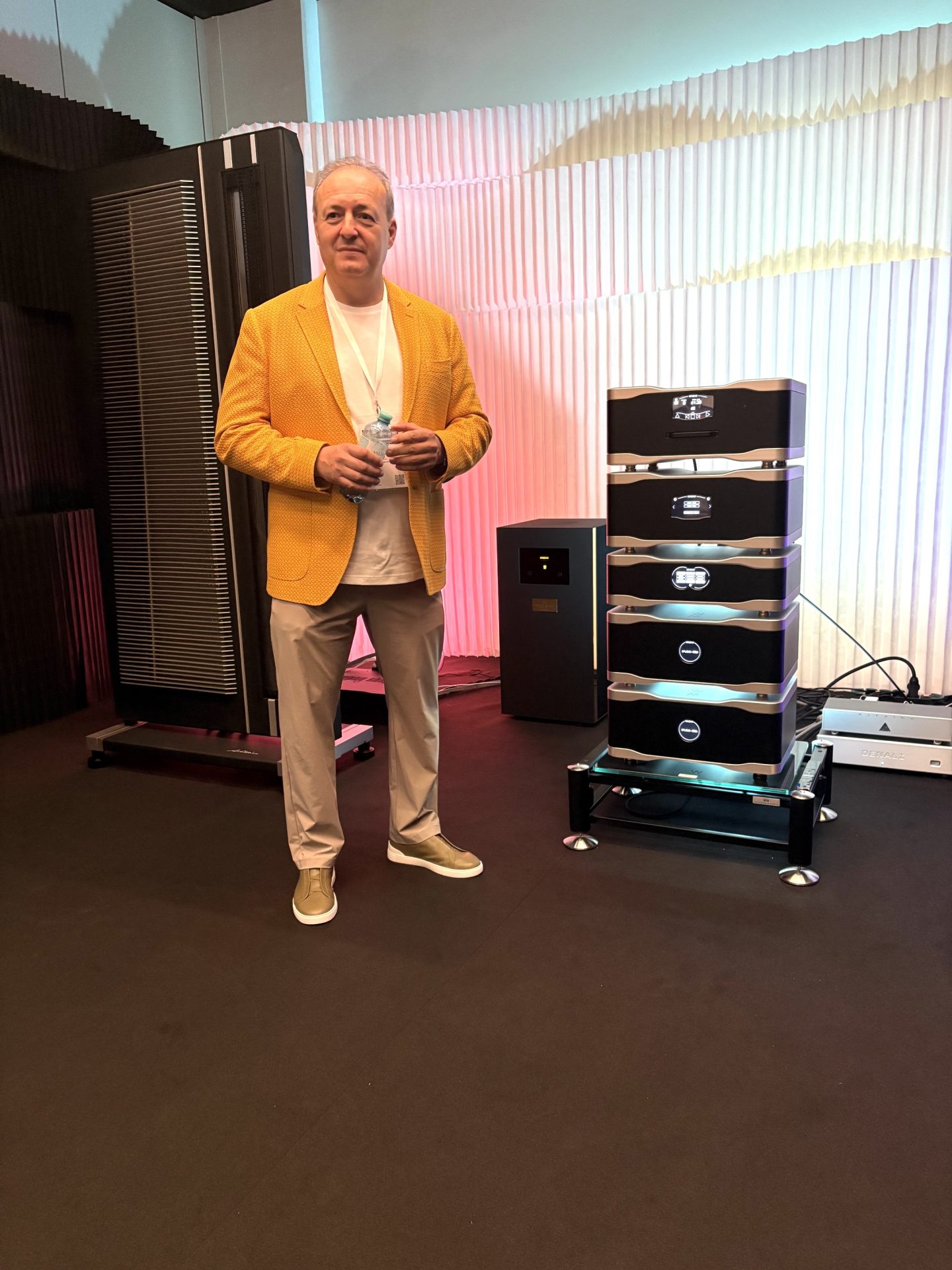
Although Wadax showed several instances of their five-box Studio stack, it only contained two new products: the long-awaited Studio DAC ($42,950) and its matching Studio Transport ($39,500). Perhaps unsurprisingly, both are contained in the same substantial chassis work as the Studio Player – which makes for a pretty substantial five-box stack! Five boxes? The Studio line is another example of the increasingly common (and welcome) expandable, upgradable system architecture that’s slowly becoming the norm. In this case you can run one box (the DAC) add a clock, transport or power-supply (with twin outputs capable of powering both DAC and transport), an AKASA optical link between the CD/SACD transport and AKASA DC cables to the PSU feeds, before taking the ultimate step and adding a second PSU, dedicating one to each of the audio boxes.
Of course, in practice few people should or will stack the Wadax components, which (if the Studio Player and Reference units are anything to go by) respond significantly to optimized support and levelling. But the imposing ‘tower of digital power’ wasn’t the most significant aspect of the introduction. The Studio DAC boasts new RAXA D-to-A technology, claimed to further lower noise, while improving staging, timing and harmonic rendition. It also includes a (rear mounted) headphone output that is measures and adapts to the listener’s individual hearing profile. Like the Studio Player, the Studio DAC’s D-to-A cards are essentially the same as those used in the Ref DAC, meaning that a RAXA DAC upgrade will be available (probably in Q4) for both the Player and flagship DAC. While a lot of companies talk a good game when it comes to future-proofing and upgradability, it’s nice to see Wadax actually delivering on the promise.