

Shostakovich’s First Symphony might well be considered as the fringes of mainstream classical repertoire. A live concert SACD released by the orchestra is definitely a fringe recording (although it deserves far wider recognition). But what applies to this music and this disc is cross-genre consistent. The C10/D10 bring their fundamental grasp of the spatial, temporal and dynamic to whatever you play. Mainstream audiophile? How about Alison Krauss, Forget About It (Rounder RRCD 0465)? You don’t get much more audiophile staple than girl and guitar (plus mandolin, fiddle and a few other bits and bobs thrown in). You don’t get to present a system with a much easier challenge or more obvious chance to shine. But even here, the 10 Series digital components bring something special, standing well above the crowd. Krauss’s voice is redolent with silken purity, but it issues from a life-sized presence, with all the measured substance and convincing immediacy of the body behind it. The band is beautifully disposed, solid and dimensional, with convincing dynamic shifts and the burgeoning density that gives tracks a sense of purpose and musical intent. It’s a performance that brings THE performance into the room with you, intimate, communicative and expressive.
Mainstream rock or pop? Try the trip-hammer urgency and drive of Lol Tolhurst’s drumming, the poised elegance of Smith’s beautifully picked guitar lines on ‘Play For Today’ (The Cure, Seventeen Seconds, Polydor 982 183 1). Low-Fi? You can’t dig much deeper than the airplay-only, ‘official’, live bootleg, Elvis Costello Live At The el Mocambo. It’s as frenetic, high-energy and chaotic as you’d expect, but the C10/D10’s sense of proportion and order brings shape and a controlled momentum to proceedings, adding to rather than diluting the naked intent in the playing. Costello’s vocals are effortlessly intelligible amidst the wall of sound, the subtleties of diction and delivery creating a core and special connection to these lyric-driven songs. ‘Little Triggers’ becomes a thing of beauty, dripping with emotional intensity, showcasing the tight musical relationship within a touring band at the height of its hunger and powers. You can feel the crowds enthusiasm. You can almost smell the stale beer and half expect your feet to stick to the floor…
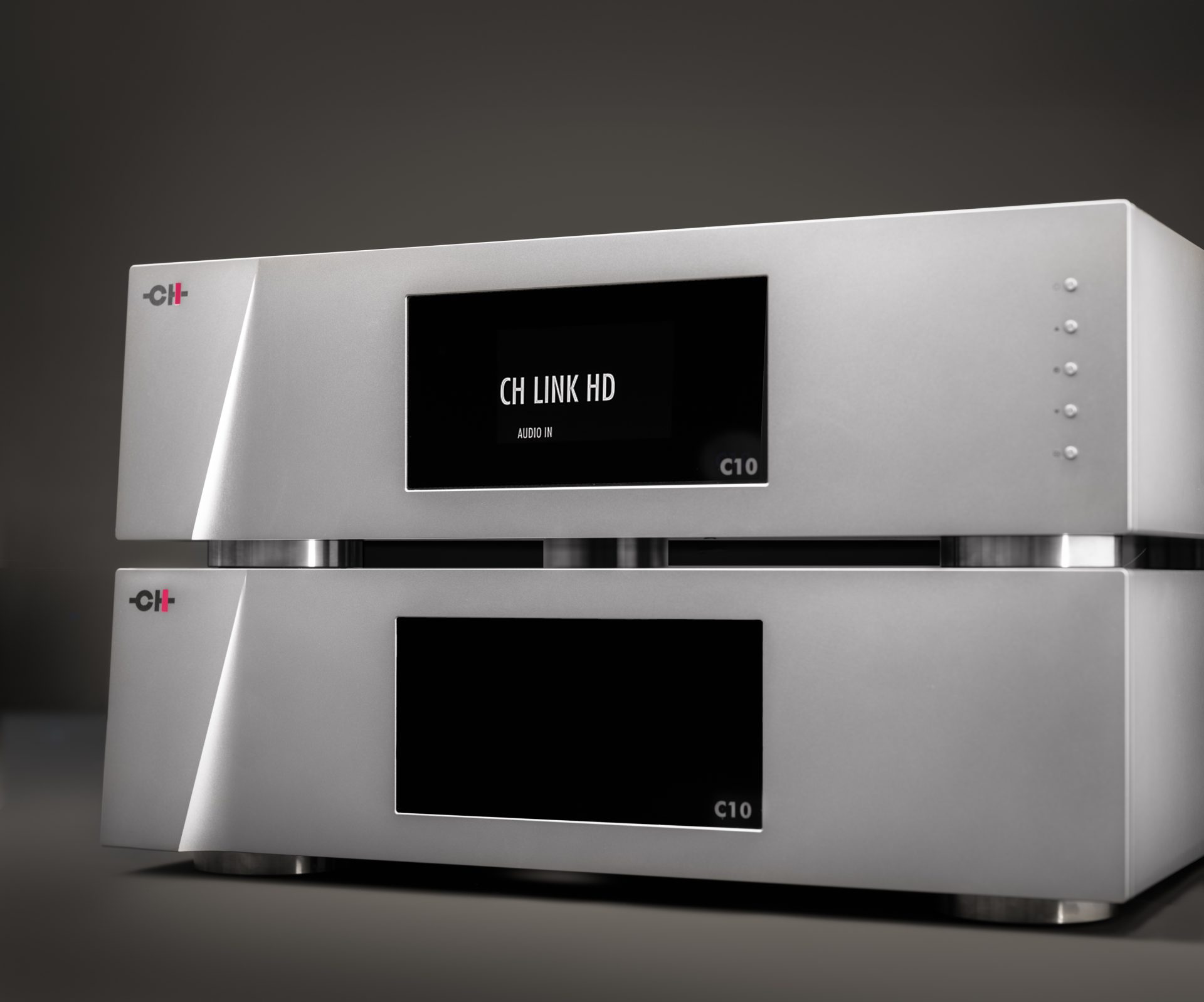
This ability to cut right to the core of the recording and drag it, kicking and screaming if appropriate, right into the room with you, is the C10/D10’s super-power. It’s built on order and precision, but it’s that organisational security that allows the music free reign without it losing its way. Instead, the pattern, the path, the sense of direction has a clarity and inevitability that brings power, depth and impact to the music – at both ends of the dynamic scale. In many regards, this is performance that finally delivers on what many listeners took to be digital’s inherent qualities and promise: At a price.
Which brings us to the next question facing this 10 Series combination. Which part delivers the greater benefit? Past experience has demonstrated the clear and unambiguous superiority of the C10 over the C1.2. In terms of focus, clarity, dynamic range and density, musical flow and articulation, there is simply no comparison between the two. But, given the cross-product compatibility, does it make sense (does it make more sense?) to think in terms of the D1.5 paired with the C10, instead of the undeniably pricy D10. After all, not everybody can, wants to or needs to devote those funds to CD/SACD replay.
Pairing the D1.5 with the C10: throwing the baby out with the bathwater?
I started by comparing the D1.5 combined with the C1.2 to the D1.5/C10 combination, just to confirm earlier impressions. It didn’t take long. Using Sol Gabetta’s transcription of Vivaldi’s ‘Winter’ Concerto from The Four Seasons (Il Progetto Vivaldi 1-3, Sony 88875035952) the 1 Series pairing captured the insistent rhythms, the spread of the small group, Gabetta’s location, front and centre, her bold instrumental voicing and the astonishing bow speed and energy in her playing. But shifting to the C10, instrumental locations and identity were far more obvious, the acoustic more coherent. Notes carried far more colour and harmonic detail, dynamic graduation was finer, delivering more natural musical impetus. Gabetta’s playing had greater physicality, the action of her bowing was far more explicit, while the presentation as a whole gained presence, solidity and dynamic range.