

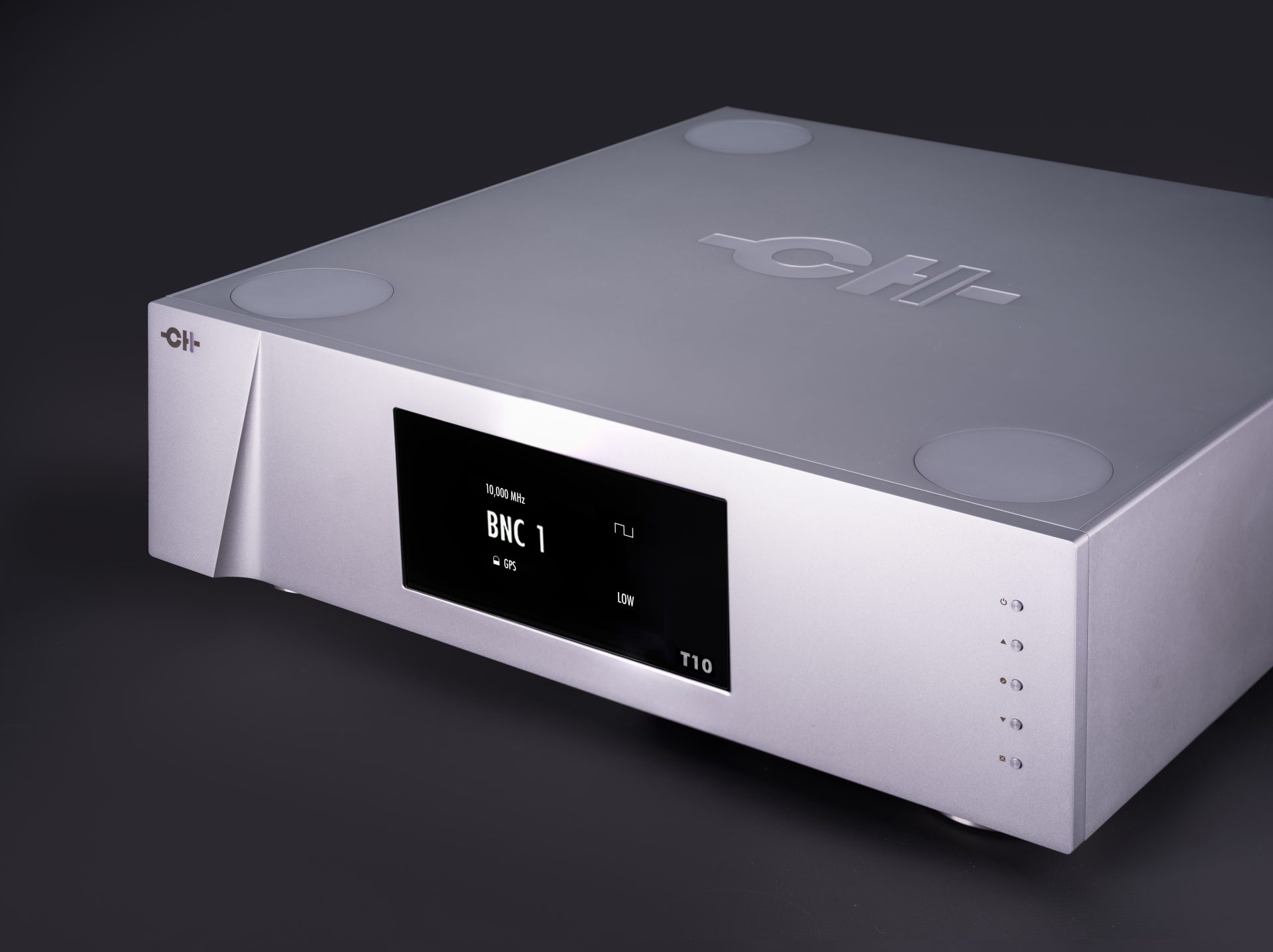
For anybody used to Ella’s effortlessly tuneful and gracefully phrased delivery on ‘Let’s Call the Whole Thing Off’, hearing Billie Holliday’s performance on Body And Soul (Acoustic Sounds SHM-SACD UCGU-9084) replayed on the D10/C10 will come as something of a shock: not just the fractured, staccato rhythm of the opening piano chords, but the way that the vocals seem detached from the rhythm and pacing of the band. There’s an edge to Billie’s voice and her phrasing sounds slurred and unfocussed. But insert the T10 into the system and the song locks in, the piano finds its groove, the drums latch on and suddenly the vocal seems subtly elegant and effortlessly connected. The system finds space and separation in the mono recording, the timing has an unmistakable swing and suddenly the whole song makes sense. So much so that the T10 is more than just a first upgrade, it should be considered an essential element in the 10 Series digital mix.
But what is interesting to me, is the scale of the T10’s musical impact. As impressive as the T1 is in the context of the C1.2 and D1.5, the clock makes a far bigger difference to the already impressive C10/D10. Reduced timing errors are a clear goal of both products, a goal that’s clearly evident as soon as you listen to them. But the musical benefits of the T10 suggest that both have considerable performance headroom in the temporal domain, potential that’s released and exploited by the addition of the master clock. Apart from the need for direct comparison, once connected the T10 was never removed from the system. I strongly suspect that any potential owner will react in exactly the same way.
Does 10 Series digital trump 1 Series?
The four-box 1 Series digital set-up has been a long-standing musical and sonic reference, an invaluable and flexible tool (certainly around these parts) and the sweet spot amongst the 1 Series digital options. While both the D1.5 and the C1.2 offer benchmark performance as standalone units, adding the external power supply and clock raises their game, while all four boxes together have long set the price/performance standard for multi-box digital solutions. Yes, you can add even more boxes to the CH set-up – and gain even more performance – but four-boxes does seem to hit the musical mark.
Just like a Formula 1 driver, the most immediate competition for the C10/D10 comes from within its own team. Both the 1 Series and 10 Series leverage much common technology and engineering, share the same design team and overall perspective. They even look pretty much the same and are cross compatible. If the law of diminishing returns actually applies, then logic dictates that the C10/D10’s closest competitors might well be their 1 Series equivalents. So, the first hurdle the new 10 Series digital components must clear is their own ‘junior’ siblings. As outlined above, both combinations were set up with considerable care, both including their clock option, creating a five-box plays four imbalance, but just as the four-box 1 Series combination, represents a sweet-spot, so too does the five-box 10 Series solution, balancing the complexity, size, cost, the challenge of accommodation against the performance delivered.