

But for starters, let’s stick to the optimum employment and a pair of Peak Sinfonias, the very essence of a wooden speaker cabinet. I started by removing the B2s that were in residence and establishing a base line before replacing them. As expected, they brought extra resolution, harmonic development, a lower noise floor and fuller, richer sound. Playing the Sarabande from Debussy’s Pour le Piano (Víkingur Ólafsson – Reflections – DGG 483 9214) the placing of notes is more deliberate, their timing and the space between them more explicit. They carry more body and weight – accounting for the richer tonal balance. The instrument is more solid and dimensional, the human agency more apparent. Overall, it’s a substantial extension of the speakers’ quality and performance envelope, in qualitative and quantitative terms. It’s also a hard act to follow…
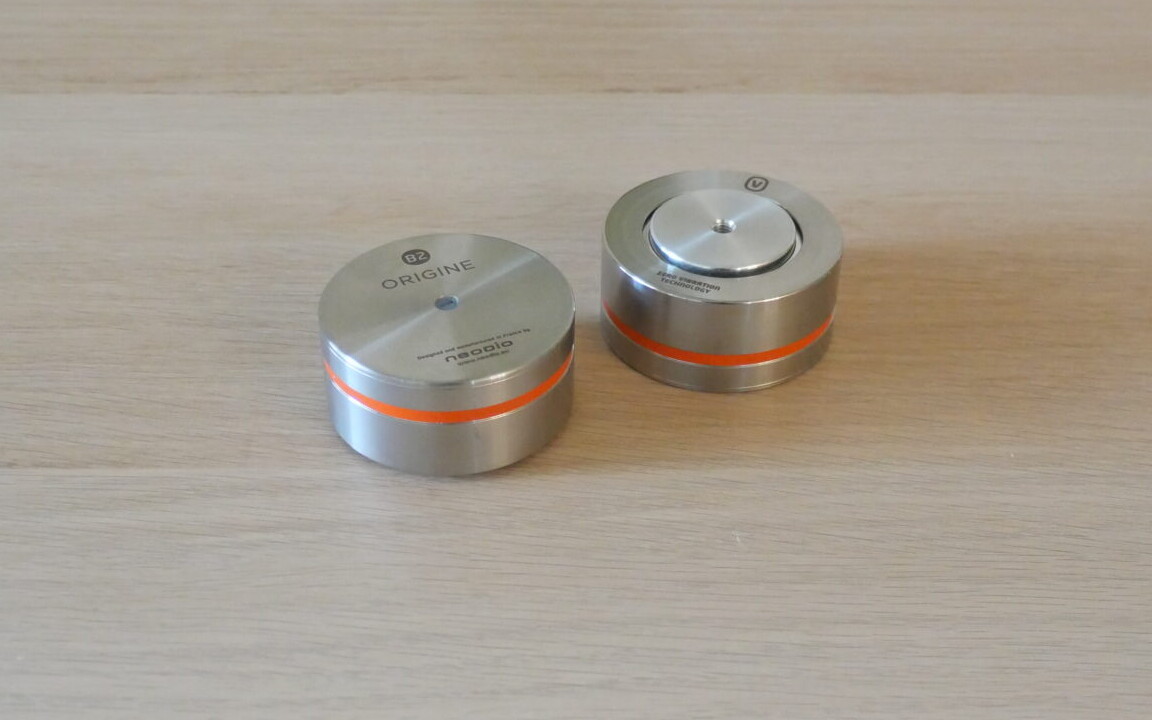
Not that I needed to worry. Substituting the B2 Orange for the original model amounted to a paradigm shift. Where the B2 had built on and extended the performance of the speakers, the Orange transformed its communicative qualities. In quantitative terms, it added all of the extra information, weight and tonal richness that the B2 delivered It just allowed the speaker to do so much more with it. The spacing of the notes, the subtlety and variation in their weighting and attack, the sense of the pianist actually shaping the melody and the piano responding to input were simply in another league. To the extent that this now sounded like a piano, rather than a recording of a piano. The instrument was big, solid and stable, the harmonic complexity and layers beautifully developed, the sense of human hands energizing the instrument, the balance of left and right hand – all were suddenly natural, unquestioned and independent of the speakers. In terms of bringing expressive range, intimacy and communication to a system I’ve rarely if ever heard anything do to a system what the B2 Orange did to the Peak Sinfonias. I’ve definitely never heard anything so simple, reversible and affordable come even close.
Anything that can do this for piano, the most demanding of individual instruments to reproduce, is clearly onto a good thing. That ability to find body, space, harmonic complexity and temporal clarity transfers directly to other recordings. The messy, congested arrangements and submerged vocals of Dylan’s Blood On The Tracks (Absolute Analogue/Columbia 69097) is a perfect case in point. Listen to ‘Tangled Up In Blue’ and the Oranges not only bring space, order and separation to the soundstage, body and purpose to the guitars, they pull Dylan’s vocal into space, adding diction and intelligibility to the lyric. But most of all, they bring a sense of rhythmic integrity and swing to the track. What can sound a little slow and downbeat, becomes measured, vital and fluid, with an inevitability that matches the song’s theme and echoes the story. The loose-limbed rhythm of Michelle Shocked’s ‘Graffiti Limbo’ (Short, Sharp, Shocked – Polygram CVLP1) finds its groove, the voice gaining intimacy, the lyrics clarity and emotional punch.