

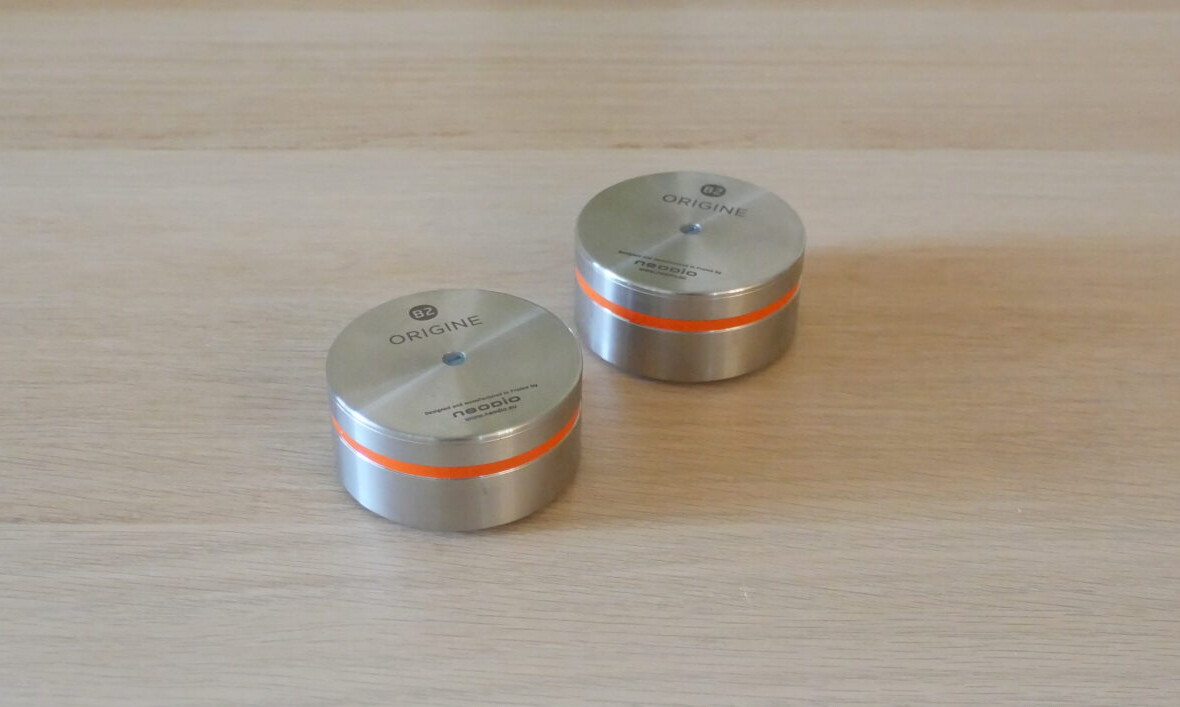
Given the effect of the B2 Orange on the Monarques, I set out to experiment with it elsewhere in the driving system. With three Wadax and eight(!) CH Precision PSUs to play with, I wasn’t exactly short of options, but I struck gold with the Ref DACs’ twin supplies. Removing the HRS Damping Plates that I usually employ on the shoe-box PSUs, placing the Oranges between the top-plate logo and the rear fixing boss produced a really significant increase in transparency, focus, separation and the harmonic envelope and identity of instruments. Playing the Tchaikovsky Violin Concerto, the emotional intensity and sensitivity in Batiashvili’s playing took another step up, her bowing and weighting of notes became even more natural. Now, in large part, that depended on the Oranges already sat on top of the speakers, but this is definitely a cumulative and compound effect.
Now I have a problem. With only four B2 Orange to hand, do I split them across the two listening rooms or deploy them in a single system? The answer of course, is both: or, in other words, get more units! The B2 orange has become instantly indispensable, to the extent that I find myself carrying them around with me as I move from one listening room to another. Which brings me to a really important point. As I suggested earlier, the B2 Orange isn’t just super effective, it’s also incredibly simple to use, or to try in a whole host of situations. It’s literally a case of pop it in place and listen to the results. If you like what you hear – great. If you are not sure, ABA testing has never been simpler. If you are less than impressed, move on to a different location or component. Once you’ve nailed down which components benefit the most, you can refine positioning, but if my experience is anything to go by, you’ll not be struggling to hear the differences. When it comes to speakers with sloping or curved tops (the current Magicos for example), you might encounter problems placing the B2s, but otherwise, any flat surface is just inviting you to try the Neodio pucks.
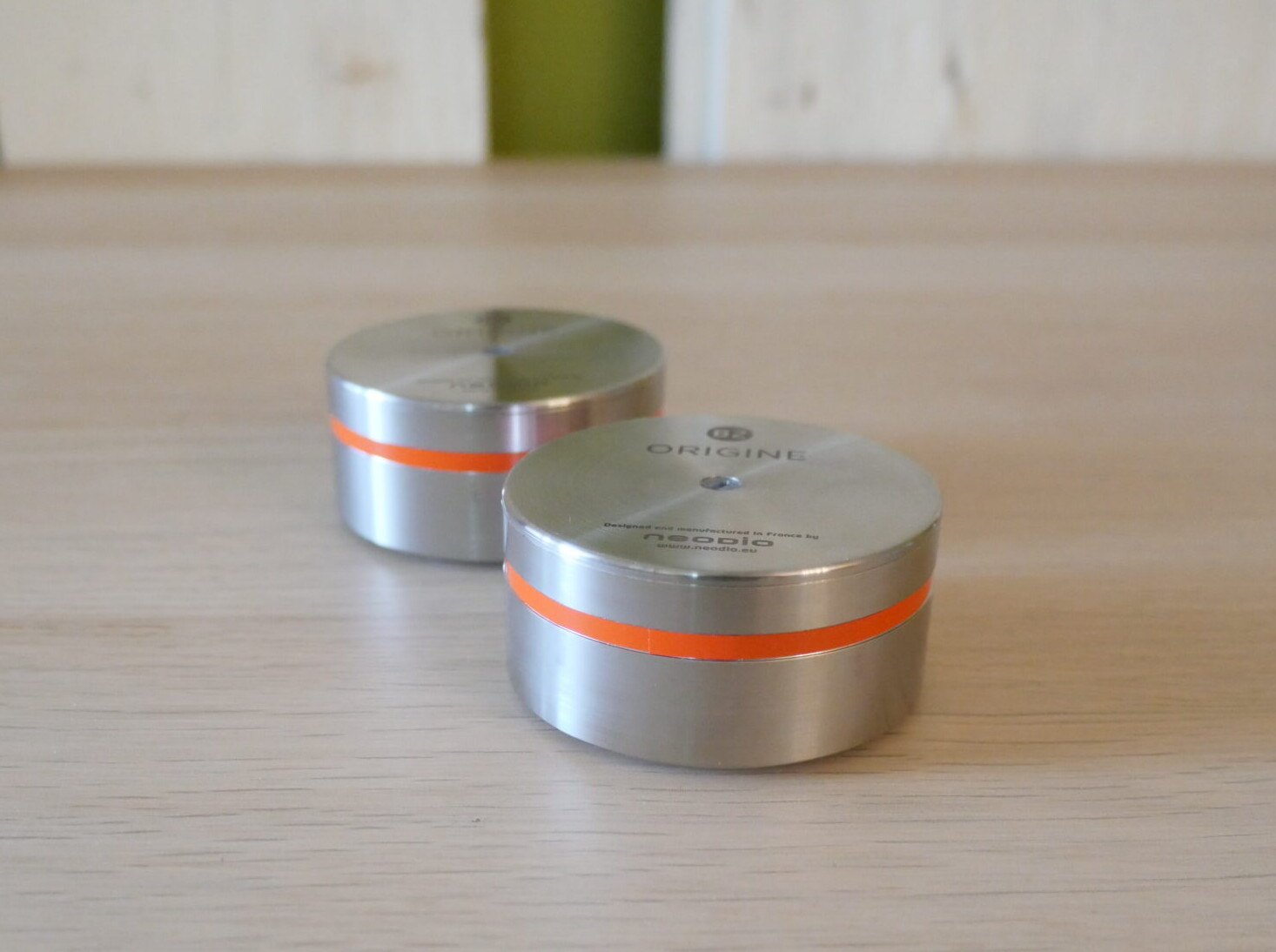
For owners of existing B2s, the good news is that anywhere a standard B2 works, the Orange works better. In fact, the Orange is so powerful that in many cases, one on top of a component will outperform three standard units underneath, so that although in unit terms the Oranges cost more, you’ll need far fewer of them. It also works brilliantly in concert with the standard B2. Just because the B2 Orange is better than the original version, doesn’t make those earlier units any less useful or effective. The bad news is that, unlike the B1 to B2 upgrade, standard B2s cannot be upgraded to Blue or Orange status. And while we’re on the subject, what about the Blue? Consider it an upgraded version of the original B2, rather than a baby Orange. It’s good, but Orange it ain’t…
Ultimately, the impact of Neodio’s B2 Orange depends on the scope and components in your system. With modest set-ups its influence is spectacular, both musically and in value terms. Step up to more ambitious systems and the benefits might be more subtle but they’re just as fundamental and just as musically important, while the cost is vanishingly small compared to the total investment in the system. In that context, if you are seeking a sonic extravaganza, you’ll likely be disappointed; but if you are are after more natural, more communicative and more engaging musical performance, the B2 Orange should be at the top of your Must Try list. And like the original B2, the beauty of the Orange (and the Blue) is just how easy they are to try.