
With its narrow front baffle and deep, rear-ported cabinet, the Haydn Signature possesses the pleasing proportions first seen in the elegant shape of ProAc’s diminutive Tablette, although with a 6”/150mm bass-mid unit, the Haydn is a step-up in terms of internal and external volume. Measuring 174 x 361 x 265mm (almost 7 x 14 x 10.5”, WxHxD) the Haydn is around 60% bigger than an LS3/5a, while offering a smaller frontal area and lower visual impact. It’s also a lot prettier. Part of that is down to the curved edges on the beautifully veneered (or lacquered) front baffle, compared to the bluff frontage of the BBC design, but then the LS3/5a was never intended to see the inside of a domestic residence. You even get a pair of elegant, magnetically attached grilles, but the speaker itself is attractive enough to render them unnecessary, while the tweeter has its own, in-built protective grille. The Haydn also weighs in at a pretty substantial 10kg, which makes it around twice the weight of the BBC speech monitor. Part of that is down to the thin-wall, birch-ply cabinet used by the LS3/5a, but it also indicates just how beefy the Haydn’s HDF/MDF cabinet construction is. Those thick panels and internal bracing make for a seriously rigid enclosure. They also help account for the €3,000 – €3,400 asking pricing, pitching the VA speaker right in between the established LS3/A and B&W 705 S3. The Haydn isn’t cheap, but it is right on the money for a high-quality compact.
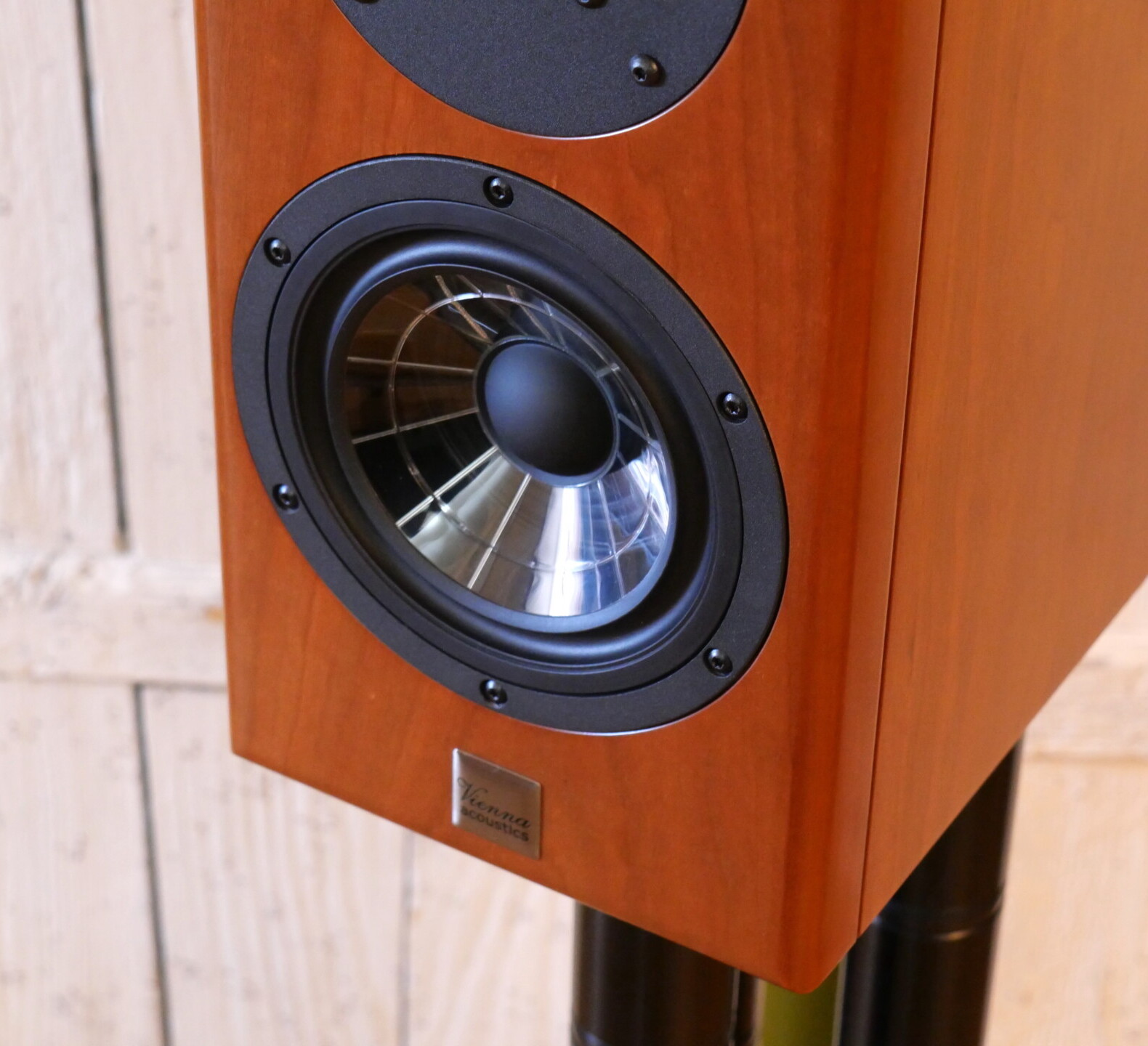
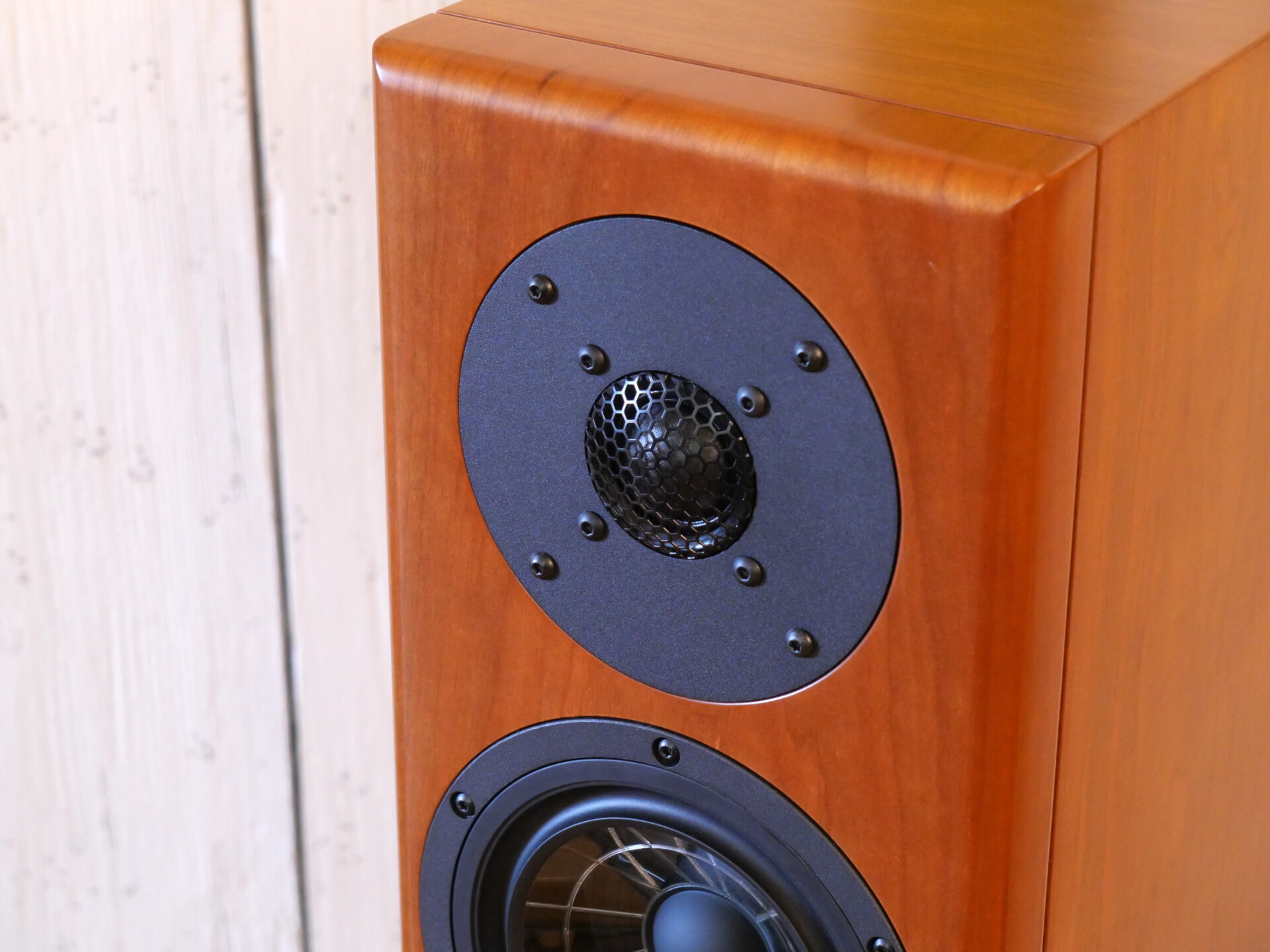
As nicely finished as the cabinet exterior is (and it is very nicely done) the devil here is deep in the internal details. Like the other speakers in the Company’s Concert Grand series, the Haydn uses proprietary drivers. The 150mm bass-mid employs a unique cone structure, dubbed Spider Cone. Moulded from Vienna Acoustic’s specially developed X3P polyproplene/polymer mix, the flared profile is stiffened by a web of radial ribs moulded into the rear surface. It’s an approach that allows designer Peter Gansterer to achieve carefully tailored mechanical performance, delivering all of the neutrality and harmonic qualities so often associated with polyproplene drivers, without the weight penalties that generally go with them. It’s an approach that has achieved impressive results in many of VA’s other speaker designs and it’s equally impressive here. It is teamed with the Company’s familiar 28mm, doped silk dome tweeter, a similarly impressive performer. Both drivers are the result of multiple evolutionary generations – and it shows in both their sophisticated tonal qualities and their seamless integration.
The rear panel sports the large diameter port and the panel on which the crossover and single pair of input terminals is mounted. Single-wiring is the house mantra which, given the care that clearly goes into the VA crossovers is understandable, even if the overall design brief, which trades sensitivity for unusually wide bandwidth for a given cabinet size, would certainly benefit from bi-amping. Still, if it’s good enough for Wilson… The crossover is unusually sophisticated for a speaker at this price. It’s a quasi-Butterworth topology with 6 and 12dB slopes to maintain phase coherence, along with extremely careful component selection. Natural tonality and harmonics have always been a VA strength, a strength that the latest generation drivers have really built on. But with crossovers, topology is only one part of the story and the voicing of the crossover has also always played its part when it comes to the VA speakers’ exceptional musical and temporal coherence.