
Playing Víkingur Ólafsson’s Goldbergs (DGG MQACD UCCG 45082) the CV40 delivers an attractively crisp immediacy, purpose and sense of momentum to the music, from the poised, clearly delineated notes and progression of the ‘Aria’, through the surefooted, tumbling vivacity of the faster variations. There’s no missing the musical vitality in the playing, or the playfulness in the composition. Thankfully, that sense of musical momentum doesn’t come at the cost of expressive range or subtlety. While a song like ‘Desperado’ (from the Eagles album of the same name, Mofi UDSACD 2230) builds convincingly from its voice and piano opening, gaining power and density as it adds layers to the mix, it never loses that winsome loneliness that underpins the lyric. Play Dusty In Memphis (Analogue Productions APA017-45) and Springfield’s vocal range and artistry are beautifully apparent, from the expressive intimacy of ‘Just A Little Lovin’’ or ‘Breakfast In Bed’ to the poised power of ‘Son Of A Preacher Man’. But it’s not all about the vocal. The songs and the singing are elevated by the snappy arrangements on tracks like the crisply spacious ‘Son Of A Preacher Man’ and the tactile, pitch definite bass line and subtly texture cymbal work on ‘Breakfast…’ The Solen amp certainly fastens to and drives the musical core, but it carries the shape and structure with it. Phrasing is explicit, rhythms are articulate and motive, musical intent is plain to hear. This is front-rank musical communication, putting the message firmly first in a way that many far more expensive products so signally fail to do.
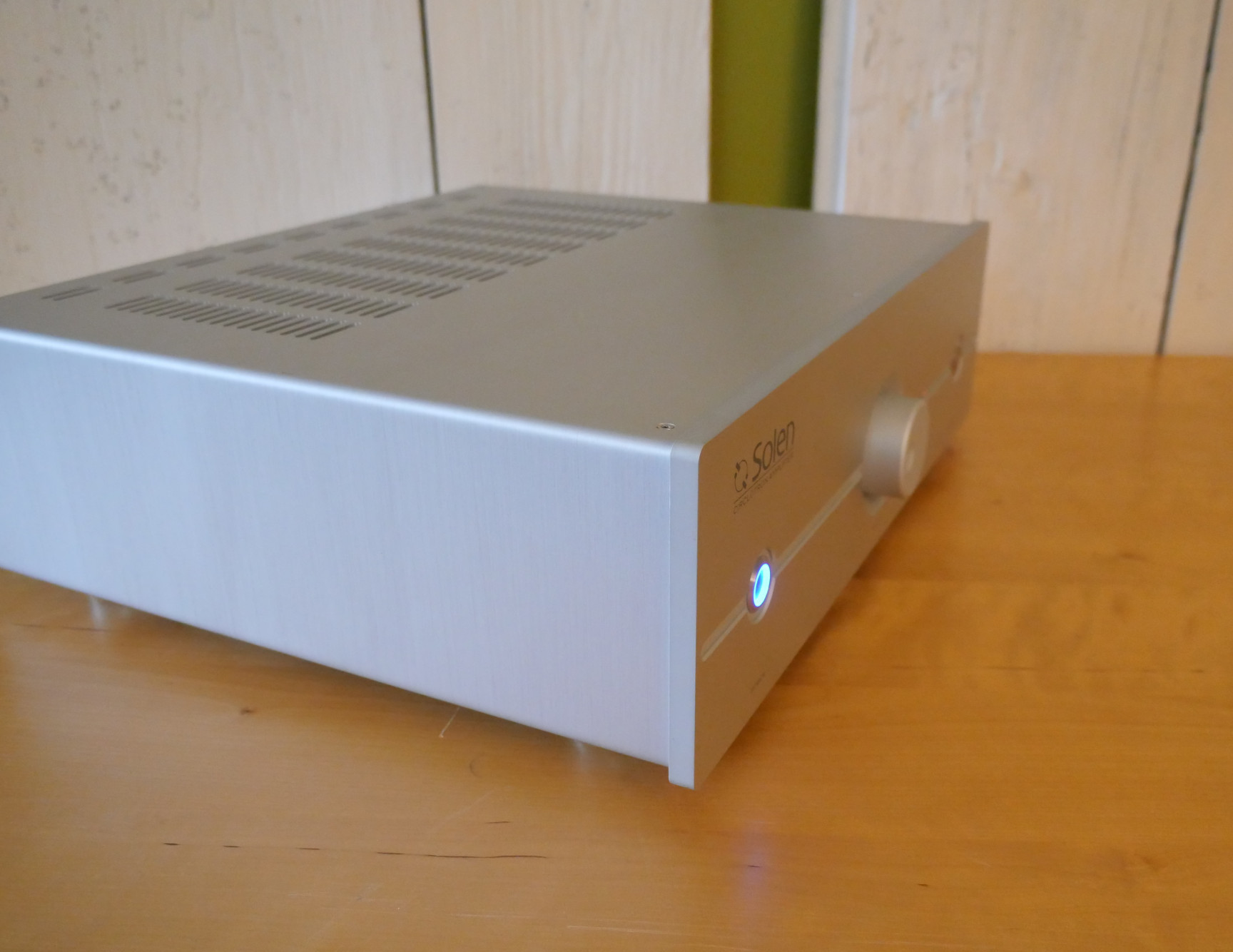
In many ways, that straightforward musical approach matches the CV40’s clean, uncluttered appearance – and it’s apparent whatever music you play. Jos van Immerseel and Anima Eterna’s Beethoven symphonic cycle (Zig Zag Territoires ZZT080402.6) is a recently discovered pleasure – and a fascinating contrast to the Jordi Savall/Concert Des Nations set(s). Immerseel has a more rigidly structured and conventional approach that lays bare Beethoven’s compositional precision: Savall relies more on his almost Barbirolli-esque grasp of rhythm, tempo and dynamic density. Compare the carefully constructed opening movement to the Fourth Symphony on the Solen amp and it’s Savall’s more intuitive approach that builds greater musical tension and drama, playing to the amp’s temporal and dynamic strengths. Immerseel’s reading is more disciplined and arguably more ‘classically’ proportioned, but with this amp, dramatic tension carries the day over more academic or cosmetic considerations. This is all about musical connection and intent, form very much following function. It’s also a clear indicator as to just where the Solen amp’s sonic and musical priorities lie – and the balance it strikes between the two.
All of which begs the question, how does the CV40 deal with the finer, more delicate aspects of musical reproduction? Switch to Ólafsson’s Debussy-Rameau (DGG 483 7701) and whilst the pace and musical impetus, the shape and phrasing are there, the sense of note-weight and precise placement is lacking. The long, decaying chords are wanting for harmonic layers, the piano’s action is less apparent. It doesn’t rob the music of grace or beauty, but the intimacy that comes from all that subtle instrumental detail, low-level dynamic graduation and the layered harmonic textures is muted. This affordable, no frills integrated simply can’t (and, realistically, shouldn’t be expected to) match the sheer transparency and information retrieval of top-flight systems. Cut your electronics budget to this extent, or to match a more modest budget, and something’s gotta give. In this case, Solen has chosen to sacrifice resolution rather than musical and communicative coherence.